Chia sẻ bí quyết học tốt từ vựng tiếng anh dành cho sinh viên Cao đẳng Điều dưỡng
Từ vựng tiếng anh đối với sinh viên Cao đẳng Điều dưỡng Hà Nội vô cùng quan trọng, một Điều dưỡng viên chuyên nghiệp thì không thể nào thiếu được kỹ năng sử dụng ngoại ngữ.
Để giúp sinh viên Cao đẳng Điều dưỡng nói chung và , Liên thông Cao đẳng Điều dưỡng nói riêng có thể tự tin bước vào nghề và trở thành một Điều dưỡng viên chuyên nghiệp, các giảng viên Trường Cao đẳng Dược Hà Nội tổng hợp các từ vựng tiếng anh chuyên ngành dành cho sinh viên Điều dưỡng để các em tiện học tập, cụ thể:
1 Acne /’Ækni/ : Mụn Trứng Cá
2 Albinism / ˈælbɪnɪzəm /: Bệnh Bạch Tạng
3 Allergy / ˈælərdʒi /: Dị Ứng
4 Anthrax / ˈænθræks/ : Bênh Than
5 Arthritis / ɑːrˈθraɪtɪs /: Đau Khớp Xương
6 Asthma / ˈæzmə /: Suyễn
7 Athlete’s Foot / ˈæθli:t S Fʊt /: Bệnh Nấm Bàn Chân
8 Backache /ˈbæk.Eɪk/ – Đau Lưng
9 Bad Arm /Bæd ɑ:M/ : Hôi Nách
10 Bad Breath / Bæd Breθ/ : Hôi Miệng
11 Bilharzia / Bɪlˈhɑːrtsiə /: Bệnh Giun Chỉ
12 Bleeding / ˈbli:dɪŋ /: Chảy Máu
13 Blister / ˈblɪstər /: Phồng Giộp
14 Broken Bone /ˈbrəʊ.Kən Bəʊn/ – Gãy Xương
15 Bruise /Bruːz/ – Vết Thâm
16 Burn /Bɜːn/ – Bị Bỏng
17 Cancer / ˈkænsər /: Bệnh Ung Thư
18 Cataract / ˈkætərækt /:Đục Thủy Tinh Thể
19 Cerebral Palsy/ Səˈriːbrəl ˈpɔːlzi /: Bệnh Liệt Não
20 Chest Pain/ Tʃest Peɪn /: Bệnh Đau Ngực
21 Chicken Pox/ ˈtʃɪkɪn Pɑ:ks /: Bệnh Thủy Đậu
22 Chill /Tʃɪl/ – Cảm Lạnh
23 Cholera / ˈkɑːlərə /: Bệnh Tả
24 Cirrhosis / Səˈroʊsɪs /: Bênh Xơ Gan
25 Cold Sore / Koʊld Sɔ:r /: Bệnh Hecpet Môi
26 Cold /Kəʊld/ – Cảm Lạnh
27 Colic / ˈkɑːlɪk / Đau Bụng Gió (Thường Gặp Ở Trẻ Em)
28 Constipation / ˌkɑːnstɪˈpeɪʃn /: Táo Bón
29 Cough /Kɔf/ : Ho
30 Cut/Kʌt/ – Bị Cắt Văn bằng 2 Cao đẳng Điều dưỡng có lớp buổi tối không?
Một trong số những cơ sở đào tạo Văn bằng 2 uy tín đó chính là Trường Cao đẳng Dược Hà Nội, tại đây các thí sinh sẽ được học tập trong một môi trường có điều kiện cơ sở vật chất tốt nhất, phục vụ công tác thực hành, trau dồi khả năng tay nghề. Bên cạnh đó trường có đội ngũ giảng viên giỏi chuyên môn, giàu kinh nghiệm sẽ giúp các thí sinh nắm bắt những kiến thức quan trọng nhất của ngành Điều dưỡng.

Năm 2017, Trường Cao đẳng Dược Hà Nội tuyển sinh Văn bằng 2 Cao đẳng Điều dưỡng với thời gian đào tạo như sau:
Các lớp học Văn bằng 2 Cao đẳng Điều dưỡng buổi tối từ thứ 2 đến thứ 6 hàng tuần.
Các lớp học Văn bằng 2 Cao đẳng Điều dưỡng cả ngày thứ 7 và chủ nhật.
Điều kiện cấp chứng chỉ hành nghề Xét nghiệm
Để giúp sinh viên Cao đẳng Kỹ thuật Xét nghiệm, Văn bằng 2 Cao đẳng Kỹ thuật Xét nghiệm, Liên thông Cao đẳng Kỹ thuật Xét nghiệm dễ dàng hơn trong quá trình tìm kiếm việc làm, Ban tư vấn tuyển sinh Trường Cao đẳng Y Dược Hà Nội hướng dẫn quá trình làm thủ tục xin cấp chứng chỉ hành nghề xét nghiệm theo thông tư số 41/2011/TT-BYT và Thông tư số 41/2015/TT-BYT sửa đổi bổ sung của Bộ Y tế quy định các điều kiện chung dành cho cá nhân muốn được Cấp chứng chỉ ngành nghề Xét nghiệm như sau:
Phải có bằng tốt nghiệp tại các trường đại học, cao đẳng xét nghiệm y học, trung học y và có đủ thời gian hành nghề theo quy định đối với từng loại hình hành nghề.
Phải có đạo đức nghề nghiệp, có năng lực hành vi dân sự đầy đủ và có đủ sức khỏe để hành nghề khám, chữa bệnh.
Sinh viên Kinh tế có nên học thêm văn bằng 2 Cao đẳng Dược?
Ngày nay khi xã hội ngày càng phát triển, thị trường lao động ngày càng cạnh tranh thì việc sở hữu cho mình kiến thức ở nhiều lĩnh vực là rất cần thiết. Chính vì thế nhiều bạn trẻ lựa chọn học thêm một văn bằng 2 ở ngành khác trong đó văn bằng Cao đẳng Dược được nhiều người lựa chọn vì đây là ngành nghề luôn có tốc độ tăng trưởng ổn định và luôn nắm giữ vai trò quan trọng trong đời sống con người. Nếu bạn còn đang băn khoăn có nên học văn bằng 2 Cao đẳng Dược thì dưới đây là những lý do bạn nên học thêm văn bằng 2 ngành này.
Kiến thức Lâm sàng cho Điều dưỡng viên khi thi tuyển công chức
Tình huống 15: Điều dưỡng viên hướng dẫn chế độ dinh dưỡng cho bệnh nhân mắc bệnh cơ xương khớp?
Bác sĩ Chu Hòa Sơn hiện đang công tác và giảng dạy Cao đẳng Điều dưỡng tại Hà Nội cho biết, nguyên nhân chính khiến bệnh nhân mắc bệnh cơ xương khớp chính là do mật độ xương giảm nên ăn thức ăn giàu canxi, ăn rau củ quả, hải sản và trứng.
Tình huống 16: Điều dưỡng viên hướng dẫn chế độ dinh dưỡng cho bệnh nhân mắc bệnh loãng xương?
Bệnh nhân mắc bệnh loãng xương cần điều chỉnh chế độ ăn giàu canxi, điều trị nội khoa và đo loãng xương 6 tháng / 1 lần.
Tình huống 17: Hướng điều trị cho bệnh nhân mắc bệnh thoát vị đĩa đệm, đau căng cơ, đau vai gáy?
Bệnh nhân nên thay đổi tư thế lao động, tập bài thể dục giảm đau, chụp X-quang xác định, khám chuyên khoa Nội hay Ngoại xương khớp điều trị.

Cách xử lý tình huống thường gặp ngoài Lâm sàng cho Điều dưỡng viên
Tình huống 8: Bệnh nhân bất tỉnh không có người nhà, không giấy tờ tùy thân. Bạn Minh Hà, cựu sinh viên lớp Cao đẳng Điều dưỡng chính quy chia sẻ, nếu gặp trường hợp này, Điều dưỡng viên cần ưu tiên cấp cứu bệnh nhân lên hàng đầu, nếu bệnh nhân có nhiều tài sản có giá trị cần tiến hành lập biên bản bàn giao và niêm phong tài sản có sự chứng kiến của nhiều người để tránh những rắc rối có thể xảy ra sau này.
Tình huống 9: Bệnh nhân vào cấp cứu và tử vong khi đang cấp cứu, trường hợp này thường gặp nhiều ở khoa cấp cứu, đây cũng là trường hợp người nhà bệnh nhân dễ bị kích động và hành hung nhân viên Y tế. Điều dưỡng viên lúc này cần có thái độ cấp cứu chuyên nghiệp, kịp thời phối hợp Bác sĩ, đồng thời việc giải thích về nguyên nhân tử vong và báo cáo lãnh đạo trực Bệnh viện để giải quyết khi người nhà bệnh nhân gây căng thẳng nhiều. Nhanh chóng hoàn thiện thủ tục cũng như hồ sơ để người nhà có thể đưa thi thể bệnh nhân về – Điều dưỡng viên tại Bệnh viện Đa khoa Ninh Bình, hiện đang học chuyển đổi Văn bằng 2 Cao đẳng Dược Hà Nội chia sẻ.
Nhiều trường cao đẳng Y Dược xét học bạ THPT
Với yêu cầu “dễ thở” cũng như với hơn 200 trường cao đẳng trên mọi lĩnh vực sẽ là sự lựa chọn hợp lý với những em có sức học TB – Khá. Không giống như mô hình đào tạo Đại học thiên về học thuật và nghiên cứu, Cao đẳng thiên về học nghề sẽ giúp các em nhanh chóng hòa nhập với môi trường làm việc thực tế. tuyển sinh cao đẳng y dược hà nội 2018
Thời gian đào tạo ngắn
Quy chế mới từ Bộ Lao động – Thương binh và Xã hội quy định thời gian đào tạo bậc Cao đẳng từ 2 đến 3 năm. Nhiều trường đã áp dụng xen kẽ thời gian đào tạo tại trường cùng với thời gian thực tập tại doanh nghiệp để sinh viên nhanh chóng thích nghi với môi trường làm việc thực tế. Sinh viên sẽ học trong 3 năm, với 6 học kì bao gồm cả lý thuyết, thực tập tại trường và thực tập tại doanh nghiệp. Đặc biệt, tại trường Cao đẳng Y Dược Hà Nội, với mô hình “TRƯỜNG – VIỆN”, sinh viên sẽ được tham gia học tập lý thuyết, thực hành tại các phòng học lý thuyết, thực hành của trường đặt trong viện. Sau đó, thực tập sẽ tại các khoa của viện. Mô hình này đang được nhà trường áp dụng tại địa chỉ: số 225, đường Trường Chinh, quận Thanh Xuân, tp. Hà Nội – viện Y học Phòng Không – Không Quân.
Học Văn bằng 2 Cao đẳng Dược thoát khỏi nỗi lo thất nghiệp khi ra trường
Là ngành nghề không còn xa lạ với một xã hội hiện đại như ngày nay. Ngành Dược đã đóng góp rất nhiều cho sự thành công vang dội của toàn ngành Y tế, giúp người bệnh nhanh chóng phục hồi. Trước nhu cầu về nguồn nhân lực của ngành nghề này, sinh viên theo học Văn bằng 2 Cao đẳng Dược Hà Nội sau khi tốt nghiệp chỉ cần có chuyên môn vững và tay nghề thuần thục thì hoàn toàn có thể xin làm việc tại Bệnh viện, các nhà thuốc, các công ty Dược phẩm,…Cơ hội việc làm dành cho những sinh viên theo học ngành Dược là rất lớn.
Trường Cao đẳng Dược Hà Nội đào tạo các ngành Y Dược với phương châm “sâu y lý, giàu y đức, giỏi chuyên môn”, đào tạo ra nguồn nhân lực ngành Y Dược nói chung và ngành Dược nói riêng giỏi chuyên môn, vững tay nghề, dễ dàng tìm kiếm công việc đúng với chuyên môn sau khi tốt nghiệp ra Trường. Trường Cao đẳng Dược Hà Nội thông báo tuyển sinh Cao đẳng Dược Hà Nội với tất cả các đối tượng đã tốt nghiệp Đại học, Cao đẳng.

Nguồn nhân lực ngành Điều dưỡng thiếu trầm trọng
Tại Việt Nam cứ một bác sĩ thì có 1,5 Điều dưỡng trong khi tỷ lệ tối thiểu mà Tổ chức Y tế Thế giới khuyến cáo là 1 bác sĩ cần 4 Điều dưỡng, con số này nói lên tình trạng Điều dưỡng ở Việt Nam đang có sự thiếu hụt trầm trọng. Chính vì nhu cầu cần được chăm sóc của người bệnh càng tăng lên nên Điều dưỡng viên chỉ có thể thực hiện y lệnh điều trị và theo dõi người bệnh chứ không có nhiều thời gian để chăm sóc toàn diện cho bệnh nhân đúng như chức năng của họ. Do quá thiếu điều dưỡng viên nên một số bệnh viện phải thuê những người không có chuyên môn làm công việc chăm sóc bệnh nhân. Sự thiếu hụt về nguồn nhân lực một mặt tạo nên áp lực cho toàn ngành Y tế nhưng cũng chính là cơ hội việc làm cho sinh viên theo học Trung cấp Điều dưỡng, Cao đẳng Điều dưỡng hay Đại học Điều dưỡng.
B. Sốc điện đồng bộ:
1. Khởi động máy: nhấn phím ON [1].
2. Gắn điện cực monitor 3 dây lên BN. Nhấn phím LEAD SELECT chọn chuyển đạo có sóng R cao nhất và cao hơn hẳn sóng T. Nhấn phím SYN: trên màn hình tam giác sáng hiện lên đính vào sóng R tuyển sinh cao đẳng điều dưỡng hà nội 2018
3. Thoa gel lên bản điện cực phần sẽ tiếp xúc với BN.
4. Chọn năng lượng cần dùng: nhấn phím ENERGY SELECT [2].
5. Nhấn phím CHARGE trên máy [3] hoặc nút CHARGE trên bản điện cực
6. Đặt bản điện cực lên ngực bệnh nhân: STERNUM ở vùng hạ đòn phải, APEX ở vị trí # V6. Lực đè #10 kg. Khi máy báo đã nạp đủ điện, đảm bảo không ai tiếp xúc với BN hoặc thành giường BN, tiến hành sốc điện bằng cách nhấn cùng lúc 2 nút trên 2 bản điện cực cho đến khi toàn thân BN nảy lên do cú sốc. điểm chuẩn cao đẳng dược hà nội
7. Quan sát kết quả trên màn hình, sốc điện tiếp nếu cần
8. Sau khi sốc điện: Tắt máy: nhấn phím ON [1]. Lau chùi sạch bản điện cực, đặt vào đúng vị trí trên máy. Gỡ điện cực monitor khỏi BN, lau chùi, bảo quản đúng qui định

Chăm sóc vết thương khâu
Chỉ khâu phẫu thuật, kẹp agraff… Được dùng cho các vết mổ trong phẫu thuật, chỉ và ghim kẹp phẫu thuật để giúp vết mổ gần sát lại với nhau giúp cho vết thương mau lành. Loại vật liệu được dùng để làm kín vết thương có ảnh hưởng đến quá trình lành vết thương.
Chỉ khâu phẫu thuật, là loại vật liệu được dùng để may một vết mổ có thể hấp thu được (ví dụ chỉ catgut hay acid chromic) hay không thể hấp thu được (ví dụ: nylon, silk, polypropylen). Loại chỉ khâu này được sử dụng tuỳ thuộc vào kích thước và vị trí của vết thương, hiệu quả thẩm mỹ, và sở thích của phẫu thuật viên. Thông thường, số lượng vết khâu ít nhất và kích thước vết khâu nhỏ nhất sẽ giúp sự đóng kín vết thương tốt nhất.
Chuẩn đạo đức nghề nghiệp của điều dưỡng viên
Chuẩn đạo đức nghề nghiệp của điều dưỡng viên là những nguyên tắc, những giá trị nghề nghiệp, những khuôn mẫu để hướng dẫn điều dưỡng viên đưa ra các quyết định có đạo đức trong quá trình hành nghề. Chuẩn đạo đức nghề nghiệp cũng là cơ sở để người bệnh, người dân và người quản lý giám sát, đánh giá việc thực hiện của hội viên trên phạm vi cả nước. Mọi điều dưỡng viên cần cam kết áp dụng mọi lúc, mọi nơi hành nghề và tại mọi cơ sở y tế.
Chuẩn đạo đức nghề nghiệp của điều dưỡng viên do hội viên tham gia xây dựng, Hội Điều dưỡng Việt Nam ban hành. Chuẩn đạo đức nghề nghiệp này đã được sự hiệp y đồng thuận của Bộ Y tế, Bộ Nội Vụ, Ban tuyên giáo TƯ và Tổng Hội Y học Việt Nam và sẽ được bổ sung sửa đổi từng thời kỳ cho phù hợp với bối cảnh mới của công tác y tế và của Ngành Điều dưỡng.
Những lưu ý cho sinh viên Y Dược qua mùa thi cử
Gác tất cả lại và...tập trung “chơi”
Các bạn thử nghĩ lại xem ngày chủ nhật gần đây nhất mình được ngủ nướng, được về quê chơi với gia đình hay được nằm thoải mái đọc một cuốn sách, xem một bộ phim yêu thích là từ khi nào? Nếu bạn đã quên bẫng đi vì quá lâu rồi bạn không có thời gian làm những điều đó thì hãy tự “thưởng” cho mình một ngày như thế nhé!
Thầy Cảnh - cũng khuyên sinh viên của mình: "Thỉnh thoảng các em cũng nên cho đầu óc mình có thời gian để nghỉ ngơi, để "lên dây cót" lại, như thế các em sẽ thấy việc học tập của mình nhẹ nhàng hơn rất nhiều".
Gác lại đống bài tập chưa làm xong, những nhiệm vụ chưa hoàn thành để tập trung thư giãn, nghỉ ngơi và lấy lại phong độ. Đừng lo lắng về việc trì hoãn này sẽ làm bạn thụt lùi phía sau so với bạn bè. Bởi thỉnh thoảng dành một ngày để vui chơi, nghỉ ngơi sẽ giúp bạn xóa tan những lo lắng, giải quyết áp lực học hành và tiếp thêm năng lượng cho bạn trước những áp lực của mùa thi cử. Hướng dẫn kỹ thuật thay băng và rửa vết thương cho người bệnh
Đối với một cuộc phỏng vấn, nhà tuyển dụng thường không chỉ đánh giá bạn qua kinh nghiệm, kỹ năng mà còn trong những câu nói và cử chỉ trong suốt buổi phỏng vấn đó. Vậy nên để tránh kết quả phỏng vấn không như mong đợi, các bạn sinh viên Y Dược cần tránh những điều sau đây để có buối “sát hạch” thành công.
“Tôi chưa tìm hiểu về công ty”
Đây là câu nói hết sức ngớ ngẩn nhưng vẫn có hàng tá ứng viên mắc phải khi đi phỏng vấn tại các bệnh viện, cơ sở khám chữa bệnh, nhà thuốc...Đối với một ứng viên nghiêm túc và thực sự muốn được trải nghiệm tại công ty thì việc hiểu biết từ A - Z mọi thứ liên quan đến nơi làm việc là điều hết sức quan trọng.
Nếu bạn nói “tôi chưa có thời gian tìm hiểu” hay “tôi chưa hiểu lắm” thì nhà tuyển dụng sẽ đánh giá bạn không cao và chắc chắn sẽ không dành thêm cuộc phỏng vấn nào cho bạn. Vì vậy hãy tìm hiểu thật kỹ về nơi bạn muốn làm việc và công việc bạn muốn làm từ những bài báo hay website công ty để chủ động thể hiện sự hiểu biết và ghi điểm trong mắt người tuyển dụng nhé. http://caodangyduochanoi.edu.vn/diem-chuan-cao-dang-y-duoc-ha-noi/

Nghề Y Dược vinh quang nhưng rất bạc bẽo
Bệnh nhân họ luôn muốn những gì tốt nhất cho mình nhưng khi bác sĩ quan tâm đến người kia chưa kịp quan tâm đến họ thì họ mắng chửi, họ trách móc. Đó chính là sự bạc bẽo đầu tiên của nghề Y Dược.
Mọi người cứ nghĩ làm ngành Y thì phải giàu có và cao quý lắm, nhưng thực chất chế độ cho ngành Y rất bèo bọt nhưng áp lực cao và nặng nề. Lương của các bác sĩ thực chất cũng chỉ theo ngạch bậc như vất cứ ngành nghề nào khác.
Tinh bột nghệ và rượu
Nguyên liệu
- 50g tinh bột nghệ vàng.
- 1 lít rượu trắng (rượu dùng trị nám tốt nhất khoảng 30-35 độ)
Cách dùng
- Pha tinh bột nghệ vào rượu trắng để trong hũ kín ngâm khoảng 3 ngày. Hằng ngày lấy hỗn dịch này bôi lên vùng da sạm, nám.
Công dụng
- Loại mặt nạ này giảm nám, tàn nhang và sạm da.
Lưu ý: Đối với da bị nám tàn nhang bạn nên nhớ kỹ, đi ra đường tuyệt đối phải dùng kem chống nắng, ngoài ra bạn có thể kết hợp uống tinh bột nghệ để có thể có tác dụng cao hơn trong việc trị nám.
Mặt nạ tinh bột nghệ được xem là "thần dược" của làn da. Sử dụng mặt nạ tinh bột nghệ và dầu dừa trị Nám da, tàn nhang
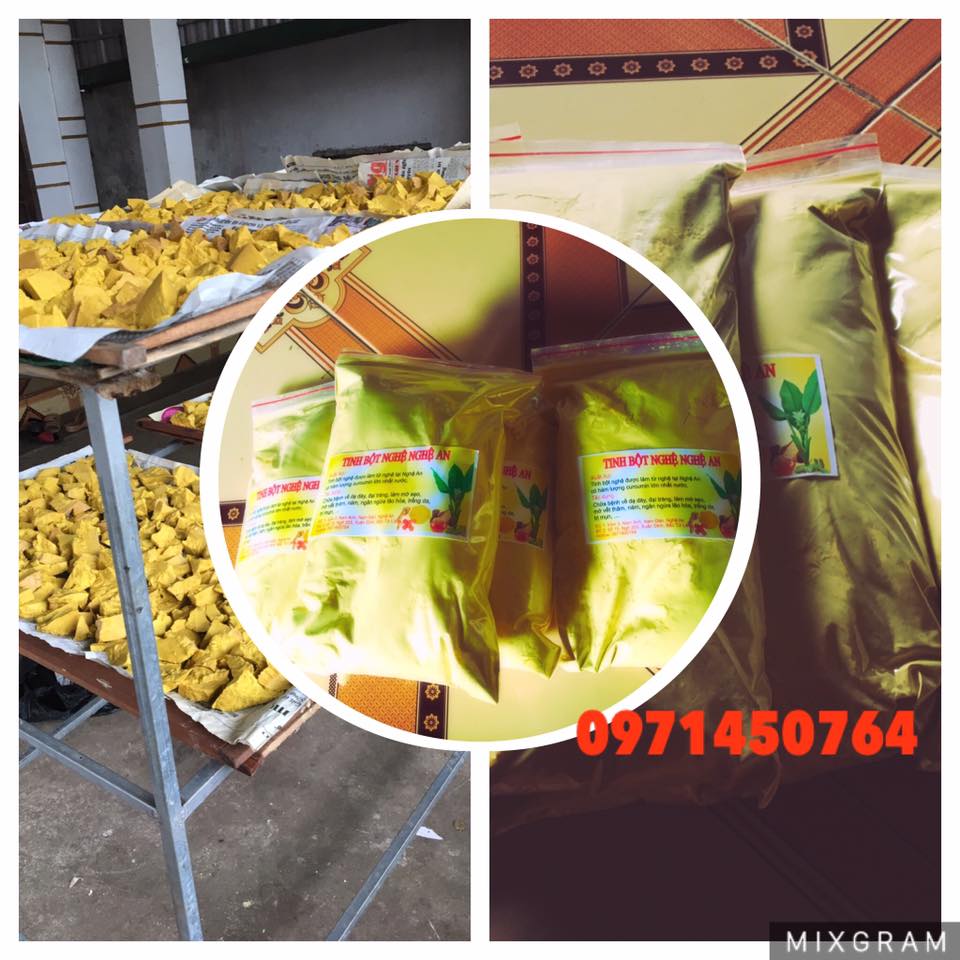
Tinh bột nghệ trị nám
Các bạn cần chuẩn bị những nguyên liệu sau:
– 1 lọ cồn 70 độ màu trắng, loại này chuyên dùng để sát trùng trong y tế không phải loại màu vàng; chị em chú ý để không bị mua nhầm.
– Tinh bột nghệ, loại này đã được tách dầu nên không bị vàng mặt nhiều như bột nghệ.
– 1 lòng trắng trứng gà (không dùng lòng đỏ), tốt nhất là nên mua trứng gà ta nhé !
Chế biến như sau:
-Trộn cồn, tinh bột nghệ và lòng trắng trứng theo tỉ lệ 3:1:1; đong bằng thìa muỗng loại nhỏ (thìa muỗng café) rồi khuấy đều lên với nhau, nên nhớ khuấy đều tay để các nguyên liệu được hòa quyện lại, như thế hỗn hợp với có tác dụng hiệu quả hơn.
- Với cách trị nám tại nhà này cần phải tẩy trang và rửa sạch da mặt sạch sẽ trước khi đắp mặt nạ tinh bột nghệ trị nám để có thể đạt được hiệu quả cao nhất.
Công thức trẻ hóa làn da vô cùng hiệu quả với tinh bột nghệ
Bạn có biết rằng rất nhiều loại mỹ phẩm hiện nay chăm sóc bảo vệ, phục hồi làn da hư tổn không. Nhưng không phải vì thế mà những loại kem dưỡng da phù hợp với mọi loại da, và ta dùng là có tác dụng, mặt khác việc dùng nhiều mỹ phẩm lâu dài sẽ không tốt cho làn da. Hiện nay dùng mặt nạ từ thiên nhiên đang là xu hướng chăm sóc, cải thiện làn da lão hóa. Trong bài viết này chúng tôi giới thiệu cùng bạn đọc công thức điều chế mặt nạ tự nhiên được làm từ tinh bột nghệ, dầu dừa, sữa chua và mật ong rất tốt để bạn cải thiện làn da lão hóa của mình.
Nếu tinh bột nghệ có tính năng kích thích sự phát triển của tế bào mới, khắc phục những vết sẹo do mụn gây ra thì mật ong là thành phần có tác dụng cân bằng độ ẩm. Không những thế, mật ong còn là nguyên liệu có tính chất chống viêm mạnh mẽ tiêu diệt vi khuẩn.
Dầu dừa và sữa chua cũng là những nguyên liệu cung cấp độ ẩm cho tế bào da, làm tăng độ đàn hồi và loại bỏ các melanin giúp bề mặt làn da có được vẻ đẹp tươi mới.
Học Cao đẳng Điều dưỡng nên học tại trường nào?
Qua những lý do trên bạn chúng ta có thể nhận thấy, theo học Cao đẳng Điều dưỡng có nhiều ưu thế hơn rất nhiều so với việc học Đại học Điều dưỡng từ thời gian học cho đến mức thu nhập và kỹ năng tay nghề. Có lẽ đây cũng chính là lý do vì sao số sinh viên theo học Cao đẳng Điều dưỡng Hà Nội lại tăng vọt trong thời gian qua.
Học Cao đẳng Điều dưỡng nên học tại trường nào?
Bạn đang băn khoăn không biết nên lựa chọn học Trường nào hay bạn chưa tìm được Trường phù hợp để theo đuổi ước mơ trở thành một Điều dưỡng viên giỏi, hãy đến với Trường Cao đẳng Dược Hà Nội – nơi chắp cánh ước mơ thành hiện thực.
Trường Cao đẳng Y Dược Hà Nội là lá cờ đầu trong đào tạo Cao đẳng Dược, Cao đẳng Điều dưỡng chuyên sâu trong hệ thống các trường Cao đẳng đào tạo Y Dược của Hà Nội nói riêng và của cả nước nói chung. Sinh viên theo học tại Trường sẽ không phải lo lắng về chất lượng đào tạo bởi Nhà trường được đánh giá là trường đạt chuẩn.
Đào tạo Văn bằng 2 Cao đẳng Điều dưỡng theo mô hình Bệnh viện – Trường học
Mô hình Bệnh viện – Trường học sẽ giúp sinh viên học Văn bằng 2 Cao đẳng Điều dưỡng vững kiến thức chuyên môn cũng như có một kỹ năng tay nghề vững vàng.
Đào tạo Văn bằng 2 Cao đẳng Điều dưỡng theo mô hình Bệnh viện – Trường học
Việc lựa chọn được ngôi trường chất lượng để theo học cũng không kém phần quan trọng như việc chọn được ngành để học, việc lựa chọn đúng giúp thí sinh góp phần quan trọng quyết định sự thành công trong con đường học vấn. Đặc biệt là đối với ngành Y Dược nói chung hay ngành Điều dưỡng nói riêng – ngành nghề có đặc thù riêng, liên quan trực tiếp đến tính mạng con người nên việc lựa chọn đúng trường để theo học càng trở nên quan trọng.

Ngành Vật lý trị liệu phục hồi chức năng có tiềm năng phát triển rất lớn
Nếu như phòng bệnh và điều trị bệnh của các Điều dưỡng viên hay Bác sĩ, giúp bạn hạn chế tối đa tổn thương mà bệnh tật gây ra, thì vật lý trị liệu phục hồi chức năng là kỹ thuật hiệu quả nhất giúp bệnh nhân phục hồi lại khả năng ban đầu của các cơ quan mắc bệnh. Đặc biệt, đây là ngành Kỹ thuật có ý nghĩa nhân văn sâu sắc khi giúp được những bệnh nhân bị những khuyết tật bẩm sinh hoặc bị tai nạn phục hồi nếu chăm chỉ luyện tập theo hướng dẫn của kỹ thuật vật lý trị liệu phục hồi chức năng, nhờ đó người khuyết tật có thể hoà nhập cộng đồng và sống hạnh phúc hơn. Những người sử dụng những kỹ thuật chuyên sâu của ngành vật lý trị liệu phục hồi chức năng được gọi là Kỹ thuật viên vật lý trị liệu phục hồi chức năng.
Học Cao đẳng Xét nghiệm ra trường làm những công việc gì?
Sau khi tốt nghiệp Cao đẳng Xét nghiệm, học viên sẽ trở thành kĩ thuật viên xét nghiệm Y học sẽ có thể vào làm việc tại bệnh viện TƯ, các bệnh viện tuyến cơ sở, làm việc tại các cơ sở khám chữa bệnh tư nhân, hay những công ty dược phẩm...
Số lượng bệnh viện, số lượng phòng khám tư và công ty dược phẩm hiện nay đều tăng lên không ngừng, thế nhưng chỉ tiêu đào tạo nhân lực ngành Xét nghiệm của Cao đẳng Y Hà Nội và các trường y tế gần như không đổi. Điều này khiến cho những người học Cao đẳng Xét nghiệm Hà Nội trở thành những viên ngọc quý luôn được các nhà tuyển dụng săn tìm mỗi đợt tốt nghiệp hàng năm. xét tuyển cao đẳng điều dưỡng hà nội
Dưới đây là một số tố chất cần có ở người hành nghề y:
Trí tuệ
Bên cạnh các ngành liên quan tới chính trị, luật pháp thì Y Dược chính là ngành có khối lượng kiến thức “khủng” nhất. Kiến thức trong ngành y dược cũng rất đa dạng, không chỉ rất nhiều dữ kiện liên quan tới nhiều môn, nhiều lĩnh vực khác phải học thuộc mà còn phải thực hành rất nhiều mới có thể ứng dụng tốt vào quá trình làm việc sau này. điểm chuẩn cao đẳng y dược hà nội 2018
Để có thể tiếp nhận, xử lý tốt khối lượng kiến thức lớn như vậy và áp dụng nó vào thực tiễn thì những người hành nghề y cần có trí tuệ, khả năng ghi nhớ và tư duy logic rất tốt.

Công nghệ thông tin giúp tăng cường chức năng quản lý bệnh viện
Với việc ứng dụng công nghệ thông tin, các thông tin của bệnh viện đều được tổ chức, sắp xếp một cách khoa học và kiểm soát mọi thứ một cách dễ dàng, tạo cơ sở cở tốt cho hiệu quả công tác quản lý bệnh viện.
Ứng dụng M-Health (y tế di động) đang được phát triển trên thế giới giúp theo dõi, can thiệp các vấn dề sức khỏe của bệnh nhân từ xa thông quá các phương tiện điện thoại di động, máy tính mảng.
Các quốc gia trên thế giới đều nhận thức rõ vai trò quan trọng của công nghệ thông tin đối với sự phát triển mạnh mẽ của ngành y tế, do đó đã xây dựng các chương trình quốc gia về công nghệ thông tin y tế nhằm thích nghi với thời đại mới
Luôn có đam mê với ngành Dược
Có rất nhiều sinh viên khi học những kiến thức trên lớp thì rất hăng say, thế nhưng khi đi thực tập thực tế thì lại buông xuôi vì nhiều lý do khách quan. Do đó, niềm đam mê phải luôn bắt đầu từ sở thích, có như vậy thì các bạn mới có thể cố gắng, nỗ lực phấu đấu để thành công với nghề. xét tuyển cao đẳng dược hà nội 2018
Môi trường làm việc chuyên nghiệp, hiệu quả
So với một số ngành khác, học ngành Dược tương đối vất vả và tốn thời gian. Thế nhưng nó sẽ đem lại nhiều thành quả to lớn đối với những ai có niềm đam mê thực sự. Do vậy, hãy lựa chọn thật kỹ, cân nhắc thật kỹ ngành nghề trước khi lựa chọn.
Thủ tục xin cấp Giấy chứng nhận đủ điều kiện thành lập nhà thuốc
– Đơn đề nghị cấp Giấy chứng nhận đủ điều kiện hành nghề Dược;
– Bản sao y Chứng chỉ hành nghề phù hợp với hình thức đăng ký kinh doanh. Bản sao y Giấy chứng nhận đăng ký kinh doanh;
– Điều lệ doanh nghiệp (trừ doanh nghiệp tư nhân);
– Bản kê khai danh sách nhân sự, trang thiết bị chuyên môn, cơ sở vật chất kỹ thuật;
– Bản cam kết thực hiện đúng quy định của pháp luật về giá;
– Đối với bệnh viện, cơ sở khám chữa bệnh có vốn đầu tư nước ngoài phải có Điều lệ tổ chức và phương án hoạt động. trường cao đẳng y dược hà nội
– Đối với đại lý bán thuốc cho doanh nghiệp kinh doanh thuốc, đại lý bán vắc xin, sinh phẩm y tế cho doanh nghiệp sản xuất vắc xin, sinh phẩm y tế phải nộp thêm bản sao hợp pháp Hợp đồng đại lý giữa doanh nghiệp mở đại lý và người đứng đầu của đại lý;
Thẩm quyền cấp Giấy chứng nhận đủ điều kiện kinh doanh thuốc được quy định như sau:
– Sở Y tế
– Bộ Y tế (đối với cơ sở sản xuất thuốc, làm dịch vụ bảo quản thuốc, làm dịch vụ kiểm nghiệm thuốc)
Cơ hội nghề nghiệp của dược sỹ:
1. Làm việc trong lĩnh vực quản lý Nhà nước về Dược:
Làm việc trong lĩnh vục quản lý Nhà nước về dược, nghĩa là bạn đang chịu trách nhiệm quản lý sự vận hành của cả hệ thống ngành dược của đất nước. Ngoài kiến thức chuyên môn trong ngành dược, bạn còn cần trang bị cho mình nhiều kỹ năng khác, tuỳ vào từng vị trí cụ thể.
Làm việc trong lĩnh vực quản lý Nhà nước về dược, ở tuyến Trung ương như tại Cục Quản lý Dược, Vụ Khoa học và Đào tạo… của Bộ Y tế. Ở cấp địa phương, các bạn có thể liên hệ công việc tại các phòng nghiệp vụ dược, phòng quản lý ngành nghề y dược tư nhân, các trung tâm y tế huyện…
2. Làm việc trong lĩnh vực nghiên cứu:
Để tham gia trong lĩnh vực nghiên cứu dược, các bạn liên hệ tại các viện nghiên cứu như viện Dược liệu, Viện Kiểm nghiệm, Viện Vệ sinh Dịch tễ, Viện Y học Cổ truyền, các trường đại học… Ngoài ra, cũng có thể liên hệ các phòng nghiên cứu trong công ty, xí nghiệp dược phẩm.
Để có thể đi vào hoạt động nhà thuốc tư nhân thì trước hết bạn phải có giấy chứng nhận đăng ký kinh doanh dược phẩm do sở y tế tỉnh, thành phố trực thuộc trung ương cấp giấy chứng nhận đủ điều kiện hành nghề mở nhà thuốc tư nhân.
-Lựa chọn địa điểm đẹp đó chính là kinh nghiệm mở nhà thuốc tư nhân:
Để lựa chọn 1 địa điểm đẹp để mở nhà thuốc tư nhân điều này rất là quan trọng bạn nhé, vì thế bạn có thể lựa chọn những địa điểm hợp lý nhất như là khu đông dân cư, mặt đường mặt phố đông đúc. Diện tích phòng phải đủ rộng rãi cao giáo thoáng mát, để phù hợp với mô hình kinh doanh của mình, đó cũng chính là kinh nghiệm mở nhà thuốc tư nhân thành công.
-Trang bị tủ đựng thuốc quầy thuốc
Để nhìn vào 1 nhà thuốc tư nhân có uy tín và chất lượng hay không thì việc trang bị tủ thuốc, quầy thuốc và cách bố trí ra sao, sao cho hợp lý điều này cũng rất là quan trong. Do vậy việc chuẩn bị quầy thuốc tủ thuốc, khay đếm thuốc, túi đựng thuốc, và các trang thiết bị bảo quản thuốc theo đúng yêu cầu bảo quản ghi trên nhãn thuốc được bán ra là điều hết sức quan trọng.
–Tìm kiếm nguồn hàng để nhập thuốc.
Để tìm kiếm nguồn hàng nhập thuốc không khó, bạn có thể qua các chợ thuốc để nhập, hoặc có thể thông qua các trình dược viên để nhập thuốc.Khi lấy thuốc hãy tìm hiểu xem chỗ nào cung cấp thuốc uy tín hoặc rẻ thì hãy lấy, hoặc tuỳ thuộc vào số vốn của mình mà lựa chọn những loại thuốc chuyên dụng và thiết yếu.

Where to shop for food in Battambang
In Battambang, there aren’t many grocery stores or supermarkets like at home or in Phnom Penh; you will have to go to the open air markets. Here are some tips to make the most of your shopping experience: You can visit Tours Indochina Cambodia to get more information.
Choose your market
While there are other markets in Battambang, the ones that most foreigners go to are Psar Nath and Psar Boeung Chhoeuk.
Psar Nath is located right by the river in the center of town, and is known derisively by Cambodians in Battambang as “the tourist market” because of the number of tourists that come through. Because of this, prices are considerably higher than at Boeung Chhoeuk.
However, Psar Nath is open late, making it the go-to stop for after-work grocery shopping for both foreigners and Cambodians. The fruit stalls on the south side of the market are open very late, often past midnight. Tours in Cambodia

The shopping scene in Battambang is certainly expanding, but remains fairly small by comparison to Siem Reap and Phnom Penh. That said, the stores that are available offer a unique array of more unusual handicrafts and souvenirs.
Bric-à-Brac, is a completely unique B&B run by Robert Carmack, an American food writer, and Morrison Polkinghorne, an Australian textile designer. They have an attached design showroom, where the duo displays goodies from their travels around the world, including pillows of antique Irish linen hand-embroidered with Burmese days of the week. If you’re lucky, Morrison will be behind the loom he built himself on site. They also stock natural Bodia cosmetics from Phnom Penh and there is a small cafe and wine bar on site.
Some Courtesies at Monasteries
Myanmar is the land of Pagodas, which overwhelm the country, forming the fascinating landscapes. When we visit the pagodas and temples, which are considered the most important, there are some advices to be careful. Indochina travel Myanmar
- Please take off the shoes and socks when we enter the pagodas, temples or monasteries compounds. We have to go on barefoot and it would be more convenient to wear the slippers during the trip so that we can easily take on and take off before and after visiting one pagoda to another. Myanmar travel packages
- Please wear decently; long pants or longyis are highly appreciated. Please keep shoulders covered.
- Please visit the pagodas, temples or monasteries according to the clockwise.
- Buddha images are sacred objects, so don’t pose in front of them for pictures and definitely do not clamber upon them.
- It is possible to take the photos to the pagodas, temples (except some archaeological monuments) or the people. However, it would be better to ask the permission if you want to make the persons nearby.
- As in other Buddhist countries the head is the highest part of the body-spiritually as well as literally. We should never deliberately touch somebody else on the head or pat a child on the head.
- The feet are the lowest part of the body; don’t point your feet at somebody.
- Indicating something with the foot is not the polite manner; please be take care not to lay down the feet toward the Buddha or the monks or even the normal persons.
- Monks are not supposed to touch or be touched by women. If a woman wants to offer something to a monk, the objects should be placed within reach of the monk, not handed directly to him.
- When we speak with the monks, the elder peoples or high rank persons, we should maintain the attitude of humble respect.
Some Courtesies in Social Life
- Myanmar people are very friendly, moderate and expect the guests.
- A good consideration to preserve the polite way to the pagoda, they also apply in the daily life such as, wearing decently and don’t indicate with the feet.
- When we pass near or in front of the elder people, we bow our body in terms of showing respect.
- We don’t touch anyone of the opposite sex. Even we don’t shake hands and it is a bad manner.
- We always give or receive the things with the right hand, but the left hand has to keep on the right forearm.
- The men always walk on the right side of the ladies (only between couples), as we believe that the potency of the men is on the right side.
Dos:
1, Respect the Myanmar people and their unique traditions: Visitors are not asked to abandon their ways, they are asked to adapt to the Myanmar environment.
2, Respect the elders: Let the oldest be served first, and bend a bit when crossing close in front of the elders.
3, Wear decent clothes when visiting religious sites: Please cover your shoulders and knees, and take off your shoes and socks when entering pagoda areas.
Offer articles with both hands. Seek permission on retrieving an article above a person’s head.
4, Keep the feet on the ground: Do tuck away your feet, when you sit, your legs should not be stretched out and your feet should never face the Buddha.
5, To maintain Myanmar’s unique heritage, do not buy antiques. Buy arts and crafts instead: Myanmar loses its heritage every.
6, Help protect Myanmar wildlife by refusing to purchase wildlife products: The illegal selling of wildlife endangers the species native to Myanmar. Tourists should not buy these products.
7, Myanmar currency should be exchanged at the official exchange counters and banks, not on the black market.
Don’ts:
1, Don’t sit with back against Buddha Image. Don’t handle Buddha Images or sacred object with disrespect. Don’t keep Buddha Images or sacred objects in inappropriate places.
2, Don’t offer to shake hands with a monk. Women should not touch a monk.
3, Don’t step on others shadow or any part of their bodies. Don’t point a finger straight in others’ faces. Don’t point with your foot: In Myanmar the feet convey messages. Pointing with your feet means disrespect.
4, Don’t touch anybody on the head: The head is the most esteemed part of the body. To be touched on the head is considered aggressive.
5, Don’t touch a woman on any part of her body.
6, Don’t gamble. Don’t use drugs. Using drugs is illegal in Myanmar.
7, Don’t go where you are advised not to go: Myanmar is slowly opening up and more destinations will be accessible to foreigners in the future.
8, Don’t kiss in public: Displaying physical closeness in public places is frowned upon in Myanmar.
9, Don’t disturb people praying or meditating: Visitors should avoid loud talk and should take care not to touch people meditating.
10, Calling with your finger up means calling for a challenge: Calling someone with your fingers down is considered polite.
11, Don’t touch the robe of a monk: Monks are very revered; they observe many rules, study the Dhamma, practice meditation and are highly respected in Myanmar society. Visitors should never touch the robe of a monk, not even if they see a worm crawling up his robe.
12, Giving money or sweets to children is not advisable: Instead of creating children’s dependency on tourism, visitors should consider the saying: “Don’t give a helpless person a fish, teach them how to catch a fish and they will learn for a lifetime”.
Laos Weddings
Lao Weddings are known as a South East Asian family event as we have our own unique and old traditional that have followed our ancestors for thousands of years. Last weekend I had the opportunity to go to a traditional wedding that Lao people attend. Travel Indochina Laos
A Lao Wedding is one event that busiest time for both families as the groom and bride need to prepare for at least two weeks or up to a month depending on the situation of the families. Both families would come together to talk about when is good time for them to have the wedding — this also includes the magic man. It is his job to come up with a good date as per the Buddhist calendar and animism day as well.
rope
After a date is set, both families would need to make a list of the guests that they would like to invite — not only friends but also parents, uncles and aunts along with brothers or sisters. Even their close friends of friends would make the list of the people that they will invite. Travel to Laos
In Laos we use one invitation for two people, so for a regular wedding about 500 – 1,500 invitation cards depending on how big the wedding is. The groom and bride will give the invitation cards out about one week or latest 3 days prior the wedding date.
The groom and bride would also look for some place for the all-important pre-wedding photo shooting. Some couples like to do this in the studio but others like to do outside like at the National Museum, their favourite temple or even at the stadium where they can get better scenery.
A traditional Laos wedding is usually held at the bride’s family home. The wedding ceremony takes place can either be in the morning or afternoon. In the past it was always in the morning which was believed to be best time for a joyful celebration such as wedding ceremony to take place, whereas the afternoon is considered the time for sad ceremonies like cremations. However, with modern lifestyles convenience has become more important so the time doesn’t really matter any more. Generally, 10:00am and 4:00pm are usually considered the best times because guests are invited to have lunch or dinner after the official ceremony is finished.
The wedding preparations start with the sou khor (bride-price negotiation) procession.
The bride-price is usually money and gold, but it can be anything valuable. Traditionally this is asked by the bride's parents as a refund for the breast milk that has been fed to the bride since she was born (literally translated from Lao). How much? depends on the family social status of both sides. Nowadays many parents don't ask for anything so long that their daughter is happy.
Engagement
Engagement is not that common in Laos. Some couples get engaged before their wedding while many others don't bother with the engagement at all. There are no set rules really, especially nowadays when life style of many Lao has changed.
When both sides negotiate and agree on the bride-price and all other details then they set the wedding date.
Traditionally, the wedding date has to be on a good day in lunar calendar, so parents of either or both sides usually consult elders or senior ex-monks, who have good knowledge of Lao custom and tradition, before the wedding date is set. One thing most Lao knows is that the wedding is not supposed to take place during the three months khao phansa (Buddhist Lent, late July - late October).
Today this procession has been slightly changed to suit modern lifestyles and sometimes the couple agrees on most of the details (including the bride-price) and they set the date to suit their busy lives. When it comes close to the wedding day, this sou khor procession is organised just for the sake of Lao custom or tradition.
The night before the Laos wedding takes place, an informal ceremony is held at the bride-to-be’s home, and sometimes the groom holds the same ceremony at his place as well. This is call an oun dong (wedding or marriage warming) and it only involves close friends and relatives who come to help with wedding preparations as well as to eat and drink. The things to prepare include pha khoun (handmade marigold pyramid made of banana leaves), food for the big day and the new couple’s bedroom. In this room tradition demands the bed must be made by the mother of the bride or an older female who has a good family (with a good husband and good children and who is not divorced, or a widow).
On the big day, the bride is dressed with a traditional Lao silk sinh (Lao skirt), and silk blouse, and has her hair tied up in a special way with gold decoration. This ensemble is finished off with a gold necklace, bracelets, earrings and a bell.
The groom also gets dressed up usually with white or cream coloured silk shirt and a traditional silk salong (a pair of baggy pants). Sometimes grooms wear normal pants and suits as some find salongs uncomfortable.
Traditionally, on the wedding day a small baci (also spelt basi) or sou khuan (a spirit enhancing) ceremony is held concurrently in both the bride’s house and the groom’s prior to the formal wedding. Now many omit this custom, especially in urban areas where Lao customs and traditions are fading.
Once the small baci is finished, a convoy of the groom is sent ahead to give the bride-price to the bride’s parents. The bride-price could be gold or money. The convoy usually consists of few older men and women, who could be the groom’s parents and relatives who are good and know a lot about Lao customs and traditions. The leader of the convoy would politely say something like “we come with horses, buffaloes, cows, a pile of silver and gold to give to you in exchange for our son coming to live with you” or something similar. While this exchange is taking place the groom’s group is formed and waits somewhere nearby.
Laos Wedding - hae kuey
Hae keuy procession in Lao wedding
When the procession is finished, the groom’s group is informed and they begin to walk to the bride’s home, playing musical instruments, singing and dancing along the way. Everybody is laughing, cheering and smiling in the most joyful way. The groom walks under an umbrella carried by his friend. This part of the Laos wedding is supposed to be really fun to join. This procession is called hae keuy.
When they arrive at the bride’s house, the groom and his party are met by the bride's relatives where a silver door and a gold door are set up and closed. These doors are just lines of silver and gold bells stretched across the door way to prevent the groom entering before he is granted permission. The groom will be allowed to go inside only after he drinks with the bride’s relatives and pays them to open the doors and after their customary questions such as: “Where did you come from? What did you come here for? What did you bring with you?” etc. are answered. So… extensive bargaining, questioning and drinking takes place here which is another fun part of the Laos wedding.
Shopping in Myanmar
While duty-free shops, department stores, supermarkets and minimarkets in Yangon offer a wide choice of products, both foreign and local with fixed prices, the real magic of shopping is to be found mainly in the well-known Bogyoke Aung San Market where shopping is fun and easy; and bargaining is acceptable. Indochina tours Myanmar
Situated in the heart of Yangon, housing 2,000 shops with a wide selection of unique locally made goods, luxury buys such as precious jewellery of gold and gems, silverware, arts and crafts, lacquerware, paintings,traditional wooden dolls, Mandalay silk, typical Shan and Kachin shoulder bags, foodstuffs, cosmetics and tailor-made clothes are a few of the sought-after items.
Shopping
Yangon is the capital of Myanmar. It is the biggest and most populated city, a major port and trading centre, and home to a blend of diverse cultures, customs and peoples. There are a variety of markets, plazas, supermarkets, marts, malls, stores, roadside shops and even street peddlers, providing a paradise for passionate shoppers who can find every kind of local product as well as imported foreign items. T ours In Myanmar
Bogyoke Aung San Market
This is a famous one-stop market for arts and handicraft, gems and jewellery, hand-woven fabrics and traditional costumes as well as other souvenirs that are truly characteristic of Myanmar. It is a must-stop shopping site for every visitor who takes an interest in Myanmar culture.
Mandalay
Shopping in Mandalay is an entirely different experience compared to shopping in Yangon. Mandalay does not have the malls and major shopping centres that the capital has to offer (with the exception of the Skywalk Mall in Yadanarbon), so shopping can be limited in this city. While the commercial stores may be lacking, the local shops are many and there are several markets to be found offering shoppers a wide array of products to choose from.
Myanmar is known for its gems, jewellery and handicrafts and all these can be purchased in Mandalay. There are countless stores and shops that sell precious stones like jade, ruby and sapphire; gold and silver jewellery are also offered in many establishments. As the country's crafts centre, Mandalay also features an abundance of souvenirs such as sculptures and Buddha images.
Zay Cho
The famous market of Mandalay provides many local and foreign products, and serves as a one-stop shopping centre for every visitor.
Nya Zay
Nya Zay means evening market, and a variety of products are for sale at very reasonable prices. This is the place for budget tourist seeking interesting items. Country-side Markets
Although every big town in Myanmar has an established market or markets of its own, the smaller rural towns and villages do not have permanent market sites. Instead, they have road-side or every-five-day markets commonly seen in the Shan State. One of the best known is the floating market at Inlay Lake, where both buyers and sellers trade from rowing boats.
Tay Ethnic Ha Giang Vietnam
Almost everywhere in the northern Vietnam where is a village, you can watch and see the locals at the work. Whether it’s working in a paddy field, gathering wood, collecting herbs, sale items or food or clothing and fabrics. When you try a homestay, you can try these work with the locals. You will see which such care is about rice and walk with the people on the rice terraces, or go to the wood. Surely you will experience a lot of fun. Tours Indochina Vietnam
The Vietnamese government is trying with subsidies, better health care, accessibility and education to encourage ethnic residents to move to lower altitudes. Despite this offer, as well as mistrust in the major lowland residents and some conflict in the past, most of the ethnic minorities stay and live in the mountains.
Tay Ethnic Minority in Ha Giang Vietnam
The Tay is the second large ethnic minority in Ha Giang, account for 25 percent total population of province. They mainly live on planting wet rice in fields near river, mountain foot and farming slope. Tay villages are usually at mountain foot and include about 15 to 20 houses. They live in house of stilt, thatch roofed houses using palm leaves or grass.

Their family handicraft is quite developed such as, knitting, making wooden furniture, pottery. Besides, weaving fabric of Tay is quite well known, especially, the type of blankets, brocade turbans with rich pattern which a lot of people love. Tay ethnic usually wear cotton clothes, dyed indigo, wear silver necklace and silver rings at their wrists and ankles. Their main color on costumes is indigo. The culture of Tay is very diversified with different kind of ceremory involving production, human life, wedding, funeral, new house celebration. The folkloric literature of Tay community are a rich treasure of legends, myths, ancient stories, verse stories, folkloric songs. Of which, Tay’s folkloric songs are well known for song “ glider”- this is a form of culture of the Vietnamese. North Vietnam tours packages
Dao ethnic minority
The Dao ethnic group in DVKP can be divided into sub-group such as Red Dao (Dao ??), Coin Dao (Dao ti?n), White Trousers Dao (Dao qu?n tr?ng), Long Robe Dao (Dao áo dài), Lo River Dao (Dao lô giang) who live by slope and terrace farming. The Dao people have some unique handicraft making such as forging, casting, jewellery, embroidery and wax printing-dyeing clothes. They live in stilt, earth or half stilt-half earth houses, close to water sources. Their dresses usually show traditional features and designs using colour thread, with lots of turban, shirt, skirt types. Their traditional religious culture is very complex, demonstrating communal spirit, conscience and conception. Worshiping and wizardry are not simply superstition but something special indicating the depth of their culture. The Dao folkloric literature is very rich in legends, myths, narratic stories, pop songs, quizzes, proverbs implying their communal perception of the universe and human life.
Top beaches in Myanmar
Johor Beaches
Located in the southern part of Peninsular Malaysia, Johor is a Malaysian state that is home to eight large islands with several smaller islands surrounding them. Travel Indochina Myanmar
Rawa Island Malaysia
A coral island located off the east coast of Johor, Rawa Island is a popular beach vacation option with tourists from Malaysia and Singapore. Offering silky white sand beaches on one side of the island and a rocky vertical cliff on the other side, Rawa is the perfect place to sit and unwind. The island doesn’t have any proper roads, but there are a few walkways that visitors can use to get around. The snorkeling and scuba diving on Rawa Island is excellent, and it offers an abundance of marine and island life for viewing.
Squids, jellyfish, octopuses, blacktip reef sharks, and many exotic fish live in its clear waters. There are two resorts on the island. Rawa Island has daily ferry service from Mersing. Tours in Myanmar
Sipadan, Malaysia
Known as one of the best dive sites in Asia, Sipadan is lush with coral life, an extraordinary marine ecosystem, and healthy green turtle and reef shark populations. It’s also rimmed with gorgeous beaches
People tend to come here for the diving, and most divers look forward to visiting Barracuda Point, where you can swim amongst thousands of barracuda. In order to conserve the area, only 120 diver permits are issued at Sipandan each day.

Gaya Island, Borneo, Malaysia
An island that is well known as a world class diving spot because of its coral and exotic fish life and warm waters, Gaya Island also offers some beautiful beaches. You can also engage in jungle-trekking in its 130-million-year-old prehistoric rainforest.
Langkawi
Langkawi Beaches
An archipelago comprised of more than 100 islands, Langkawi Island is full of five star hotels and beach resorts. It also offers a wide variety of water sports, such as diving, yachting, parasailing, and beach combing. Langkawi is also home to a massive rain forest, and it offers some beautiful tree-top trekking along the canopy of the rainforest.
Myawyik Pagoda & San Maria Bay. south myanmar beach
Location; 9 miles south of Maung Ma Kan
Beach; dull white sand
Transport; motorbike
Facilities; small shops
Road Condition; poor
Myawyik Pagoda is a beautiful small rocky island with a causeway running to it from the mainland, both the island and causeway can be seen in the distance when standing on Maung Ma Kan Beach. San Maria Bay is a 3km long white sand beach just before you reach Myawyik Pagoda, the beach was named after an Austrian nurse who served in South Myanmar during formal times, chances are you will have the whole beach to yourself. To get there take the only road heading south from Maung Ma Kan Village, the village turnoff is set back approximately 1 km from the beach.
Teyzit beachTeyzit Beach.
Location; 25 miles south of Dawei
Beach; beautiful soft white sand, good water clarity
Transport; motorbike, car
Facilities; small fishing village
Road Condition; poor
Teyzit is one of the most beautiful white sand beaches with amazing water clarity on the Dawei Peninsula. Upon arrival the kids from the fishing village will likely join you and do backflips in the knee high waves. There are two small islands off the beach you can reach by longtail boat, we do not suggest swimming to them its further than it looks  .
.
Shae Moe Pagoda
Location; 80km south of Dawei
Beach; deep blue water
Transport; motorbike, local bus
Facilities; small shop and pagoda
Road Condition; reserved for true explorer’s
Located at the very bottom of the Dawei Peninsula Shae Moe Pagoda is one of the nine famous pagodas in the Dawei Region. The journey really is the destination as you venture where very few tourists have ventured before through small villages, jungle and open paddy fields to arrive at this historical pagoda at the end of a long bay.
Rail journeys in Myanmar
When we were in our initial planning stage of our trip to Myanmar we read many a horror story of travellers experiences of train travel in Myanmar and many strongly suggested taking overnight buses instead. But I have to disagree. Any traveller who wants to experience real Myanmar needs to take at least one train journey. It is a great opportunity to get a insight into remote village life, see some of the country’s most scenic views and it is a rare opportunity to mix with the local people. Tours indochina Myanmar
We found that most of the travellers we met in Myanmar travelled around the country by bus. While we also used overnight buses, the trains in Myanmar offer upper class and overnight sleeper cabins, which gave us a more enjoyable journey – albeit being a bumpier ride than any other train I have ever been on!
With any mode of transport there are always downsides and benefits to both but this was our experience. I hope this article helps you to decide what is best for you and to point out some of the misconceptions some travellers have with train travel vs buses in Myanmar.
The legacy of British Burma can be found all over modern Myanmar. One notable hangover of colonial times is an extensive – if distinctly unmodernised – rail network. Despite extensive dilapidation many sections are still in full service to this day. We don’t usually recommend taking long-distance train trips in Burma – bumpy is an understatement! – but taking shorter journeys can be fun, adventurous, and – in certain areas of the country – breathtakingly picturesque. Myanmar travel packages

The most famous stretch of track runs from the hill station of Pyin Oo Lwin across the 115-year old Gokteik Viaduct. This component of this dramatic bridge – spanning some 2,260ft and with a drop of 820ft down to a fast-running ravine – were shipped from Pennsylvania but the construction is a triumph of British-engineering. The section travelled runs from Naungkhio up to Kyaukme, from where you can either return to Pyin Oo Lwin, or head on to the charming Shan village of Hsipaw.
Further south in Shan state, a stunning stretch of track links rural idyll Kalaw with Shwenyaung, from where you can travel the remaining short distance to Inle Lake by road. Slower but more interesting than driving the whole route, but much quicker for those opting out of an overnight trek!
In the capital itself we often recommend spending an hour or two on Yangon’s famous suburban Circle Line. Starting and finishing in Central Station, you can ride the whole 3-hour circuit, or jump on and off at will. While the trains themselves are far from luxurious, the scenery is ever-changing and local life found inside and outside the carriage is never short of fascinating.
Finally, those venturing further south of Yangon can take a pleasant ride through the plains of the Irrawaddy Delta to Thaton. Thaton is the jumping off point for Mawlamyine – once capital of British Burma – which itself marks the former end-point of the infamous Burma-Siam ‘Death Railway’. We recommend a couple of days to take in Mawlamyine’s fading colonial glory, before heading back to the capital – potentially making a stop at the Golden Rock en route.
We have recently overhauled our ‘Temples and Trains’ tour to include all the above, but any individual journey can be built into a bespoke itinerary. Contact us today to find out more!
South vietnam beaches
Vietnam’s southernmost beaches are not on the southern coast at all, but on the former French prison islands of Con Dao. While many beaches are now experiencing high-octane development, Con Dao retains a laidback, unhurried air that tempts many to stay far longer than they’d planned. Back on the mainland, the first town of note is Vung Tau, once a French seaside resort, and now a smart, oil-rich town with passable beaches; much better beaches can be found further up the coast at places like Ho Coc. In reality, few travellers have the time or inclination to meander along the beaches between Vung Tau and Mui Ne, but with your own transport and an adventurous spirit you’ll find somewhere to pace out a solitary set of footprints in the pristine sand. Tours Indochina in Vietnam
You’ll never be alone at Mui Ne, a short skirt up the coast. Very recently, this was virtually unheard of, but its transition from being the country’s best-kept secret to one of its most high-profile resorts happened almost overnight. It’s perhaps a sign of things to come for Vietnamese tourism – slick resorts rubbing shoulders along a fine sweep of soft sand, looking out over aquamarine waters. This tourist enclave attracts a steady stream of overseas visitors, as well as providing an idyllic short break for Ho Chi Minh City’s expats and growing middle-class. Those for whom a day sunbathing is a day wasted will prefer to make a little more headway, and rest up around Phan Rang, site of Po Klong Garai, the most impressive of the many tower complexes erected by the once-mighty empire of Champa. The nearby beaches at Ninh Chu and Ca Na aren’t quite in the same league as Mui Ne, but both make appealing options for a bit of peace and quiet.
North of Phan Rang, Highway 1 ploughs through sugar-cane plantations, blinding white salt flats and shrimp farms on its way into Nha Trang. Here travellers can enjoy the best of both worlds – a combination of Cham towers and beach activities, the latter including diving and snorkelling trips. Nha Trang also has the southern coast’s greatest range of accommodation and restaurants, and is a deservedly popular place. Other more secluded beaches that warrant an expedition further north include Doc Let and Sa Huynh, while for a little more civilization, Quy Nhon makes a useful halt above Nha Trang. The scars of war tend not to intrude too much along this stretch of the country, though many visitors make time to visit Quang Ngai, where Vietnam’s south-central arc of coastline culminates, and view the sombre site of the notorious My Lai massacre perpetrated by US forces in 1968. South vietnam beaches[/caption]
Long Beach, Phu Quoc
Long Beach (Bai Trong), spanning the west coast of Phu Quoc Island, is a 20km stretch of largely deserted soft yellow sand and swaying coconut palms. Ideal for sunbathing, sunset watching and swimming, this beach is great for classic tropical beach views and is undoubtedly the best Phu Quoc has to offer. Travel to Vietnam
Star Beach, Phu Quoc
The largely undeveloped east coast of Phu Quoc is less frequented than, but just as beautiful as, the more popular west. A strong contender for the most beautiful beach on the island, Star Beach (Bai Sao) has dazzling white sands and mesmerizing, often calm waters. A few beach restaurants line the pale blue waters, and in season there are kayaks for rent and half-day snorkelling trips by boat.
City Beach, Nha Trang
Nha Trang, a delightful south coast city, is generally recognised as Vietnam’s premier beach destination. Six kilometres of sand joins the sea to the city, with rolling waves on one side and fringed on the other by cafes, restaurants, and some unusual modern sculptures. Watersports, day trips by boat and of course fresh pineapple are all readily available, but bear in mind the more choppy waters of November and December mean the beach loses much of its appeal.
Beach in Nha Trang, Vietnam
Hon Chong Beach, Nha Trang
Just north of Nha Trang lies the secluded Hon Chong Beach – less refined than its central counterpart but worth the trip for the night-time views across the bay to the city centre. Cheap seafood restaurants abound at its far end.
Ho Coc Beach, Ho Coc
A spellbinding, often deserted beach, Ho Coc offers a primitive but wonderful five kilometre stretch of golden sand. The beach has clear waters and is backed by fine dunes, and the Binh Chau Hot Springs are located conveniently nearby in case sunbathing gets too much.
Doc Let Beach, Hon Khoi peninsula
Doc Let beach, on the splendid Hon Khoi peninsula, is a pristine location for a day’s beach-bumming. White sands and casuarinas (evergreen trees) make for a delightful, uncrowded scene. Good accommodation options are available, and even more secluded beaches can be found nearby.
Dai Lanh, Hon Ghom peninsula
The Hon Ghom peninsula is coated in largely empty, endless beaches. Perhaps the best is next to Dai Lanh, a tiny fishing village at the northern end of a one kilometre-long beach, hemmed between clear, turquoise waters of the South China Sea and a mantle of green mountains. Réalisé avec EN SAVOIR PLUS My Khe, Quang Ngai
My Khe in Quang Ngai consists of seven kilometres of powder-soft sand, backed by casuarinas (evergreen trees), and is very good for swimming. Hamlets stand along the beach, while fishing boats are sometimes moored off it, and there’s a handful of restaurants that only get busy at the weekend.
Cua Dai Beach, Hoi An
It’s a popular bike (or motorbike taxi) ride from Hoi An to the clean, white sands of Cua Dai Beach. The best way to enjoy this stretch is to take an umbrella and deck chair at one of the many beachfront café-restaurants – you’ll be expected to at least buy a drink – to minimise hassle both from hawkers and other visitors. That way you can sip cocktails and watch spectacular sunsets over the Chám Islands just off the shore.
Cam An Beach, Hoi An
Cam An Beach, just north of its more popular counterpart, Cua Dai Beach, is a pleasantly scruffy alternative to the tourist focused Cua Dai. Ramshackle bars dot the far less visited beach, seen as the local expats’ beach of choice.
Con Son Island, Con Dao Archipelago
Con Son is ringed with pleasant beaches – Lo Voi and An Hai are nearest Con Son town, but Dam Trau to the north and Bat Dat Doc to the east are less frequented and just as nice.
best beaches in Vietnam
Ca Na, southern coast
Numerous parked coracles (round boats) line the beach at Ca Na, with its invitingly clear water and healthy, but razor sharp, coral. It’s easily accessible and, if wanting a little more solitude, just 2km to the south lies another good stretch of sand.
Ninh Chu Beach, Ninh Chu
Five kilometres north of busy Phan Rang lies the pleasant, wide crescent of Ninh Chu Beach. Less popular with tourists than Mui Ne or Nha Trang, the beach still provides a quiet midweek stop, good for swimming, sunbathing and beach games in general.
My Khe, Da Nang
About three kilometres south of the city of Da Nang, My Khe is a long stretch of sand popular with seafood-craving locals, where US servicemen were once flown for R&R during the war.
Quy Nhon, Binh Dinh province
Quy Nhon, a small seaport town, is bordered by a beach admittedly less picturesque than others along the coast, but, for this reason, almost free of foreigners. For more adventurous travellers, this is a good place to get away from tourists, something which only adds to the town’s intrigue.
best beaches in vietnam
Non Nuoc Beach, Da Nang
Non Nuoc is a dusty, unkempt village, inhabited since the fifteenth century by stone carvers. Follow the paved road east from the village and you reach Non Nuoc Beach, a pleasant and stretch of beach that competes for business with its northern neighbour, My Khe. A note of warning, however: there’s a powerful undertow off this coast, so riptides are particularly dangerous.
Y Ty travel guide
Tourism website thrillist.com has named Y Ty mountainous commune in Bat Xat District of northern Lao Cai Province as one of the best-kept secrets in Asian travel. Tonkin Elegance tour
The website said: "Y Ty sits atop Viet Nam's highest plateau, offering spectacular views of cloud-reaching mountains and yellow rice patty fields. If you want to experience rural Viet Nam without straying far from the tourist centre of Sa Pa, this is your spot."
The website also suggests meeting locals at Y Ty's market where ethnic tribes sell traditional crafts and agricultural goods. Travel to Vietnam
The other destinations on the list are Kep, Cambodia; Vieng Xai, Laos; Gili Meno – Gili Islands in Indonesia; and Sabah, Malaysian Borneo.
Y Ty commune is located west of Bat Xat district, about 100 km from Lao Cai town. Y Ty is dub "foggy land" with gorgeous terraced fields and the most beautiful earth walled houses in Lao Cai.
Spend about 2-3 days or even a week depending on your time budget, you can even travel by motorbike from Hanoi to Y Ty, or better catch a night train from Hanoi, arriving in Lao Cai station in the early morning, a lot of domestic tourists travel to Lao Cai by sleeping bus which starts at My Dinh station.
Y Ty commune, Sapa, Lao Cai
Y Ty can be reached in 2 ways, which is more than 100 km each, one can start from Lao Cai, through Lung Po via Trinh Tuong where the Red river comes to Vietnam from China, pass through A Mu Sung before arriving in Y Ty, the path cuts through jungles, cardamon forests with sparse population and the villages nestled on the slopes. The road is challenging and not easy for even hardened bikers.
Another way is from Sapa to Muong Hum market, Den Thang to Y Ty, this path is easier, motorbikes and cars can go however just be careful as it is slippery there are many sharp bends.
Travelers can rent a motorbike from Lao Cai or Sapa to go to Y Ty, just choose ones in good conditions, make sure the brakes work and get your mind ready if there is anything wrong during the drive.
Y Ty lands deep in the mountains, surrounded by sheer mountains, all year round covered by dense white clouds, located at the altitude of 2000 metres above the sea level, leaning agains the Nhiu Co San peak of 2700 m high rarely see the sun shine all day, the town is nestled by the mountain, on the winding dirt road. As a peaceful valley, Y Ty is beautiful with clouds, mountains, jungle, terraced rice fields or the dirt walled houses belonging to Ha Nhi ethnic group.
Coming to Y Ty, travelers are amazed at the Saturday market, the weekly market is full of colours with Ha Nhi girls and women wearing big wigs round their heads, Hmong people with their traditional skirts or the colorful peacock scarf on the head of Dzao women. Produce brought to market are agricultural products made at home and handmade brocades, more specifically discover the beauty of earth houses considered the best in Lao Chai communes.
Accommodation:
There are not many options for tourists as all guest houses belong to villagers, the houses are simple and basic with limited electricity and water . Contact prior to coming and remember that foreign visitors need to arrange permit in order to spend the night in the village.
Food:
As un upland and distant place there are not many specialities to enjoy, however in return for such a trip travelers can try their ability as a cook with food brought along. On market days on Saturdays don't forget to try Thang Co Ngua (soup made from horse)
Other considerations:
Road to Y Ty is pretty bad and slippery it is recommended that you bring along gloves for your hands and legs, that will keep warm and avoid scratches in case you fall off the bike.
Weather is different between day and night, bring with you warm clothes, sleeping bags, hats, blankets...You should bring extra fuel, food and drinks, instant noodle and if possible bring a dry alcoholic, small boilers for cooking along the way . A cup of hot coffee along the way is always an unforgettable experience.
Khau Vai Love Market Festival
This special event is held annually, from the late evening of the third Lunar month's 26th day and lasts until the end of next day in Khau Vai Commune, Meo Vac District in the northern most province of Vietnam, Ha Giang. Vietnam travel packages
Unlike any other markets, Khau Vai Love Market is extraordinary and remarkable because the people coming here do not sell or buy any goods. Instead, it is the dating place for ex-lovers who fell in love but could not have a marriage.
Khau Vai Love Market Festival is legendarily originated from a sad love story: A couple from different tribes deeply fell in love with each other; however, their marriage was forbidden by the girl’s tribe while the boy’s tribe wanted her to be one bride of theirs. A violent conflict later on was occurred between two tribes and caused blood shedding for both of them. To stop the nonsense and fierce battles, the couple decided to fall apart with broken hearts. Still, they promised to see each other once a year on lunar March 26th in Khau Vai. Since then, on every lunar March 26th, Khau Vai Love Market Festival emerges as an occasion for couples of different ages who used to love but could not get married to come and meet each other again. About a century has passed by; still, the festival remains and makes its main claims for a humanity meaning. Festival in Ha Giang
On this day, at a selected hour no matter it is in the morning or afternoon, people take a bath and put on their best clothes in anticipation of the New Year. They take incense, lamps, flowers and fruits to a pagoda where they do the great calendar-receiving ceremony. At the pagoda, Moha Sang-Kran, put on a red-lacquered, gilded tray, is placed on a palanquin and carried three times round the main sanctuary. This rite is to welcome the New Year and wait for omens for a bad or good new year. Then the official ceremony is carried out inside the sanctuary. After that, every participant prays to the Buddha and chant prayers for a happy new year. Young males and females walk out to the pagoda yard and join in fun activities until late at night.
The second day is for the ceremony to offer boiled rice and heap up a sandy mountain. On this day, every Khmer family cooks rice and offers it to Buddhist monks at the pagoda in early morning and at noon. The monks chant prayers to thank those who make the food and bring it to their pagoda and say good luck to them.
On the afternoon the same day, people start to heap up a sandy mountain in search of happiness and luck. They make small mountains looking to eight directions and one in the middle which represent the universe. This custom originates from an age-old legend. It displays people’s aspirations for rain.
The third day is for the ceremony to wash the Buddha’s statue and Buddhist monks. After giving boiled rice to the monks in the morning, they continue to listen to Buddhist teachings. In the afternoon, they burn incense, offer sacrifices and use scented water to wash the statue in order to pay tribute and gratitude to the Buddha. This is also to get rid of the old year’s misfortunes and wish all the best for the New Year. The monks do a ceremony to pray for peace in the death’s souls. After that, the people return to their house and wash the Buddha’s statue at home. They offer dishes, confectionery and fruits to ask for happiness for their parents and grandparents and being forgiven for their mistakes made in the old year.
During these three days, Khmer people go to visit each other and wish good health, good luck and prosperity to each other. They also join in fun activities.
Chol Chnam Thmay festival shows Khmer people’s aspirations, like many others ethnic groups, to forget about the old year’s misfortunes and look for a better new year.
Each year, there is a market session on lunar March 27 (often falling on solar May), but it is not a farming produce trading market but a love market. The name and activities of the market have common things with love market in Sapa.
But what’s different is that Khau Vai is a love market for various ethnic minority groups from four mountainous districts in Dong Van Plateau and ethnic minority groups in communes adjacent to Bao Lam and Bao Loc districts of Cao Bang province.
Local senior people said that this love market dated back to 1919. Roads are now more accessible than the previous years, so more people come to the market. However, activities of the market are still rich in cultural identity.
A local myth tells the story of a young couple from different tribes who fell in love with each other. The girls belonged to the Giay group and the boy belonged to the Nung group. The girl was so beautiful that her tribe did not want to let her get married with a man from another tribe. Consequently, violent conflict arose between the two tribes.
One day, the boy witnessed an aggressive fight between the tribes as a result of their love. To stop the blood shed, the lovers sorrowfully decided to say goodbye. However, they made plans to meet once a year on that day, lunar March 27.
The place where they used to meet is Khau Vai, which thereafter became a meeting place for all of those in love.
In the market area, there are two temples called Ong and Ba (Mr and Mrs). A story tells that, once upon a time, there was a boy and a girl born in two different places of the Dong Van Plateau. The boy’s surname is Linh and the girl’s surname is Loc. They love each other very much despite being hindered by deep streams and high rock mountains.
Because their families prevented their marriage, they together came to Khau Vai, a prosperous land with rich plants which they could live on.
Although they did not have a child but they lived happily until they died. In honor of their merits in cultivating the wild land into a rich land, the local people built the two temples to worship them.
Therefore, on every lunar March 27, Khau Vai attracts couples of different ages, including those who seek their partners for the first time. However, most of them are those who love each other very much but cannot wed together because of many different reasons.
On the day when the market session takes place, it is likely that both the wife and her husband together go to the market but they look for their own partners to share emotions. If one of them has to stay at home, he or she is not jealous in love because the dating at the marketplace is really a faithful feeling exchange.
It can be said that the beauty of love is a basic factor to keep the existence of Khau Vai love market for such a long time.
With the assistance of Ha Giang Culture and Information Department, Meo Vac district and Khau Vai commune authorities hold the traditional love market of Khau Vai in order to promote cultural identity of ethnic minority groups in the locality.
The love market festival is held on lunar March 26 and 27 with the participation of a large number of locals. The festival features food and drink culture, song performances and folk games. Ethnic costumes, jewellery, ethnic musical instruments and culture and art publications are on display at the market, reflecting activities of the local people.
Nha Trang shopping
Nha Trang shopping outlets offer a much more relaxed and authentically local atmosphere compared to Ho Chi Minh City and Hanoi’s often overcrowded malls and sleek designer stores. Street markets such as Vinh Luong and Dam are great for observing the daily life of Nha Trang’s local population as well as purchasing handicrafts, clothing, and jewellery at relatively low prices. Centre Vietnam tours packages
Meanwhile, humble-looking shops along the beach offer beautiful artwork and quality clothing, both of which make excellent souvenirs for loved ones back home. Although this coastal town isn’t particularly famed for its retail offerings, we’ve compiled a helpful guide on what to buy and where to shop to make sure you get only the best buys during your vacation in Nha Trang.Tours in Vietnam
Anh Tai Wood Carvings
Beautiful wood carvings can be found at this family business. Observe the artisans at work.
Address: 100 Tran Phu Street.
Tel: +84 58 381 5976.
Artful Gallery
Owned by French photographer Thiery Beyne, who has been living and taking pictures of Vietnam for the last 15 years. At the Artful Gallery (there’s also a café attached) you can find all his work, limited editions and original black-and-white prints, of his impression of the country he now calls home.
Address: 20A Nguyen Thien That.
Tel: +84 126 376 1020.
Bambou
Bambou is a popular French-run T-shirt shop in the heart of the backpacking area of Biet Thu. There are other branches all over Vietnam and quality is the byword here. These shirts are earning cult status so go for one, or two.
Address: 15 Biet Thu Street.
Tel: +84 58 391 0774.
Dam Market
Need to replenish your vitamins intake? Then Dam Market is the place you want to visit, either to stock up on the variety of tropical fruits on sale here or just to browse and take photographs. The juice section of the market is popular with tourists for its young coconuts and smoothies.
Forty Thieves Clothing
Forty Thieves Clothing is located in a Deep Blue dive centre and sells totally original gear. It is open from 07:00 until 21:30 selling ginko biloba T-shirt with original design. 100% cotton.
Address: 66 Tran Phu Street.
Kim Quang
When the local painter Kim Quang, who is confined to his wheelchair, wanted to try his hand at painting T-shirts, he came up with fun cartoon characters and some unique designs. You can find a very special gift of a painted T-Shirt at Kim Quang. He is to be found in his small shop near the Sailing Club.
Address: 72–74 Tran Phu Street (within the Sailing Club).
Tel: +84 58 382 6528.
My Village
My Village stocks gift items made from bamboo, fabric, glass and mother of pearl. Most popular are the brightly coloured sets of bamboo fruit bowls.
Address: 6G Hung Vuong.
Nha Trang Centre
Open in 2011, Nha Trang Centre is the first shopping mall of its kind in this coastal city. Situated right on the beachfront street of Tran Phu, Nha Trang Centre is a modern shopping mall housing all the fashionable brand labels. There are also local designer fashion accessories, cosmetics, jewellery, perfume, sportswear and children’s wear, a food court a cinema and an entertainment area.
Address: 20 Tran Phu Street.
Nha Trang Market
Centrally located and easy to find, Nha Trang Market is a veritable treasure trove of fresh fruit, vegetables, freshly fish and squid from the sea, raw produce, footwear, textiles and trinkets. There are bargains to be had here but you have to haggle hard to get the prices down.
Don’t ever pay the asking price, even if you think it’s already a snip!
Ngoc Bich Gift Shop
This shop specializes in jewelry made from jade. It also stocks a range of fine arts handicrafts including tortoise shells, lobsters, shell curtains amongst others. Small seashells made to look like animals are fun too as are mother-of-pearl pictures of the Vietnamese countryside.
Address: 12 Tran Phu Street.
Tel: +84 58 359 0066.
Obi Gift Shop
Obi Gift Shop sells traditional Vietnamese products including handicrafts, folk art, ceramics and paintings.
Address: 100 Tran Phu Street.
Tel: +84 58 381 2131.
XQ Nha Trang
More of a craft centre than a souvenir shop, XQ Nha Trang is part of the big venture XQ, which runs similar embroidery and cultural centres in many big cities in Vietnam. The centre is cleverly designed to look like a traditional village where women in ao dai (Vietnamese dress) produce framed embroideries of fantasy landscapes, flowers and animals of Vietnam, portraits of many important statesmen and celebrities And of course you can have your portrait embroidered here as well.
Address: 64 Tran Phu.
Tel: +84 58 352 6579.
Motorbiking Moc Chau Trip
Experience Moc Chau Plateau with Vietnam Motorbike Tour Expert
Moc chau motorbike
It’s not wrong to say North Vietnam is the land of mountain, with more than 70% of the inland area is mountain Vietnam has many cool plateaus on these mountainous areas and The Moc Chau is one of them which Vietnam Motorbike Tour Expert usually organize motorcycle tours to.Moc Chau plateau. Travel Indochina Vietnam
Moc Chau is one the largest and most beautiful plateau in North Vietnam which is famous for cool temperature and interesting attractions such as: Doi cave, Thai Hung waterfall and large green tea fields. Besides the green and beautiful nature, the Moc Chau plateau is also a land of culture and traditions, with plenty of different colorful hill tribes such as: the Hmong, Muong, white Thai…it can also give you chances to discover the colorful culture of Vietnam. what’s more, the unique and delicious food made by the local is another reason to make tourists love Moc Chau. North Vietnam travel packages
It’s true to say that in each month of the year you can see the different beauties of Moc Chau but the best time to come to the plateau is from January to May when you can see the most green nature with many different kinds of flowers.
It’s not too far from Hanoi just around nealy 200 km but it need 2 day to have a enjoyable motorbike tour from Hanoi to this plateau. Many Vietnam vietnam motorbikemotorbike tour organizers design motorbike rides to Moc Chau but touring with us we will take you almost on the countryside back-roads and beautiful mountain passes also we can offer some fun offroad motorbike ride to Moc Chau. Besides, the Vietnam motorbike tours to this area including some interesting home stays that make the trip really unique experience
Moc Chau plateau located at Son La province , approximately 180km north west from Hanoi . Blessed with a wide variety of nature beauty , gifted with boundless meadow for an unlimited source of fresh mik , Moc Chau highland is an all-time perfect tourism destination to discover the true beauty of North West Vienam .”
Highlight
This trip offers a stunning motorcycling route with great exploration of nature and culture of northern Vietnam. The trip is organized for first time rider and easy adventure.
* Stunning, rugged mountainous scenery from Mai Chau to Moc Chau.
* Pine Forest in Ang Village
* Remote and wondrous ethnic villages & Bonfire evening
* Amazing fields and hill sides with white mustard flowers
FULL ITINERARY
Hòa Bình City – Mai Châu Town – Bản Bước Village
Morning: Pick-up at your hotel at 8.00; preparing to go to Hòa Bình City using National Road No.6 . Arrived at Hoa Binh City at around 10.00; visiting Muong Ethnic Museum. After that we hit the road again and have lunch at around 12.30 at Tan Lac District.
Afternoon: Drive all the way to Mai Chau Town, passing through Thung Khe Pass (so-called White Rock pass due to the brightly white color). Stopping atop the pass at Mai Chau Flag Pole for taking picture then embarking to Mai Chau Town, Ban Buoc Village.
Having dinner and doing homestay with Thai ethnic minority people.
Mai Chau – Moc Chau – Pa Phach
Morning:
Having breakfast then drive to Moc Chau. The road is in good condition with a lot of stunning scenery along the way. On the way, we can visit ethnic minority people of H’mong, Thai …
After reaching Moc Chau province, we will visit tea plantation hills where produce one of the best tea in Vietnam. Then we will have lunch with “Be Chao” – roasted veal.
Afternoon: Reaching Mộc Châu town, then visiting Pa Phach village – one of the remote and secluded village of the H’mong people (difficulty: Moderate). Depend on the season, there will be different kind of beautiful flowers blooming around.
Having dinner then staying the night at Moc Chau town.
Dai Yem Waterfall – Lóng Sập bordergate – Tea Hill
Morning: Having breakfast, visiting Bat Cave then departing to Dai Yem waterfall – a 9-stage beautiful waterfall. Depend on the climate, you can take a swim here.
Having lunch at a restaurant near Lóng Sập bordergate.
Afternoon: Visiting Lóng Sập bordergate then exploring the Laos village near the border – you can try the famous Beer Lao here. After this, we will visit Tan Lap Tea Hill then coming back to Moc Chau province.
Having dinner then staying the night at Moc Chau town.
Moc Chau – Van Yên Ferry – Thanh Sơn – Thu Cuc – Hanoi
Depart from Moc Chau to Van Yen Ferry – you can see the stunning scenery of Da River along the National Road No.43 after crossing the Ferry.
We will arrive at Thanh Son town & having lunch there.
After that, we will come all the way back to Hanoi ( We may stop at Ba Vi to taste the famous Ba Vi milk here)
There's something Hoi An
There’s a certain something special about Hoi An. Walking through its Old Town streets, past preserved colonial buildings painted in pale hues, lanterns that glow bright at night, flowering trees adding bursts of colour, and a pale flowing river, you’ll feel a mile away from Vietnam’s more chaotic cities. Its chilled-out atmosphere and striking beauty make this the type of town that travellers plan just a few days in, and then decide to stay for another… and another… so we guess there’s no wonder that this UNESCO listed World Heritage Site often winds up being one of travellers’ favourites. Want to make the most of your stay? Here’s our recommendations for the 7 best things to do in Hoi An! Tours Indochina Vietnam
Once upon a time, the city of Hoi An, Vietnam, was home to one of the most important trading ports in all of Southeast Asia. Exotic spices and intricate ceramics passed through this city for centuries, bringing wealth and recognition to the entire region.
These days, Hoi An is still well-known. But today it doesn’t trade in spices or ceramics — today it trades in tourism. Centre Vietnam tours packages
Hoi An, Vietnam
Compared to the rest of Vietnam, Hoi An is significantly more Westernized; more touristy; full of people (namely tailors) trying to sell you things. It doesn’t feel like the rest of Vietnam.

Lanterns in Hoi An, Vietnam
Hundreds of years after Hoi An lost its prestige as a major port city in Asia, the city still retains its original architectural style and layout, leading UNESCO to name the Old Town as a World Heritage site. It’s full of weathered-looking buildings, intricately-detailed Chinese assembly houses, and endless strings of colorful lanterns.
Lanterns in Hoi An, Vietnam
Hoi An came at a perfect time on my Intrepid Travel tour of Vietnam — after bustling Hanoi and historical Hue, and before more modern Saigon. The fact that it was so… different from the rest of Vietnam both took me by surprise and delighted me.
In fact, Hoi An ended up being my favorite town in Vietnam. It’s probably not difficult to understand why…
Despite the fact that Hoi An is more touristy than other places I visited in Vietnam, I have a feeling that it would be impossible to resist its charms.
Get tailor-made clothing — Hoi An is known for its tailors. In fact, there are so many of them that competition has become incredibly fierce. It can be daunting to find a tailor that’s good (good quality, decent price, etc.), but if you do, definitely have fun getting some custom clothes or shoes made. I can recommend Yaly, which has multiple locations around Hoi An and in-house tailoring teams. They are very professional, and won’t ask for any money up-front.
Visiting temples/assembly houses — There are temples, pagodas, and Chinese-style meeting houses dotted all over Hoi An. It’s worth paying to enter at least one or two of these, as they are beautiful. Notice the huge coils of incense that can take weeks to burn.
Sign up for a cooking class — Hoi An is also known for its food scene, and this is a perfect place to take a Vietnamese cooking class. I took one at a locally-owned restaurant called The Tropics and had a great time (and also a great meal).
Hang out by the river — Hoi An is situated on the banks of the Thu Bon River, which becomes quite lively in the evenings. Restaurants and boats light up with fairy lights and lanterns, people dine on outdoor terraces, there’s live music and partying on boats and in clubs, and you may even see good luck candles floating across the water.
Hmong King Palace – Ha Giang travel guide
Ha Giang, Vietnam
Nestled in the far northeast of Vietnam on the border with southwest China, lies the timeless world of Ha Giang. North Vietnam tours
Until recently, it has been cut off from visitors by the Vietnamese government, and has therefore escaped the relentless march of civilisation that has changed so much of the planet.
Landscape and scenery
Terraced rice paddies, primary forests, winding mountain paths that climb through vertiginous passes to reach colourfully-dressed minority tribes, some of whom have never been documented: Ha Giang offers visitors a glimpse of Vietnam from a bygone era. Indochina holidays
Local markets
This fascinating province remains almost completely unaffected by the tide of commerce, industry and tourism that has swept over so many other places, and so retains an air of authenticity unsurpassed in Indochina. The lively local markets form the lifeblood of the province and villagers in traditional dress gather from miles around to trade, eat and gossip.

Accommodation
Our itineraries are designed around these events. Hotels in the region are very basic, so we have set up a number of excellent homestay opportunities: these give visitors the chance to fully experience the life of the local people.
For those interested in minority cultures, local markets, textiles, stunning scenery and wonderful photographic opportunities, Ha Giang is an immensely rewarding experience.
Often dubbed Vua Meo (king of H’mong), the palace’s official name is Vuong Chinh Sinh. The Hmong king ruled over a vast territory from Dong Van Plateau to Meo Vac Town. During his reign, the charismatic king attracted a lot of attention when he and other Meo residents joined forces with Ho Chi Minh to gain national freedom.
HMONG KING PALACE
The palace is in Sa Phin valley in Lung Phin Commune, Dong Van District at the base of a mountain, backed by cliffs and topped by a mass of clouds.
Tall sa moc trees surround the palace that is built from stone, fir wood and terra-cotta tiles in the Chinese architectural style of the Man Qing era.
Covering a total area of 1,120 square meters, the palace was used as a residence and fortress during the Vuong Dynasty.
The two storey, 50 meter long palace that took eight years to build has four long houses and six wide houses with 64 rooms for the king’s wives, children and soldiers.
All the walls are 50-60 centimeters thick. Surrounding it is stone barrier which is 2 meters high and 80 centimeters thick.
The palace is divided into many areas such as dining room, bed room, kitchen, marijuana store, rooms of his wives, a prayer altar and an area for criminal executions.
No one lives at the palace anymore but it has been well maintained by the provincial government. It contains wardrobes, fireplace, beds, flour-mill, crossbow and pan-pipe.
Still largely un-restored the palace is a great place to learn about the province’s interesting history
Hungry and Haunted in Huew blog post
On my first day in Hue, I crossed the bridge into the old city from the South Bank, walking over the Perfume River and into the mist surrounding the Citadel. My goal was to find banh ep, a small disc made of tapioca or cassava flour flattened between two heavy iron plates and served at the side of the road. In Saigon, my mid-afternoon rewards were a hodgepodge of other fun snacks, but banh ep remained elusive. Centre Vietnam tours packages
Before I made it into the gates of the old city, hunger pangs hit. In Vietnam, a soup stall is never far away. And sure enough as I set foot on the concrete of Tran Hung Dao street, I caught a glimpse of a conical hat and Vietnamese pyjamas just below me. Doubling back on my intended path, I looped under the bridge toward the Dong Ba market, scanning the sidewalk as I avoided potholes.
There, sitting on a low plastic chair with a beatific smile was a granny making a simplified version Bun bo Hue, the spicy beef soup the city is known for. Indochina travel Vietnam
Bun bo hue in hue
Granny’s bun bo Hue on the side of the road
At her side was one of the many xe om drivers in town. Anticipating that I wanted a ride, he stood up with start. I shook my head, impatient with the rumbles in my stomach.
“Bun bo Hue?” I asked granny, pointing at her metal pot of broth.
Her head jerked back in surprise, and then she looked at the driver and burst out laughing.
As the motorcycle taxi driver gave me one last baffled look and hopped on his bike, I sat on a tiny chair, watching as he deftly spun it full circle and drove out into the haze. Waiting for granny to compose my bowl of noodles, my eyes settled on the steady stream of motorcycles traversing the bridge and fanning out, seeping almost seamlessly into the many breaks in the old city walls. PANDAW CRUISE MEKONG
I found the banh ep eventually, but not on that day. I made the mistake of walking instead of taking a motorbike or bicycle, and by the time I started zigzagging the tinier streets, looking for a tiny handwritten sign, darkness had fallen. I had missed my snack window. I returned later in my visit, skidding to a stop when I saw the telltale flatiron being set up on the side of the road.
Banh ep before being flattened
“Hue is, in many ways, a city of ghosts, of memories and spirits.”
– Anthony Bourdain
My visit to Hue was a last minute trip, one that I booked gleefully the evening before my flight. Despite having spent several seasons in Saigon, I never made it up to this former capital. I first read about Hue’s history when I arrived in Vietnam in 2012 and then pored over the details of the city’s rise as I planned my food walks.


Like many of the cities in Southeast Asia, it went through a Rolodex of rulers and conquerors. The Cham kingdom came first. They were followed by the Chinese, who captured Hue several times. In the early 1300s, it was surrendered to what was then called Dai Viet (now Vietnam), and later became a central power of the Nguyen lords as their feudal dynasty ascended to prominence from the 16th century onwards.
In 1802 the emperor Gia Long (born as Nguyen Phuc Anh), took over the reigns of the city and established it as a capital of Vietnam as a whole, affording him control over both the north and the south of the country. Given its location in the middle, Hue was a wiser place to rule than the more remote Saigon. He built the imperial city’s walls, 11km long, surrounded by water. Within them, the Purple Forbidden City, modeled after Beijing’s own Forbidden City at the heart of its metropolis.
Hue
Moat outside the Imperial City’s walls
When the French subsequently controlled Hue, the South Bank across from the Imperial walls became their quarters, buildings lining the right side of the Perfume River. The city was then occupied by Japan from 1940-45, and then, in the years that followed, the capital of Southern Vietnam was moved to Saigon.
As if those cycles of conquering and surrender were insufficient, the city has gone through several others since the end of WWII. During the Indochina wars, angry uprisings burst out of the city centre several years in a row. Hue was also heavily bombed during the Vietnam War (called The American War here), as it sits just below the Demilitarised Zone (DMZ). Many of the imperial buildings and shrines were damaged, and during the Tet Offensive, the battles were particularly bloody.
As Anthony Bourdain writes in his show notes for his recently-filmed Hue episode, which I have yet to watch:
Many, many people were lost—their bodies never identified or recovered. This—the inability to find the physical remains of a relative—is a particular agony to Vietnamese.
I came to Hue for the food, of course.
I spent many a night eating central Vietnamese food in Saigon — giant snails steamed with lemongrass and stuffed with pork and mushrooms, banh da xuc hen, a baby clam, lemongrass, and chilli dish served with a giant rice cracker to scoop up the delicious seafood, banh beo, tiny rice flour disks fashioned after lily pads, circular and symmetrical, topped with shrimp and pork skin. But eating at the source is always different, and the street snacks in one city vary wildly from the next. Besides, I had to add to my “doing x in x” list.
Eating bun bo Hue in Hue just could not be missed.
Bun Bo Hue for breakfast in Hue
Bun bo Hue
In my excitement, I texted my friend Cam about food recommendations and ever the enabler of deliciousness, he sent back a PDF of a hand-drawn map and list of where he ate. I expected a weekend of sampling dishes and market exploration. I did not expect to feel like I had stepped into a strange other world of heavy memories that weren’t my own, and nights of disjointed sleep.
I wanted to write a guide to the food but despite eating well the food remains an afterthought to my time in Hue. It is entirely out of character for me, but I felt a strange weight of the city’s history during my entire visit, one that gave me pause in terms of how to write this piece.
Every morning there I woke up gasping for breath, still strangled by the last terrifying hold of a horrific nightmare. I dreamed of family members committing suicide, of war, of drowning, of running through forests that never ended. I would drag myself out of the curled edges of sleep only to find the remnants of those nightmares sitting with me all day, resting heavily on my shoulders as I roamed in search of food. When I would forget about them, a small corner or the branch of a certain tree would bring with it a claustrophobic flashback. I would be fine, and then the blood would drain from my face, as if my dreams were chasing me during the daytime.
It seems unreasonable to say that I felt haunted the entire time that I was there, but I would be lying if I said otherwise. The hair on my arms stood on end during my entire time in the old city, spooking me. I do not normally have crazy nightmares, nor do I generally have problems with historical angry ghosts. But my weekend in Hue was a surreal mixture of fullness in my belly and complete confusion about the angst that I have only now been able to shake.
Something indescribable affected me deeply, despite having visited unfortunate places that have suffered far worse fates than Hue.
Hue, Vietnam
Altar on the old, moss-covered ruins of a colonial house in Hue’s South Bank
I arrived to the city quite late from Saigon, and woke up the next morning to a torrential downpour. “Sad weather,” the hotel manager said, peering outside at the sheets of rain. Then, brightly, “but you can still eat!” The night before, as I sat shivering in the lobby waiting to finish checking in, I was asked what tombs I wanted to see, and what plans I had in mind for the coming visit. My answer — that my goal was merely to wander and try Hue’s specialities, hopefully getting a feel for the city — was not what the hotel expected.
“You mean, you just plan to eat?” they asked incredulously.
“Well, eat and walk and explore the markets. But yes, mostly eat.”
Confusion turned to enthusiasm fairly quickly that morning, and by the time the rain had let up slightly I was armed with a list of places to try and some advice about what to look forward to.
My first order of business was Dong Ba market, a way of getting to know more about what was sold on the ground and what food was available for those doing their morning errands. The market was a maze of stalls and colours, spilling out of the dimly lit concrete building that housed its core and onto the surrounding streets and alleyways. Along the water’s edge, a woman sold live chickens and bananas, and as I approached she tried to unceremoniously stuff one of the squawking birds under a wire mesh cone.
I saw that she was also in the middle of breakfast and as I tiptoed up so as not to spook the chicken, I figured out what my first meal would be: banh canh, a crab and tapioca noodle soup that I ate often in Saigon.
Hue Dong Ba Market
Chilli, lime, garlic, and shallots. Can’t go wrong.
My days in Hue followed a pattern: morning market, snack, lunch rush, snack, early dinner, nightmares. My focus was on the smaller snacks like banh ep that I wouldn’t find in Hue restaurants around Saigon.
On the third day, I took a motorbike deep into the old city, getting completely lost in the narrowing roads. Past the dark Citadel, flag flying red against the cloudy sky, past the food recommendations I received from friends and the hotel, past anything that looked familiar. The looks on the faces of those coming in the other direction went from curiosity, to confusion, to unfriendliness the deeper I explored. Curving around a reservoir and stopping the bike to see where I was on a map, people glared at me as they drove by. While locals have been extremely friendly during my travels in Vietnam, I was clearly infringing on a part of the city most foreigners did not go, and I did not feel welcome.
I doubled back and returned toward the Citadel itself, settling in at a bun hen (rice vermicelli noodles with baby clams) stall to shake off the remnants of the ride. The ruins of buildings around the stall were wrapped in a carpet of moss and mold, yellow walls straddled by the roots of gnarled trees, taking back what was once theirs.
I ate my bun hen slowly as the rain began to fall.
On my last day in town, the only item I had yet to find was banh tranh trung, a rice cracker ‘pizza’ that was a popular street snack. Much like banh trang nuong, a grilled rice paper snack that I wrote about in my early introduction to Saigon, this iteration involved a sheet of rice paper, ground pork, and fried shallots. The difference was in the egg — a full chicken egg in Hue, and a small quail egg in Saigon — and several of the toppings that went with it. As the minutes ticked down, I walked the grid next to the Citadel, peering down side streets in search of my that final bite of food.
Finally, as I was about to call it a day, I spotted a small sign at the side of a dead-end street. Next to the sign, a tiny cart full of eggs, bananas, rice crackers, and more, with two giggling schoolgirls perched on tiny chairs surveying the scene.
It was exactly as crunchy and savoury as it ought to have been, so much so that I lost track of time. I looked down at my phone midway through and jumped up. My flight back to Saigon was in less than two hours, and here I was in the damp streets of old Hue, dreamily munching on a rice cracker. I hurriedly pressed 10,000 dong in the vendor’s hand and rushed off, cutting diagonally toward the Citadel to make it back to the bridge. Scurrying across to the South Bank, I felt the mist clear both in front of me and in my mind. It felt almost immediately like the weekend had been some sort of dream, my nocturnal discomfort blending into the history of the place.
As soon as I got back to Saigon, the nightmares stopped.
Days later and troubled by the feelings I had in Hue, I confided in a Vietnamese friend.
“Oh it makes perfect sense,” she said. “My parents tell me not to go out at night in the old city because of all the ghosts.”
This seemed like the wrong answer.
“What are you trying to figure out?” she asked me as I tried to find other reasons. I was tired. I was hungry. I was affected by the rain. Shaking her head she mocked me gently.
I suppose my North American brain is simply at a loss. This is a culture with a ghost month in lunar July — see this piece about the curse of the wandering ghosts — and my attempts for perfectly rational explanations seemed like a waste of energy to my friend.
I am glad that the nightmares stopped, and that despite them I ate plentifully in Hue. Perhaps this is one of those things, much like my experience during the year of the Snake’s inauspicious beginning, that I can chalk up to spending a lot of concentrated time in a country place I love.
For those heading to Hue, I seem to be the only one of my non-Vietnamese friends to have felt tortured there. For those travelling soon, may your days be filled with food and exploration and may your nights be calm.
Hanoi Hue Saigon foods
I’ve spent roughly 100 days in Hanoi over the past 12 years, and I don’t recall ever once seeing blue sky. Not that I’d have it any other way. Like London or Seattle, this is a city that becomes itself under cloud cover. During those moist, moody afternoons, when mist hangs over the streets like smoke from a cooking fire, Vietnam’s gorgeous old capital feels more intimate than it already is.
Even in the heat of summer, Hanoians favor cockle-warming dishes suited to far chillier climes. The most renowned of these is Vietnam’s de facto national dish: pho bo, eaten at any time of day but especially for breakfast. Taking root in an earthy, long-simmered beef broth—shot through with clove, ginger, and star anise—the soup is filled out with rice noodles and one or more varieties of raw or cooked beef, tendon, or tripe. Southerners sprinkle fresh herbs and bean sprouts on top, but a Northern pho is generally unadorned, with only a few scallions and a bit of cilantro cooked into the broth and perhaps a squirt of rice vinegar.North Vietnam travel packages
Pho Gia Truyen, on Bat Dan Street in Hanoi’s Old Quarter, doesn’t look like much from the outside—or from the inside, for that matter. The room has a clock, two fans, three bare lightbulbs, and a handful of communal tables. The only decoration is the food itself: hulking slabs of brisket suspended from hooks, a hillside of scallions on the counter, and a giant cauldron puffing out fragrant clouds of steam like some benevolent dragon. A cashier takes your money (about a dollar a serving), her colleague fills a bowl with noodles and chopped scallions, and a teenager with a faux-hawk ladles strips of ruby-red beef into the broth to cook for two seconds, then spoons it all into the waiting bowl. Half of Hanoi queues up for a seat, while others slurp their soup perched on motorbikes outside. All wear serious expressions, and eat in a silence that feels not joyless but reverential. The stock is so wholesome and protein-rich you feel yourself being cured of whatever might ail you, perhaps of anything that ever could. Huong Hai Sealife cruise
A proper restaurant culture, the sort with waitstaff and normal-size chairs, is still in its infancy here, but Vietnam has a long tradition of eating out—quite literally so. Western notions of indoors and out are reversed: at a typical Old Quarter house in Hanoi, the motorbikes are in the living room and the stove is on the sidewalk.
When people here crave a particular dish, they usually visit a particular street vendor, often on a particular lane (which may even be named after said dish). The best way to tackle Hanoi is to treat the city as one vast progressive buffet, moving from the spring-roll guy to the fermented-pork lady and onward into the night. (For an exhaustive guide to Hanoi’s top street stalls, check out stickyrice.typepad.com.)
Or you could make it easy and hit Quan An Ngon (locals call it simply “Ngon,” meaning delicious). The owner recruited an all-star roster of street-food vendors to cook their signature dishes in the courtyard of an old villa, added menus and table service, and watched the crowds pour in—not just foreigners but also well-heeled Vietnamese, who can’t get enough of the place. (There’s also a branch in Saigon, a.k.a Ho Chi Minh City.) The quality is excellent, the atmosphere convivial, and seats hard to come by after dark. Come for breakfast and the food is even fresher (and the cooks outnumber the patrons). Most of these dishes are traditionally served all day, so the morning menu is much the same. My ultimate breakfast: an order of bun cha (grilled pork in a marinade of sweetened fish sauce with a side of rice vermicelli) and a bowl of banh da ca, a fabulously tangy fish soup from Haiphong laden with chunks of tilapia, chewy, fettucine-like banh da noodles, dill, scallions, and the magical rau can (a woody stalk with a strong, cedary bite).
Speaking of fish, Hanoi cha ca is one of the great Vietnamese dishes, a note-perfect blend of raw and cooked ingredients, assertive and delicate flavors, with a DIY element as a bonus. It’s often associated with a century-old Hanoi institution called Cha Ca La Vong, which is very good, indeed, though I prefer the more peaceful surroundings and local clientele of its rival, Cha Ca Thanh Long, a few blocks away. The firm white flesh of the snakehead fish is first marinated in galangal, shallot, shrimp paste, and turmeric, and briefly seared on a grill. It’s then brought to your table in a large pan with bowls of shaved scallions, crumbled peanuts, chiles, and a hedgerow of bright-green dill. A tabletop brazier is ignited. This is where you come in: tossing everything into the sizzling pan, sautéing the fish to a golden brown, then laying it onto a bed of cool vermicelli, with a few more dill sprigs for good measure. Add a dollop of supremely funky shrimp paste if you dare (and you should).
For all their obsessive eating and snacking, Hanoians tend not to linger at table. Most finish dinner in seven minutes flat. Where they do while away the hours is at the local café. Hanoians drink a lot of coffee: thick, rich, tar-black stuff, sometimes cut with condensed milk but often taken straight. The bohemian soul of Hanoi’s café scene is Nang, a 1956 landmark on Hang Bac Street whose 74-year-old owner, Ms. Thai, still brews nearly every cup herself. (Her father-in-law, who lived in Paris for a spell, taught her how to French-roast the beans.) Ms. Thai’s blend, sourced from Dong Giao, in the northern Nghe An province, is strong enough to power a 125 cc motorbike. The café is only eight feet wide, with tiny wooden tables and tinier wooden stools, occupied all afternoon by young Vietnamese men sporting the currently in vogue greaser look: slicked-back hair, black leather jackets, skinny jeans, white pocket T’s with single cigarettes poking out. The place looks exactly as it must have in 1956—a perfect microcosm of a city that’s always had a tenuous relation to the present tense.
Hue
Hue is a slow-burn town. While Vietnam’s former imperial capital is certainly beautiful (the flame trees lining the boulevards could make a grown man swoon), it’s also sleepy and standoffish, more village than city. There’s an upside to this: a short bike ride out from the center will bring you into unkempt wilderness, where only cicadas break the silence. But even downtown isn’t much livelier. And though Hue figures into plenty of travelers’ itineraries—for its magnificent Citadel, pagodas, and imperial tombs—many find it tough to crack.
In all my visits I never really “got” Hue, until I met Vo Thi Huong Lan, a friend of a friend who offered to show me its elusive charms. Lan is something of a professional enthusiast (her three favorite words: “I love it!”) and is positively mad for her hometown. “They say Hue is a place you leave, so you can miss it when you’re gone,” she told me, “but I never want to live anywhere else.” Most of all, she’s crazy about the food. Hue is renowned for its elaborate cuisine, developed by the skilled cooks of the royal court. Legend has it that the Nguyen kings, who ruled a united Vietnam from Hue in the 19th century, refused to eat the same meal twice in a year, so their cooks came up with hundreds of distinct, visually arresting dishes (most using the same few dozen ingredients). This tradition endures in the local craze for dainty, flower-like dumplings and cakes such as banh beo, which aesthetically owe much to China and Japan. Banh beo is an acquired taste (“I love it!” Lan says), a bit too gluey for my own; it may be the only Vietnamese food I don’t enjoy.
But I was knocked out by Hue’s other specialties, from com hen (a spicy clam-and-rice concoction) to banh khoai (a fajita-size rice-flour crêpe similar to the Southern favorite banh xeo). Lan, it turns out, eats like a five-foot-tall Anthony Bourdain, reveling in the bottom of the food chain: pig intestines, chicken heads (“I love the brains!”), and shrimp eyes (“My mother says if you eat them, your own eyes will brighten”). For breakfast at Quan Cam, we tucked into a stellar bun bo Hue, the city’s signature dish: a fiery broth of long-simmered beef bones, suffused with lemongrass and stained red from chiles, ladled over a bowlful of umami: paper-thin strips of beef, crab-and-pork meatballs, pig’s trotters, and huyet—quivering cubes of congealed pig’s blood. (These are way, way better than they sound.) The bun bo is served only until 9:30 a.m., so early mornings are the busiest time. Some customers grabbed takeaway portions in skimpy plastic bags tied with a string. Lan, meanwhile, gobbled up huyet like so many Snickers bars (“I love it!”), then cast a still-hungry eye on my bowl: “Are you going to finish that?”
In the leafy enclave of Kim Long, we lunched at the open-air canteen Huyen Anh, which serves two dishes only: banh uot thit nuong and bun thit nuong. The former, dim sum–like ravioli stuffed with grilled pork, are terrific. But it’s Huyen Anh’s bun thit nuong that sums up everything that’s simple and delightful about Vietnamese cooking. Bun means noodles—in this case a bowl of vermicelli—that arrive still warm and soft, with a moistening drizzle of nuoc cham (fish sauce and lime juice infused with clove, chili, and garlic). Shaved banana blossoms, shredded lettuce, bean sprouts, peanuts, cucumber, and green papaya provide a textural counterpoint, while sprigs of cilantro and aggressive peppermint fill in the high end. The crowning touch: glistening slices of char-grilled pork. At home in New York I used to order bun thit nuong twice a week at our local Viet kitchen; alas, Huyen Anh has ruined me for anyone else’s.
The highlight in Hue, however, was a three-hour dinner at Hoang Vien (“royal garden”), opened in March by the painter and chef Boi Tran in a restored French-colonial house. In an open-walled dining pavilion, long teak tables are set with vases of yellow roses: an ideal setting for a modern take on Hue cuisine, presented with appropriate flourish, like Vietnamese kaiseki. “Shrimp with five tastes” was reminiscent of Thai tom yum koong, with a single, plump pink prawn swimming in a consommé spiced with Kaffir lime leaf, lemongrass, chili, shallot, and ginger. Each flavor came through brilliantly. Hoang Vien’s nem ran (pork, shrimp, and mushroom spring rolls) were shrouded in wispy golden threads of fried rice paper and accompanied by a salad of rose petals. Across five more courses, all presented on exquisite china from Bat Trang, the famed pottery village outside Hanoi, Boi Tran and her chefs took the precious formality of Hue cuisine to a new place, where the pleasure of pure flavor, not mere visual dazzle, was primary.

Hoi An
It’s true that the quaint, narrow streets of this fishing village turned backpacker mecca turned resort haven are often choked with tour buses. But Hoi An still evokes Vietnam’s long-ago like few places can, especially at night, when the lanes are finally quiet and silk lanterns glimmer like rainbows off the river. Like Hue, Hoi An has a fine culinary tradition, including some dishes that are only made (or made well) here. One is the soup known as cao lau, whose thick noodles are cooked in water from one of five local wells. Any other water, people tell you, just won’t work.
Because Hoi An is still a town of fishermen—at least those who haven’t taken jobs at luxury hotels—it’s a fantastic place for fresh seafood. On nearby Cua Dai Beach, barbecue restaurants have set up tables in the sand; the best of the lot is the amiable, family-run Hon, whose muc nuong (grilled squid) and ngheu hap (clams with ginger, lemongrass, and fresh mint) are both ridiculously good.
The doyenne of Hoi An’s food scene is Vy Trinh Diem, whom everyone calls Ms. Vy. The 40-year-old chef owns four restaurants here, the flagship of which is Morning Glory, a bustling two-story house in the heart of the Old Town. Morning Glory is a tourist haunt, and proudly so. It’s also the best place in town to sample Hoi An cuisine. While you can get a very good cao lau from stalls at the Hoi An market, Morning Glory’s rendition is endlessly richer: a tangy broth spiked with anise and soy sauce, sprinkled with chives, mint, and cilantro, and topped with a crumbled rice cracker. In the center are juicy strips of xa xiu (soy-simmered pork, pronounced sa-syoo, as in the Chinese char siu). Ms. Vy’s cao lau noodles are so toothsome and chewy you’d swear you were eating soba, not rice noodles.
But what Hoi An is mainly known for is banh mi. Vietnam’s iconic sandwich is rarely served in restaurants, but sold from bakery counters and street carts. The term (pronounced bun-mee) refers to the baguette itself; the sandwich is formally a banh mi thit pâté (thit = meat, pâté = pâté) or sometimes a banh mi thit nuong (thit nuong = grilled meat). In the classic version, the pâté—a rich, velvety, offal-y spread—is paired with smoky barbecued pork and/or some mortadella-like cold cuts. Atop that goes a slathering of mayonnaise, strips of pickled carrot and daikon, cucumber, chiles, a few sprigs of cilantro, and behold: the best sandwich ever.
That’s what I used to think, anyway. But no prior encounter could have prepared me for the marvel of Phuong Banh Mi, a sandwich stand on Hoang Dieu Street run by a young woman of the same name. I’d heard about Phuong from friends in Hanoi and Saigon. The concierge at the Nam Hai resort practically growled with hunger when I mentioned the place. Phuong’s banh mi is unique in that (a) she adds sliced tomato and hand-ground chili sauce, along with the standard trimmings; and (b) unlike in the South, where the baguettes are inflated to balloon-like proportions, Phuong’s are modestly sized, the bread-to-filling ratio spot-on. Come in the early morning or late afternoon (after the second baking) and the bread is still warm. Phuong wraps her creations in newspaper if you want them to go, but I devoured mine right there on the curb in about 47 seconds. It was unbefreakinglievable.
STREET SCENES OF HO CHI MINH CITY
After writing all of my Ho Chi Minh City (“HCMC”) posts that related to specific topics, I found myself with almost 300 photos that didn’t really belong anywhere. Looking through the photos, I managed to whittle the number down to and assortment of 26 photos of street scenes, people and buildings which still resonated with me for some reason or another. I hope at least one of them resonates with you. South Vietnam tours packages
There is so much going on all over HCMC that it’s hard to know where to focus your attention at times. When I took the photo below, the angle was much wider, as I was trying to capture a row of shops. Looking back on the photo it didn’t really look “right” however I noticed this man standing in front of one of the shops and zoomed in to discover the boy and old woman in the scene as well. I don’t recall noticing this when I took the photo, but I really like how it turned out.
For me, this photo is the perfect example of why one should never delete a photo from a camera soon after it’s been taken. You never know you might discover that isn’t obvious from glancing at your camera’s screen.
 Street Scenes Of Ho Chi Minh City
People are sitting on seats or their parked scooters all over the sidewalks of HCMC, doing a variety of activities (or not doing much in the way of activity at all as might be the case). BASSAC CRUISE
When I took this photo, school had just ended and the streets were full of parents who had picked up their children from school and were walking to wherever they were headed. It’s fascinating to see small children who have grown up in such a hectic city act so confidently around all that is going on – to them it’s just normal.

Because HCMC is such a densely populated city and very mixed use in regards to residential/work/dining/entertainment all being lumped together in the same areas, it’s sometimes difficult to know what is what. An example is in the photo below. A lot of the good stuff in HCMC is tucked away down alleyways and the like. This alleyway looked interesting so my wife and I walked down it to see what was going on.
We got to the end of the alleyway and it opened up to this residential area, with people chilling out, cooking, cleaning and doing all of the usual things that one does at home.
This was another example of an alleyway that led to a residential area.
I stumbled across this street in District 3, which was really wide and lined with trees and shops. It was a really nice street, and I even found a huge supermarket which was selling all kinds of interesting products.
HCMC doesn’t sleep at night – on the contrary, this is when the city really wakes up. The proverbial volume is turned up to 11 and everything steps up a notch. This street just outside of the Bến Thành market was bustling and full of locals, tourists and scooters trying to zip their way through it all. The market itself is overpriced, aimed at tourists and full of stuff that you don’t need, but it’s still fascinating to walk through.
This side street looked very interesting so I wondered down to see what it was all about. There wasn’t actually too much happening beyond the usual mixture of vendors and food stalls, but at the end was a cul-de-sac that contained some beautiful old houses/apartments that had been well maintained. If you lived at the end of this street, you could enjoy some luxury and peace and quiet while still being only a few minutes walk from the hustle and bustle.
Looking up in HCMC, you’ll often see a jumble of wires, cables, and boxes. I don’t envy the person who has to work on these lines whenever they need maintenance.
Most of the government buildings in HCMC take their design cues from the 1970s socialist architecture handbook. There are some really interesting concrete structures about but unfortunately from a photography point of view, most of them are inaccessible to the public, and surrounded by lush greenery when looking at them from street level at a distance that would be far enough to get a good photo.
The Saigon Notre-Dame Basilica was constructed between 1863 and 1880 by the French, and was built using all French materials.
They aren’t exactly everywhere, but I was surprised at the number of chickens that I saw on the sidewalks of HCMC.
This street, heading towards a rather large roundabout, was perhaps one of the most intense that my wife and I walked down. At this section, just before the roundabout, the barrier between road and sidewalk almost becomes non-existent. Scooters pile up at the red light, squeezing into any gaps between cars and other scooters that are on the road. Shops and seats extend all the way to the end of the sidewalk. Some drivers decide that they don’t want to wait for the lights to turn green, and drive their scooters onto the small gaps on the sidewalk to take a shortcut. Finding a way to walk through all of this is very daunting at first, however after a few days in the city it becomes second nature.
One thing that I thought was really great in HCMC were the parks. Not only is there some great parkland, but there are lots of courts and spaces for people to engage in various activities. The exercise machines on the side are a great idea and the parks were being used well into the late hours of the night.
The rich end of town is very different to the rest of the city. Gardens are manicured, beautiful buildings with opulent fittings that wouldn’t look out of place on the Champs Elysees in Paris line the streets and gleaming skyscrapers reach for the sky.
Ho Chi Minh City Hall was built in 1902-1908 in the French Colonial style. It’s a grand building that is lit up at night.
As I hope you can appreciate, HCMC is a truly diverse city that offers a lot to visitors. If and when you do visit, take some time out to put away the guidebooks and just wander around the city, letting your senses take you on a journey.
Full moon Mid-Autumn Festival
Tet Trung Thu, as it is known in Vietnam, or the Mid-Autumn Moon Festival as we refer to in foreign countries, is a wonderful, ancient festival that revolves around children.
Vietnam’s Mid-Autumn Moon Festival (or Full moon Festival) takes place on the full moon night (15th of the Lunar August), the most charming and picturesque night of the year. The festival involves the customs of moon contemplating, procession of star & moon - shaped lanterns, lion dance, as well as holding parties with moon cakes and fruits. Do you know why we have this special festival? BASSAC CRUISE
The origin…
The Festival dates back as far as 15-20,000 years ago in Southeast Asia, and is traditionally held on the 15th day of the 8th Lunar Month
. Looking at the moon on this day, you will see that its orbit is at the lowest angle to the horizon, making the moon appear brighter and larger than at any other time of the year. Thus, accordingly, there came a festival with a series of entertainment activities in honor of the beautiful full moon. Paradise Cruise Halong
There are several explanations for that phenomenon as well as the tradition of celebrating the Mid-autumn Festival. Some said that it began since the reign of King Duong Minh Hoang in China, at the beginning of the 8th century. According to ancient manuscripts, the Emperor often wished to visit the Travel to Vietnam
 Full moon Mid-Autumn Festival
Palace on the Moon. Then, with the help of a magician, he was taken to the Moon and welcomed by a lot of beautiful fairies. He expressed his admiration for their dance, which was called Nghe Thuong Vu Y, and tried to memorize. Later, he accidentally found that there were similarities between Nghe Thuong Vu Y and Ba La Mon styles. After combining the two songs and dances styles into one, he gradually introduced it to everyone in their far ruling countries. The tradition of watching the moon, the dance and songs later became a traditional event in the Mid-Autumn celebration.
Celebration on animated streets
The festival is very much like a combination of Halloween and Thanksgiving. On the night of Lunar August 15th, the streets are full of people buying festival stuff and wandering. Besides the assorted paper lanterns, cakes, candies, the toy animals made of rice dough, the dragon heads and faces of the Earth God made of paper are displayed everywhere in the markets. Children parade on the streets, singing and carrying colorful lanterns of different sizes and shapes, such as fishes, stars, butterflies, which spin when candles are inserted, representing the earth circling the sun. In well-off families, the mid-autumn banquet is to show up their nubile girls’ cooking abilities.
This festival is mostly geared to children, thus, to help children get ready for the Festival, parents can help them make their lanterns and costumes for the lantern procession and discuss the history and culture of Vietnam. Showing our love for our children and teaching of Vietnam's love for their children is a wonderful reason to celebrate!
Lion dances and moon cake.
One important event before and during Vietnamese Mid-Autumn Festival is lion dancing. Both non-professional and professional children groups perform dances on the streets or go to houses. If accepted by the host, "the lion" will come in and start dancing as a wish of luck.
Beside the lion dance, it is customary to offer Banh Trung Thu, boxes of moon cakes, which are traditionally very rich in taste. The cakes are filled with lotus seeds, ground beans and orange peels and have a bright yoke in the center to represent the moon. “Banh deo” is the white cake, made of sticky rice and filled with sweet mixture of lotus seeds, pumpkin seeds or green bean. “Banh nuong” is the brown cake and has salty taste with a mixture of egg, pork fat, fried onion, peanut and lemon leaves inside. Both can be in round or square shapes.
Where in Ha Noi and Ho Chi Minh City could we join this event?Moon cakes
Moon cakes
In Ha Noi, you can come to Ho Tay Water Park, Van Ho Exhibition Centre and Giang Vo Exhibition Centre to have musical performances for children in these two days.
In Ho Chi Minh city. Between 10th and 15th of August, Ho Chi Minh City government holds "Full Moon Festival" parties for children. Are you interested in the disadvantage children? On this occasion, the city arranges for some 5.000 children to participate in lantern processions along the main streets.
Today, the Mid-Autumn Moon Festival, together with the encouraging affection for children, promotes education, poetry, dance, arts and crafts. Most overseas Vietnamese family, though far away from their home country, would like to bring their kids back to the home country right in Full moon festival time, one amongst the most important ones in Vietnam. Otherwise, most of them hold a distant festival on their own in the country where they live to remind the kids of their origin and national culture.
Top 5 Festivals in Vietnam
Lunar New Year (Tet Nguyen Dan)
Tet falls on a time when the old year is over and the New Year comes by lunar calendar. This is also the time when the cycle of the universe finishes: winter ends and spring, the season of birth of all living things, comes. Travel to Vietnam
Tet is an occasion for pilgrims and family reunions. It is a time when one pays respect to his/her ancestors and grandparents who have brought up him/her. It is an occasion when everyone sends each other best wishes for a new year, stops thinking about unhappy things and says good things about each other.
On the 23rd day of the twelfth month by lunar calendar, there is a rite to see Tao Quan (Kitchen God) off. The rite to say goodbye to the old year is held on the 30th or 29th day (if that month has only 29 days) of the twelfth month by lunar calendar. The rite to welcome the New Year is held at midnight that day
. The rite to see off ancestral souls to return to the other world is often held on the 3rd day of the first month by lunar calendar when the Tet holidays finish and everybody goes back to work. PANDAW CRUISE MEKONG
There are various customs practiced during Tet such as ancestral worshipping, visiting a person’s house on the first day of the new year, wishing Tet wishes, giving lucky money to young children and old people, wishing longevity to the oldest people, opening rice paddies or opening a shop. Bai Tho Cruise
 Top 5 Festivals in Vietnam
Lim Festival
Quan Ho" is a special folk song of Kinh Bac Province, now called Bac Ninh Province. The festival takes place on Lim Hill where the Lim Pagoda is located. This pagoda is where Mr. Hieu Trung Hau, the man who invented Quan Ho, is worshipped. The Lim Festival takes place every year on 13th day of the first lunar month. Visitors come to enjoy the festival and see the performances of "lien anh" and "lien chi". These are male and female farmers who sing different types of songs in the pagodas, on the hills, and in the boats.
Besides this, visitors can come to the Lim Festival to enjoy the weaving competition of the Noi Due girls. They weave and sing Quan Ho songs at the same time. Like other religious festivals, the Lim Festival goes through all the ritual stages, from the procession to the worshipping ceremony, and includes other activities. The Lim Festival is a special cultural activity in the North. The festival celebrates the "Quan Ho" folk song which has become a part of the national culture and a typical folk song that is well loved in the Red River Delta region.
Hung Temple Festival
The festival begins with a palanquin procession performed by three villages of Co Tich, Vi Cuong and Trieu Phu. The procession carries bamboo elephants and wooden horses symbolizing the submission of animals to the Kings Hung and the wedding of the Mountain Genie and Princess Ngoc Hoa. Banh chung (square sticky rice cake) and banh giay (round sticky rice cake) are indispensable offerings in the procession in order to honour the merit of the Kings Hung who taught people to plant rice and to remind people of Lang Lieu who invented these cakes.
The worship service is held on the 10th day of the 3rd lunar month and commences with a flower ceremony with the participation of state representatives. Held in Thuong Temple, where the Kings Hung used to worship deities with full rituals, the ceremony is conducted with the traditional rituals representing the whole nation. During that time, the nha to Do Ngai guild performs singing and dancing to welcome visitors.
The children of the Kings Hung throughout the country converge on the temple to offer incense. The procession includes the state representatives, one hundred young men and women in traditional costumes symbolizing “children of the Dragon and Fairy” and pilgrims.
The procession marches are followed by a Xoan singing performance (a kind of folk song of Vinh - Phu region) in Thuong Temple, ca tru (a kind of classical opera) in Ha Temple, and other activities including bamboo swings, nem con (throwing a sacred ball through the ring), cham thau (beating bronze drum), dam duong (pounding rice).
Hung Temple Festival not only attracts visitors from all over the country because of its special traditional cultural activities, but it is also a sacred trip back in time to the origins of the Vietnamese nation. People usually show their love and pride of their homeland and ancestral land. This religious belief deeply imbedded in the minds of every Vietnamese citizen, regardless of where they originate.
Do Son Buffalo Fighting Festival
The Buffalo Fight in Do Son (Haiphong City) is officially held every year on the 9th day of the eighth month of the lunar calendar. There are, in fact, two rounds of elimination before the middle of the fifth month and 8th day of the sixth lunar month.
The preparation for this festival is very elaborate. Fighting buffaloes must be carefully selected, well fed, and trained. These buffaloes must be between 4 and 5 years old, with a good appearance, a wide chest, a big groin, a long neck, an acute bottom, and bow shaped horns. The fighting buffaloes are fed in separate cages to keep them from contact with common buffaloes.
The beginning of the worshipping ceremony lasts until lunch time. A typical procession begins with an octet and a big procession chair, carried by six strong young men. The six clean buffaloes that are part of the ceremony are covered with red cloths and bound with reddish bands on their horns. There are 24 young men who dance and wave flags as two teams of troops start fighting. After this event, a pair of buffaloes are led to opposite sides of the festival grounds and are made to stand near two flags called Ngu Phung. When the right signal is released, the two buffaloes are moved to within 20m of each other. At the next signal, the two leaders release the ropes that are attached to the noses of the buffaloes. The two buffaloes then rush into each other with well practiced movements. The spectators then shout and urge the fighting along.
At the completion of the fight, the spectacle of "receiving the buffaloes" is very interesting as the leaders must then catch the winning buffalo to grant it its reward.
The Buffalo Fight in Do Son is a traditional festival that is attached to a Water God worshipping ceremony and the "Hien Sinh" custom. The most typical reason for the ceremony is to express the martial spirit of the local people in Do Son, Haiphong.
Elephant Race Festival
The Elephant Race Festival takes place in springtime, normally in the third lunar month. In preparation for the festive day, people take their elephants to places where they can eat their fill. Apart from grass their food also includes bananas, papayas, sugar canes, corns, sweet potatoes. The elephants are free from hard work to preserve their strength.
On the big day, elephants from different villages gather at Don Village. People from near and far in their best and colourful costumes flock to the festival. The racing ground is 500m long and wide enough for ten elephants to stand simultaneously.
After a salvo of tu va (horns made into musical instruments), the elephant handlers called nai take their elephants to the ground, standing in a row at the starting point. The leading elephant stands in front, whirling his trunk and nodding his head in greeting the spectators. Atop each elephant there are two handlers in traditional costumes for generals. The tu va signals the start of the race and the elephants rush forwards amidst the resounding cry of the spectators.
The first handler uses an iron stick called kreo in M'Nong language to speed the elephant. The second handler beats the elephant with a wooden hammer called koc to ensure its speed and to keep it in the right line. Upon seeing the first elephant dashing to the destination the spectators shout boisterously amidst the echoing sound of drums and gongs.
The winning elephant is given a laurel wreath. Like its owner, the elephant expresses its happiness and enjoy the sugar canes and bananas from the festivalgoers. After this race, the elephants participate in the competition of swimming across the Serepok River, of tug-of-wars, or throwing balls and playing football.
Coming to this Elephant Race Festival , tourists have a chance to indulge in the boisterous atmosphere of the festival, of the echo of gongs and the spectacular performances of the elephants from the Central Highlands forest.
When the race comes to an end, the competing elephants bring back the atmosphere of the festival to their villages. Upon returning to their village, they receive warm welcome from the villagers. Very often the elephants from Don Village win the prizes as the village has a tradition of training and tending elephants.
The elephant race constitutes a big festival in the Central Highlands. It reflects the martial spirit of the M'Nong people, an ethnic group famous for their bravery in wild elephant hunting. The magnificent landscape of the Central Highlands further stresses the grandiose characters of this traditional festival.
Best beach in Cambodia
The tropical seaside beach town of Sihanoukville is known to have some of the best beaches in Cambodia. Located in the center of a small peninsula that extends into the warm waters of the Gulf of Thailand, Sihanoukville boasts several fine white sand beaches.
The main attractions of Sihanoukville are its beaches and islands, and scuba fans will delight in underwater excursions around Sihanoukville’s outlying islands.The beaches of Cambodia don’t measure up to the serene beauty of the beaches in Thailand. Nevertheless, Sihanoukville is a a popular choice for beach lovers and a popular hangout with the backpacking crowd. Being a short drive away from the capital city of Phnom Penh, the best beaches in Cambodia can easily be reached in a few hours by bus or private car. Cambodia travel packages
Ochheuteal Beach
Ochheuteal Beach holds the title for being the most popular beach in Sihanoukville
. Formerly known as UNTAC Beach in the early 90s, Ochheuteal Beach is a long, narrow, sandy stretch of beach with a nice choice of hotels and budget guesthouses, restaurants and bars located either on or near the beach. In the evening, this is the place to be. Several roadside BBQ restaurants offer a nice mix of beats and fresh seafood and meat skewers. South Vietnam tours
Seredipity Beach, Cambodia
A popular hangout with the backpacking crowd, Serendipity Beach is located at the northern end of Ochheuteal Beach and it is well known for its budget beachfront accommodations. Little beach bars, restaurants and BBQ shacks are also strung out along the beach. People come here to socialize and take advantage of the beach parties which run late into the night.
Victory Beach
Victory Beach can be found at the base of Weather Station Hill (Victory Hill) and it is best known for its incredible views of the town and port. There are several budget guesthouses and beach bungalows for rent located on the side of the hill. Sun chairs and umbrellas, seafood shacks, restaurants, bars, and even a nightclub can be found right on the beach. Paloma Cruise
Victory Beach has developed a reputation for its incredible sunsets; the best vantage point being at the top of Sihanoukville Mountain. The western side of the mountain offers stunning views of the town, port, ocean, and several outlying islands.
 Best beach in Cambodia
Otres Beach
Pretty little Otres Beach may be furthest from the town center, but it is also the least spoiled of all the beaches in Sihanoukville. The sand here is fine and perfect for sun bathing, while the water is clear and perfect for swimming. Best of all, this beach doesn’t draw the crowds that Serendipity and Occheuteal Beach draw. There are plenty of seafood shacks and bars on this beach. Accommodations, though, are come few and far between.
Sokha Beach
Beautiful Sokha Beach is a wide sandy beach covered in fine, silky, sand, stretching over a kilometer in length. This quiet beach is owned by the Sokha Beach Resort, a 5-star beach resort offering luxurious beachfront accommodations. Sokha Beach is open to the general public as well as guests of the resort. A number of pretty beach gazebos and some upscale beach bars and restaurants can be found here, but if it’s cheap seafood that you are looking for, you’ll have to look elsewhere.
Independence Beach
The historic 7-story Independence Boutique Resort and Spa lends its name to this beautiful sandy beach. Locals know it as otel pram-pul chann, and in town, street signs point the way to 7-Chann Beach. The beach is best at low tide. At high tide, it is quite narrow. The beach has been closed temporarily due to new development projects, with only the south and north ends of the beach remaining open. There are a few drinks and snacks vendors at the southern end of the beach. The northern end allows access to Independence Resort, which sits on a rocky point overlooking the ocean.
Bamboo Island
If a deserted island experience is what you’re after, head to Bamboo Island. Basic accommodations are on offer here. If an overnight stay is not in your plans, day tours to outlying islands can be booked at a number of guesthouses in Sihanoukville. Visitors can spend the day snorkelling, swimming, and exploring.
Vietnam Visa and Passport Requirements
Do you need a Visa?
Our preferred partner VisaCentral can make applying for one fast and easy.
Apply for one now!
Preferred suppliers of Visas and Passports by World Travel Guide
Passports:
To enter Vietnam, a passport valid for at least one month after the visa expiration date is required by all nationals referred to in the chart above. North Vietnam travel packages
Passport note:
For security reasons, it is advisable to carry copies of documents rather than originals when in Vietnam.
Visas for Vietnam are required by all nationals referred to in the chart above, except:
1. Nationals of Denmark, Finland and Sweden, who may visit without a visa for up to 15 days.
Visa note:
Visitors travelling on business must arrange a visa directly through their host organisation/partner, who must apply for a visa through the Immigration Office of Vietnam
. Once approved, the immigration office issues a letter which allows you to collect the visa at your local Vietnamese embassy. PANDAW CRUISE
Nationals not referred to in the chart are advised to contact the embassy to check visa requirements for Vietnam.
Types and cost:
Tourist visa: fees vary according to the type of visa and length of stay and are regularly adjusted. Please contact the nearest embassy for up-to-date fee information. Alova Gold Cruise Halong bay
Validity:
Tourist visas are valid for 30 days or 90 days from the proposed date of entry depending on the type of visa granted.
Transit:
Visas are not required for passengers in transit, provided they have an onward/return ticket, are continuing their journey within 24 hours and do not leave the transit area of the airport.
 Vietnam Visa and Passport Requirements
Application to:
Consulate (or consular section at embassy).
There are also a number of agencies offering a visa on arrival. You apply and pay for a letter of approval online through a commercial company and collect your visa on arrival at the airport (not at overland border crossings). These agencies usually charge an additional service fee. The Vietnamese Embassy in the UK advises against obtaining visas using this method however, as it cannot verify the validity of the visas.
Temporary residence:
Foreigners can take up temporary residence if they are invited to work in Vietnam by an organisation there. You must give details of the type of work and duration before a visa and temporary resident permit can be issued.
Working days:
Allow five working days for visa processing. For an additional fee, an express service of one or two days is available.
Extension of stay:
You can extend tourist visas for up to a month and the best way to do this is through a travel agent in Vietnam. Rates vary depending on the agent used. Do not overstay your visa.
Embassies and tourist offices
British Embassy in Vietnam
Telephone: (04) 3936 0500
Website: ukinvietnam.fco.gov.uk
Opening times: Mon-Fri 0830-1145
US Embassy in Vietnam
Telephone: (04) 3850 1500
Website: vietnam.usembassy.gov
Opening times: Mon-Fri: 0830-1100 and 1300-1500
Embassy of the Socialist Republic of Vietnam in the USA
Telephone: (202) 861 0737 or 2293 (consular section).
Website: vietnamembassy-usa.org/
Opening times: Mon-Fri 0930-1230
Embassy of the Socialist Republic of Vietnam in the UK
Telephone: (020) 7937 1912
Website: vietnamembassy.org.uk/
Opening times: Mon-Fri 0930-1230 (visa section).
Ha Giang Forest Festival
Although the Pu Peo is ethnic people in Ha Giang, they still preserved many liturgies and a folklore treasure. Along with other liturgies are held in the New Year, people prays dryad for the green of forest, security for people in the forest fest. Also, from this ceremony, the forest has the Pu Peo protected very well, especially, the sacred forest. They protect the forest in order to have water for farming and have wood for making house. Each year, on June 6th lunar calendar, people held this fest with the most solemn rites. North Vietnam tours
The fest takes place in the forbidden forest, the sorcerer faces in a big tree and bow in the ground in order to pray dryad for protecting their village. The Pu Peo always understands that preserving forest is keeping water.
All thing were displayed on the banana leaf forest, the altar was constructed of green bamboo with nearly 2 meters height, facing the mountain. The square glutinous rice pounded to a pulp to make cakes, sliced carefully. On each piece of rice is a small boiled egg. It the bottom of the altar, there has 2 chickens which are still alive. Around the altar is bottle wine and bowl. Besides, they have forced a female goat near the altar. The fest lasts several hours; sorcerer holds a fresh bamboo waving in all time of liturgy. Sometimes, he holds a dried gourd. The rite shows the respect of human divided into three stages. The first stage, chickens and goats still live, the second stage, the youngsters cut their neck and finally, people have meal in this place right. The families do not attend, they also were divided food. Halong Jasmine Cruise
During the day, with the jubilant atmosphere and the unity of ethnic groups in the village, the liturgy was implemented by the Pu Peo ethnic. The festival part is involved by whole people in the village. Having traditional sports such as: push sticks, tug, playing “ao”…attract a large number of ethnic groups. Besides, folk song programs will be presented by the Pu Peo ethnic. Jasmine Cruise
Harmony with nature, respect and protect natural forest as friend become a common sense of Pu Peo community, shown in each family, village. Each sacred forest is protected by people. It not only brings physical value and spiritual value but also contributes to protect and develop environment.
Ha Giang Praying for Rain Festival
Praying for rain festival of the Lo Lo is common religious in agriculture. On the festival occasions, almost all activities of the Lo Lo are aimed at praying for rain. They wish the rain down to the Meo Vac field and they pray for a prosperous forever.
Every March, when the climate is dry and trees lack water, Lo Lo ethnic people in Meo Vac, Ha Giang Province often held a praying for rain festival. With typical rituals, the festival, handed down from generation to generation, is also an opportunity to meet one another.

The praying for rain festival is often held on the 15th, 17th, 19th of the 3rd lunar month. It is only organized when the weather is harsh or drought appears. Previously, rich people in villages used to pay for the cost of the festival but nowadays each villager contributes an item to the festival. Objects include a chicken, a dog or a kilogram of rice is taken to the house of a sorcerer or village chief. To have a successful praying for rain festival, the first procedure that cannot be avoided is to organize a ceremony to ask ancestral sorcerers for aid.
The procedure is quite easy, including a cup of water, incense and bamboo paper (a kind of papers that is used for sacrifices of the Lo Lo people). First of all, the sorcerer burns incense at the family ancestor’s altar and then, the cup of water and the paper are placed at a house corner. After that, the sorcerer starts worshipping. He covers the water cup with the bamboo paper; if the water in the cup is not absorbed or poured out of the cup, “permission is granted” and then, the praying for rain festival will be successful. Finally, the sorcerer burns the bamboo paper and the procedure is completed.
The Lo Lo ethnic people believe that after organizing the festival within three to nine days, it will rain. The festival is divided into two parts: the ritual and the festival. The ritual is made with the participation of villagers. Live objects such as dogs and chicken will be taken to the praying place and worshipped twice. After being used for worshipping for the first time, village’s boys will slaughter them and use the meat for worshipping again.
When the worship finishes, villagers drink the alcohol, eat the meat and dance. Beautiful Lo Lo girls dance in their traditional costumes weaved with colorful patterns.
The rain praying festival is a typical cultural activity bearing unique characteristics. The festival is an opportunity for villagers to pray for luck and show their faith in God
Floating markets - the uniqueness of Mekong delta
Mekong Delta area is the largest rice growing region in Vietnam which always covered with green rice paddies, orchads coconuts, mangos, pineapples, bananas and oranges. It is also the only region in Vietnam where riverboats and sampans are the main means of transportation due to low-lying, soft soil condition and dense system of rivers and canals. Also because of dense rivers and canals system, the uniqueness of Mekong Delta – floating markets are created to supply the demands of trading of local people. Gradually, it becomes attractive places for tourists when they travel to Mekong Delta area.
The Cai Rang floating market, the most facsinating and largest wholesale floating market in the Mekong Delta, starts around 5:00 am and runs until mid-day, however, it could be more interesting if you visit it before 9:00 am. Some historians say that it has been operating since early 1900s during the Nguyen dynasty
. It means that this market has become a must in the life of local people for a long time. If you don’t want to discover this market by yourself, don’t worry because a day tour to Cai Rang floating market is the most popular Mekong tour from Ho Chi Minh city. Talking about the distance of 6km from Can Tho or about 30-minute boat ride, you will have a glimpse about life along shores. You’ll see vibrantly painted boats anchored along the shore, merchant vessels carrying loads down the river or houses built on stilts over waterface. Once you reach the market, it’s an impressive site. A strech of boats selling all variety of goods lines the river. It’s not only the place of selling souvernirs, but also people come here to buy large quantities of goods, mostly foodstuffs. You’ll learn that boats identify what they are selling by hanging a sample off the top of a long pole, if you want mango, simply scan for a hanging mango. And if you want, you’ll have an opportunity to interact with some of floating merchants to get more understands about their work. Au Co Cruise
 Floating markets - the uniqueness of Mekong delta
Not far away from Ho Chi Minh city, approximately 2 hours by car, Cai Be floating market is an ideal place for those have limited time travel in Mekong Delta. Cai Be is a charming small town with lots of colorful fruits and vegetable gardens, traditional crafts, a French church from 1935 and an impressive traditional house which can be visited. Cai Be, one of well-known floating markets in western region of southern Vietnam, lies in Tien river, adjacent to three province Tien Giang, Vinh Long and Ben Tre. This market is always busy from 3:00 am in buying and selling goods. Rafts and boats that full of fruits, vegetables and other products are anchored along two sides of river for kilometres. As same as in Cai Rang floating market, the merchandise sold in each boat is hung on a pole in front of the boat to attract customers. From floating markets, goods are shifted for selling at inland markets or small boats take them for delivery along canals in the Plain of Reeds. South Vietnam tours Packages
Floating markets in Mekong Delta is an unique cultural characteristic, creating such a beautiful river painting. Apart from Cai Rang, Cai Be, you also can visit Phung Hiep floating market in Hau Giang province or Nga Nam in Soc Trang province. It can be denied that visiting floating markets is among can-not-miss experience in Southern Vietnam which will leave you the most impressive, meaningful and memorable moments in Mekong Delta travelling.
Moreover, it also is a necessary part in any Mekong day tour, so if you want to explore, you only need to join in our tour at Mekong Delta Tours
9 should-do things when visiting Cat Ba Island
1. Swimming
From central town of Cat Ba, you can walk or take a motorcycle taxi or electric car to Cat Co 1 beach, Cat Ca 2 beach, Cat Co 3 beach – the most fresh and beautiful beaches in Cat Ba. These beaches are linked with a small track on the mountain side. Among the three, Cat Co 1 is the largest but also the most crowned. If you love peaceful and quite atmosphere, you should choose Cat Co 2 and 3. Remember never swim after 18h30 because around this time, the tide rises very quickly. Paradise Cruise Halong bay
2. Diving to see coral reefs
Under the water around the island, there are a lot of red coral reefs with varied rare sea creatures such as abalone, pearl, lobster and colorful flocks of fish. If you have chance to dive into the sea, you will be amazed by the fantastic and marvelous beauty of undersea world. Joining a diving tour at Diving Center in Monkey Island Resort is a unforgettable experience in you trip. Vietnam tours Packages
3. Sightseeing from Cannon Fort
Not far from the central of Cat Ba town is Cannon Fort – an era fort that was used in naval defense of Hai Phong during the Vietnam War. It is a interesting historical sight, which bring to you more understanding about Vietnam War and Vietnamese history. The fort is located on the top of mountain, so you can have an impressed view to see everything from high distance. The view can hold every detail of Cat Ba Island, from mainland to the sea. Cannon Fort is also a perfect place to see sunset. SONG XANH CRUISE
4. Strolling along the sea at night
You can hire a bike or motorbike or take an electric car to go along the seaside, get some fresh air and feel the ease in your soul. However, visitors prefer walking by their foot along the track with ocean on a side and mountain another side. If you visit with your partner, it would be very romantic and lovely.
5. Visiting to Ha Lan Bay
 9 should-do things when visiting Cat Ba Island
The landscape of this bay is as similar as Ha Long Bay, but many travelers choose it over Ha Long Bay because of its pristine condition. In Ha Lan bay, you can swim on small sandy beaches, sit on the boat for sightseeing and visiting caves, go kayaking by yourselves, visiting local floating village where you can fishing and exploring pearl-making.
6. Visiting Monkey Island
Monkey Island is one of the most beautiful islands near Cat Ba town. It has friendly funny monkeys living here. It also has Cat Dua beach, which is considered as the best beach in Cat Ba with very clean blue water and strengthened white sand. You nowadays can stay in Monkey Island Resort, located in Cat Dua 2 beach, with over 30 equipped bungalows and a lot of seafood restaurants.
7. Rock climbing
This is an activity for venture lovers. They open climbing tours which instruct you the best place to climb or provide facilities. The best place for climbing is Butterfly Valley and Ben Beo Wall as well as Offenheimer’s Creation and Slo Pony at Tiger beach.
8. Discovering Cat Ba National Park
Cat Ba National Park takes the east part of the island, with a pristine abundant biodiversity. There are varied kinds of rare animals and plants such as chamois, cao cat, kingfisher, bile, yellow monkey,…as well as a lot of imposing landscapes such as freshwater ponds, marshes, coastal mangroves, caves and coral reefs. Coming to the Cat Ba national park, you can try experiencing the feeling of walking in the forest, biking and immersing in nature in order to see rare animals. In addition, visitors will also taste natural produce such as: wild honey, pink tea…
9. Visiting caves
The most popular cave in Cat Ba is Da Hoa Cave, which is located in Gia Luan commune, on the north of Cat Ba, next to Ha Long Bay. The cave lies on the height of 50m comparing to the water level. It still remains the original and primeval beauty, with multi-shaped stalactites and a small magical stream running through the cave.
Besides, there are a lot of other caves that attract your interest, including Quan Y cave (Hospital cave), Trung Trang cave, Hoa Cuong cave, Phu Long cave.
Saigon’s Parks Open Spaces
Saigon used to be famous for its lush street vegetation and abundant greenery. Visitors during French colonial times would comment on the towering tropical trees that graced the city’s parks, the shaded boulevards that fanned out from the banks of the Saigon River, and the rich and varied botanical gardens. Now days, Saigon is known for its concrete and air pollution: a thriving and dynamic city it may be, but a green one it’s not. Or is it? There are still a great many parks and open spaces in this city, many of which date from French colonial times, and some of which have been born out of the city’s recent economic boom. With the sweltering months of April and May upon us, I wanted to find out what kind of respite Saigon’s green spaces could offer. As always, the city didn’t let me down. Paradise Cruise
Saigon’s Parks & Open SpacesThe following parks and open spaces are scattered around the city. Unless otherwise stated, they’re all open from dawn till dusk and they’re all free. There are many more parks in Saigon than you might think, and they are all great places to escape the heat, noise, and pace of the city. Apart from peace and quiet, these parks offer opportunities to let off some steam: dancing, jogging, hula-hooping, tai chi, badminton, fishing, swimming and much more. Dripping with tropical foliage, these green spaces are a reminder that Vietnam is still one of the most biodiverse places on the planet; where everything and anything can grow, even in the middle of Saigon. All of these parks are best visited in the early mornings and evenings, when locals partake in myriad exercises, temperatures are relatively cool, and the aroma of grilled pork and coffee fills the air. South Vietnam tours Packages
 Saigon’s Parks & Open Spaces
1. HOÀNG VĂN THỤ PARK
Address: Hoàng Văn Thụ and Phan Đình Giót streets, Tân Bình District
Hoang Van Thu Park, SaigonFilling the triangle formed by the intersection of three of the busiest thoroughfares in the city, Hoàng Văn Thụ Park is an oasis of calm, cool, and quiet in the midst of a tide of traffic and a cloud of exhaust. One of my favourite and most unexpected parks in this list, it underwent renovation a few years back, and they’ve done a marvellous job. The beautifully maintained gardens are bursting with bright foliage, humming with birdsong – there are even squirrels in the trees – and filled with the smells of damp earth and flowers. Straddling either side of Phan Đình Giót Street, the lush grounds are big and well-kept, but not so manicured and neat that they become rigid and ornamental. A great variety of flora is on display here: screw pines, traveller’s palms, coral trees, casuarinas, tamarind, sago palms, copperpods, bamboo, heliconia, African mahogany, and bougainvillea to name but a few. The pathways are cool and the dense canopy muffles the sound of the surrounding traffic, turning it into a monotonous and almost soothing murmur; a lulling background noise. Huts and gazebos, covered in creepers and epiphytes, dot the park, under which people read, study, and make out. There’s very little of the kitsch ornamentation which blights so many other Saigon parks. Several small mounds of earth provide some height, and there’s a lake which you’re allowed to fish in, but it could do with a clean and some more water. Cool at any time of the day, this is definitely a place to while away some hours with a good book. I love it. Mekong river cruise Vietnam
2. THỦ THIÊM TUNNEL PARK
Address: Cây Bàng Street (above Thủ Thiêm Tunnel entrance), District 2
Thu Thiem Tunnel Park, SaigonA fabulous new open space for Saigon, the small park above the east entrance to the Thủ Thiêm Tunnel, in District 2, offers superb views back over the river to the high-rises and colonial hotels of District 1, especially at night. Destined to become like The Bund riverfront walkway in Shanghai, one day the promenade park will extend along the length of the riverbank here. When the tunnel opened in 2011 and people first started to gather above the tunnel entrance at dusk, the police didn’t like it much. However, now that there’s a parking space, trash cans, and public toilets, local authorities seem to leave the groups of picnickers, lovers, and families alone, as they bask in the cool air and river breezes, taking in the views. The large, paved square by the river is an excellent place to lay down a blanket, take out some sandwiches, and watch the lights flickering across the Saigon skyline. Boats ply back and forth along the black river, behind them the old and new icons of Saigon: the Majestic Hotel, the Bitexco Financial Tower, Nhà Rồng Warf. Young couples embrace on their motorbikes under gigantic advertising billboards on the riverbank, street vendors sell candy floss and ice cream to excited children, and teenagers engage in gossip and games between mouthfuls of food and drink. Great atmosphere; great views.
3. TAO ĐÀN PARK
Address: Nguyễn Du, Trương Định, and Nguyễn Thị Minh Khai streets, District 1
Tao Dan Park, SaigonCompeting for the title of most impressive canopy of tropical trees in Saigon, Tao Đàn Park is a vast space in the city centre; the green lungs between the exhaust-stained arteries of downtown. Towering, century-old, African mahogany trees cast a welcome shadow over this park. Their columned trunks rise a hundred feet before exploding in foliage, filtering the heat, noise, and pollution of the city. Far beneath this leafy umbrella, hundreds of locals shake the lethargy of dawn from their bones by joining in communal dance classes, shadow boxing with friends, hula-hooping on the pathways, or swinging like a pendulum on the exercise apparatus. Unlike the rest of Vietnam, the average age here in the mornings is upwards of 50 years old: early morning exertion in the open air is a tradition which seems unlikely to pass down to the younger generation. Tao Đàn Park also displays some arts and culture: There’s an interesting sculpture garden to the east, a miniature re-creation of a red brick Cham temple at the centre, and a shrine to the Hung Kings, legendary founding royal dynasty of the nation.
4. THE CRESCENT WALK & HỒ BÁN NGUYỆT PARK
Address: Tôn Dật Tiên Street, District 7
Crescent Walk, SaigonNew Saigon’s ultra-modern showpiece, The Crescent Walk is a traffic-free, paved promenade along the arcing bank of one of the city’s many waterways. It’s been developed over the last few years into the perfect package of high-end residences, prime office space, public outdoor recreational areas, and a string of international dining and drinking chains with outside seating overlooking the water. It’s a quiet, clean, and slightly surreal space to unwind at the end of a busy day in Saigon. Why surreal? Well, because this is supposed to be Saigon; steamy, chaotic, noisy, and exotic. The Crescent is none of the above. The waterside architecture is all glass and curves, and there’s a definite impression that everything is orderly and under control. This is Saigon’s future; this is Singapore. And very nice it is too, even if it does lack a certain ‘Vietnamese-ness’. The Crescent Walk spans a couple of kilometres along Tôn Dật Tiên (Sun Yet Sen) Street, and is a particularly beautiful place to watch the sunset. A sleek and slender bridge connects The Crescent Walk with the green pastures of Hồ Bán Nguyệt Park – great for a weekend picnic.
5. BOTANICAL GARDENS & ZOO
Address: Nguyễn Bỉnh Khiêm Street, District 1
Botanical Gardens & Zoo, Saigon The only park in this list that requires a fee (50,000vnđ per adult), Saigon Botanical Gardens and Zoo is one of the oldest in the world. Opened in 1865 in the early years of the French colonial period, the gardens were created by Jean-Baptiste Louis-Pierre, who is also responsible for many of Saigon’s other green spaces. A dense enclave of vegetation along the banks of the Thị Nghè Channel, these sprawling tropical gardens are impressive in scale and variety. The giant trees, with gnarled trunks like elephants’ feet, are all labeled in Vietnamese and English. The air is scented with jasmine and other blossoms and natural perfumes. Louis-Pierre is commemorated by a sculpted bust at the gardens’ entrance. The shaded benches along the quiet, meandering pathways are a favourite spot for young lovers. However, there’s a fair amount of tat, including concrete fairytale castles, sorry-looking, miniature amusement park rides, plastic monkeys, and painted brick toadstools, all of which, I’m guessing, weren’t part of Monsieur Louis-Pierre’s original plan.
The zoo receives a lot of negative press, but perhaps it’s not quite as bad as people make out. That’s not to say it isn’t bad – indeed, I’m not sure if a ‘good’ zoo exists, at least ethically. Elephants, giraffes, rhinoceros, tigers, primates, peacocks, porcupines – they’re all here, and you will actually see them. Conditions are cramped, run-down, and in need of maintenance, and animals look bored if not unhealthy. On weekends it belongs to the children, who love the open spaces and the animals. The Saigon Botanical Gardens and Zoo make for a relaxing stroll amongst nature and, even if the zoo is not a showcase for animals or zoo standards, at least it makes you think about the nature of zoos in general, and our place in the animal kingdom.
6. VĂN THÁNH PARK
Address: 48/10 Điện Biên Phủ Street, Bình Thạnh District
Van Thanh Park, SaigonSerene and peaceful, Văn Thánh Park nestles around a small lake, surrounded on all sides by high-end apartment blocks. Accessed via a diminutive entrance off the burgeoning, 14-lane Điện Biên Phủ expressway, Văn Thánh Park aims to recreate the aesthetic of an old, traditional Vietnamese village. Wooden trunk canoes lie beached on the grass, bamboo lanterns hang from the trees, feline stone statuettes guard crumbling red brick gateways, coconut palms line the lakeshore, areca palms line the pathways, tropical fruit trees dot the lawns, and bright bougainvillea, scented jasmine, heliconia, and cannonball flowers light up the gardens. Discreet and tasteful, this is a great escape from the heat and chaos of weekday Saigon. There’s a good restaurant and a café by the lake which is a lovely place to bring a date. Gazebos on the grass can be hired for a picnic or barbecue with friends (around 400,000vnđ). Entrance to the park is free but you have to pay to use any of the excellent facilities here, such as the swimming pool and tennis courts.
7. APRIL 30th (30/4) PARK
Address: Hàn Thuyên, Lê Duẩn, and Alexandre de Rhodes streets, District 1
April 30th Park, SaigonSpanning either side of the grand boulevard that leads from the red bricks of Notre Dame Cathedral to the concrete smile of Reunification Palace, this park is right in the heart of old colonial Saigon. Named after the date of the liberation of Saigon in 1975, the park hosts grand celebrations when the anniversary comes around each year. The tall trees, grass, and shaded walkways make for a relaxing stroll between two of Saigon’s architectural icons. Quiet in the mornings, this park gets going in the late afternoons and evenings, when it plays host to a lovable Vietnamese youthful tradition: café bệt. Essentially drinking coffee and chatting with friends in the open air, café bệt draws hundreds of Vietnamese students, who gather at dusk to gossip, flirt, play guitar, sing, and relax in the cooler hours of the day. The park is lined with popular cafes and upmarket chains so you’re never far from a cappuccino. But there are also street vendors who cater to the café bệt crowd in the evenings, selling Vietnamese coffee in plastic cups and light snacks, such as crispy pancakes and kebabs. To best enjoy this park, grab a street snack and take a stroll around, watching Saigon’s youth unwind, and maybe joining them for a song on the guitar. Read more about café bệt HERE.
8. LÊ VĂN TÁM PARK
Address: Võ Thị Sáu and Điện Biên Phủ streets, District 1
Le Van Tam Park, SaigonPeaceful in the mornings, but busy in the evenings with roller-skaters, roller-bladers, ballroom dancers, joggers and martial artists, Lê Văn Tám is a manicured park in a traffic-clogged part of the city. Low trees with twisting branches are arranged in neat rows with a wide pathway leading down the middle to a victorious, socialist-realist sculpture. A few creeping banyan trees add to the tropical atmosphere, and covered gazebos provide shelter during the rains. Hemmed in on all sides by some of the most congested, nightmarish streets in Saigon – Võ Thị Sáu, Hai Bà Trưng, and Điện Biên Phủ – the park’s peace is all the more apparent and welcoming. Indeed it has long been a place of peaceful rest: during French colonial times this was the site of Saigon’s elite cemetery. After the exhumation of its former ‘residents’, the cemetery was renamed Lê Văn Tám Park, after a Vietnamese revolutionary martyr from the First Indochina War. Today, some locals believe the park is haunted, but that doesn’t seem to stop most people from having a lot of fun here from dusk onwards.
9. SEPTEMBER 23rd (23/9) PARK
Address: Lê Lại and Phạm Ngũ Lão streets, District 1
September 23rd Park, SaigonJust across from Saigon’s buzzing backpacker area, this park is long and narrow, reflecting the nature of its former incarnation as the final approach to what was once Saigon’s main train terminus. Alive with activity from the early hours of dawn, September 23rd Park got its name from a brief but brutal rebellion against the reinstatement of French control in Saigon, just three weeks after Ho Chi Minh had declared independence on September 2nd 1945. There’s a kinetic energy to this park: badminton, kung fu, aerobics, yoga, jogging, and đá cầu (like badminton, but played with feet rather than rackets) are all practiced here. Meanwhile, young couples, dressed for work, share a quiet moment on the benches under the low hanging branches of copperpod trees, before they must part and go their separate ways to work. There’s more concrete than grass, but there’s plenty of shade provided by dozens of palm and tamarind trees.
10. GIA ĐỊNH PARK
Address: Hoàng Minh Giám Street, Gò Vấp District
Gia Dinh Park, SaigonCovering a massive area just southeast of Tân Sơn Nhất Airport, Gia Định Park is a big but bland green space. Splaying out on either side of Hoàng Minh Giám Street, the park’s regimented rows of tall trees – over 700 in total – stand like Doric columns supporting a roof of leaves. Even though a portion of this park has recently been bulldozed for a new airport road, there’s still a large area to explore. The colonnade of trees is great, but there’s plenty of wide, open spaces that are extremely exposed to the sun and heat during the daytime. In the early mornings and evenings, however, they are alive with sports and activities, attracting both young and old. Venture deeper into the park and you’ll find it gets more interesting. Winding pathways lined with bamboo lead through well-tended lawns, and frangipani trees fill the air with their bewitching scent. Once considered the perfect site for Saigon’s first golf course, in the 1950s, it’s now seen by many as the lungs of the city. Gia Định Park is so big that the work force required for its upkeep is huge, and there’s always a team busily doing something – mowing lawns, pruning bushes, raking leaves, or cutting branches.
Top 3 Festival in Sapa
Xoe Dancing Festival in Ta Chai Sapa
Time: The 15th day of the first lunar month.
Place: Ta Chai Commune, Bac Ha District, Lao Cai Province.
Objects of worship: Agriculture Deity (administer of fields and gardens).
Characteristics: Xoe dancing of the Tay. Hanoi – Sapa 5 days
Xoe Dancing Festival in Ta Chai Sapa
Xoe Festival in Ta Chai is the spring festival of the Tay to pray for good crop, full of grains and rice. The ritual is rather simple with a tray of offerrings put at the foot of a neu tree which show the sincerity of villagers to the god of farming. After the magician observes rituals, the whole of the village take part in dancing of xoe in the boisterous sounds of gong, drum with many special styles of dance such as: xoe in group, xoe in couple, xoe in four person, xoe greeting… Paradise Cruise Halong bay Top 3 Festival in Sapa
Thuong Temple Spring Festival Sapa Vietnam
Thuong TempleTime: From the 14th to the 15th day of the first lunar month.
Place: Lao Cai City, Lao Cai Province.
Objects of worship: Tran Hung Dao.
Characteristics: A palanquin procession, tug of war contest, wrestling contest, and con throwing, sticks pushing, no (arbalest) shooting.
Thuong Temple Spring Festival Sapa Vietnam
Thuong Temple is located on the Hoa Hieu Hill, Lao Cai City, dedicated to Tran Hung Dao – the famous general of Tran Dynasty. He commanded the Dai Viet troops defensive in Lao Cai in 1257.
The spring festival is organized at the cutural center of Lao Cai Ward and Thuong and Mau Temples. The ceremonies include the opening festival, processions of the Holy Mother and Thien hau Nuong; worshipping ceremony takes place on the 14th day, thanksgiving ceremony is on the 15th day to pray for peaceful and prosperous things to everyone. Mekong Mango cruise
It involves traditional singing and dancing performances and mountainous ethnic games: con throwing, arbalest shooting, tug of war, stick pushing, wrestle, cocks fighting, swinging… The spring festival is alco displayed brocade souvernirs, local goods which are made by girls of the Mong, the Dao, the Thai…
Traditional festivals in Sapa Vietnam
Sapa is very famous for its traditional festivals.Spring festival is filled with colorful traditional religious customs. Long Tong festival is the most specific activity of the Tay people. It reflects the desire to have good crops, health, as well as many children and grandchildren.
Traditional festivals in Sapa Vietnam
Spring festivals
The days of the festival are filled with colorful traditional religious customs, such as blessing heaven for a child, fortune or a lucky and happy life. This is also the time that mountain villagers, boys and girls, all display their best clothes and new costumes.
Many entertaining contests also take place such as gun shooting, Giao Duyen singing style of singing where a boy and girl sing traditional love songs to express their love for each other), pan-pipe playing and dancing,kung fu, ball throwing and feasting.
Long Tong Festival
It is the most specific activity of the Tay people. It reflects the desire to have good crops, health, as well as many children and grandchildren. The ceremony involves solemn rituals, such as staging a procession for the Water, worshipping ceremonies to the Village Deity, the Stream Deity and the Mountain Deity, and worshipping the con tree.
There are many merry games such as “nem con” (a game in which boys and girls throwcloth balls), tug—of—wars, playing cockfights by banana flowers, and buffalo fights by aspara-gus. Boys and girls come to the festival to folk dance, sing love songs, and make friends.
Mui Ne Sand Water
A friend of mine once commented, “So you live on a houseboat?” “Yeah, kinda… It’s an ocean of sand under us. It’s a sand dune beach.”
When you live in Mui Ne, you become more and more aware of living in a sea of change. Development, politics, tourism… but especially the environment. Everyone talks about the “microclimate” here, but we all keep trying to figure out what that really means. In Muine, we live on sand. Wet sand, dry sand, clean sand… dusty sand. We buy and sell it. We shovel it. We suck it up and spit it out with machines. We love it so much and when it goes, we miss it. Like an old and endearing friend, it always comes back. South Vietnam tours
Fifty kilometers inland sand seems to tip out of the mountains and in a sluice between the rocky points of the Cham towers to the southwest, and the peninsula that holds the town of Muine to the east and north, this sand pours into the south China Sea (called The East Sea in Vietnam). Wind picks up sand, grains at a time, and takes them up towards the mountains again. From the mountains to the sea, it’s a big sluice. We live on a fifty kilometer deep beach. Dragon Pearl Junk Halong
The sand gets hot and creates a “heat draught” that pulls air off the ocean and makes Muine one of the best and most predictable wind sport spots in the world. Even as sand inland gets hot, the wind from the sea keeps the temperature near perfect along the coast. If the temperature drops for some reason, the warm air over the sand dunes seems to fall back towards the sea keeping it perfect. The heat creates a bubble and a lot of the stormy weather that comes to the south of Vietnam just seems to wrap around us. We often sit in the sun during the rainy season watching dramatic storms over the ocean. Often when we drive to Phan Thiet, a line of water on the highway shows where the rain begins and motorcycles are pulled over to put on their raincoats. Overall, we have the dryest and best weather in Vietnam. BASSAC CRUISE
 Mui Ne Sand & Water
The sand under us swirls and stretches and flows. There are days each year when a person sitting on a deck chair at Joe’s Café will be looking eye to eye with someone walking on the beach while at another time the beach will have disappeared completely and the ocean laps or crashes our patios and walls. The beach sometimes will go for a couple hundred meters out at low tide, at others it is gone completely. When you enter the sea, you might be able to walk through the shallow seas for a couple hundred meters or you might find yourself over your head in just a few meters. Where’s the beach? You’re on top of it. Nature thinks it just put it here and will pick it up later. We’re squaters to nature. We’re not going anywhere! Let the great contest and cooperation continue!
White sand dominates and what we call the “White Sand Dunes” is a special place and ecosystem. People stop at the “Red Sand Dunes” as well and the hike up the “Fairy Stream” is a must as a mixture of sands is cut by flowing water Grand Canyon style. Red sand we associate with iron ore. Black sand is heavier than white sand and is associated with titanium and titanium mining. Black sand stays out of sight until you walk on the white beaches, your feet sink in and a bit sticks to your feet.
One of the other great benefits to our microclimate is the currents that for most of the year keep all trash away and our beach pristine and water clear. There is no rip current here to take you out making our beach safer than many, but you might get a couple resorts further than you thought in a hurry as it takes you down the beach.
Phan Thiet beach and sanddune
It’s so confusing because even as the beach, the actual sand, will go up or down a couple meters in an hour, it’s hard to remember what it was like. People brag or lament. We hear about global warming, changes in rainfall, cutting down the mangroves in the Mekong, development… greening of the sanddunes with farms and golfcourses… we hear about the factories and watch long peirs, jetties or holding walls go out into the sea to control sand. We debate the designs of our seawalls and watch some fail. We think of the sand going up and down the coast and sometimes in and out of the sea, but of course it’s moving vertically as well as we build and change the ground water table.
I often think of a glass of water stirred and dropping a little blue ink in to watch it swirl up and down and around. I think the sand is doing that below us and around us. But of course that isn’t perfect either… sand when dry is solid or dusty, sand wet is even harder until it gets wet enough, and then it liquifies.
One thing is for sure, we love our microclimate. We love the heavily touristed winter months when wind and weather are perfect and people choose us instead of chilly Natrang and Danang. We love the rainy seasons when it rains- but rarely and we love how the air still has that after rain freshness. We love our beach and pine for it when it is gone. We live in constant change.
Top 7 Souvenirs to Buy in Vietnam
The top 7 souvenirs to buy in Vietnam, whether you are on holidays or on a business trip.
Apart from the joy of discovering a new culture, taking photos and tasting the exotic flavors of Vietnam, shopping might bring you more opportunities to get in touch with local habits.
A shopping tour is usually the last step of a trip and it is always a bit tricky. The second “HCMC 100 exciting things”, a campaign promoting activities in the city, announced some time ago the top 7 souvenirs to gift to friends, family members and loved ones. The results came from a poll voted on by travelers and expats. Travel to Vietnam
Hopefully more of these events will be coming to other major cities, such as Hanoi, Hoi An, Hue and others.
CONICAL HAT
Ao dai
Non la (leaf hat) is a circular cone made of bamboo cataphylls, notable for it’s romantic adornments. The non la is more than an indispensable tool for people in Vietnam: it has become a cultural symbol. The style differs by region, so for example those of the Tay people have a distinct color, while in Thanh Hoa they use only a 20-hem frame. Hue’s is thin and elegant, while Binh Dinh’s is thick. Mekong delta tours
Vietnamese wear the non la all year. The shape protects the wearer from the downpours of the rainy season like an umbrella, and provides shade and protection from the heat during April and May, when temperatures climb to unbearable levels. Top 7 Souvenirs to Buy in Vietnam
Local Insight: At a workshop, you can get a hat for only VND 3,500 - VND 10,000. Depending on the quality, price at souvenir shops range between VND 30,000 and VND 100,000.
Since the 18th century, the ao dai (long dress) has been Vietnam’s national costume. There are three main styles of ao dai nowadays. Halong bay cruise
“Trendy” ao dai reach to the floor and fit the curves of the body by using darts and a nipped-in waist; the “hippy” ao dai is brightly colored and very popular among young teenagers; and the “mini” ao dai have slits extended above the waist and the panels reach only to the knees.
The usual way to acquire an ao dai would be to pick the fabric first. Usually there are two different colors, one for the long dress itself and a second contrasting color for the trousers worn underneath. After the fabric is chosen, you bring it to a tailor specialized in creating ao dais. Usually it takes around one week until you can pick up the finished product, but please keep in mind that during the preparation for Tet (lunar new year), it can take significantly longer.
Local Insight: An ao dai costs at least VND 700,000. If you can spend the time and have experience finding decent cloth and a good tailor, you might have your stylish ao dai at a reasonable VND 1,500,000.
Silk is woven from the cocoons of the silkworm. Thus, It has always been considered extremely luxurious and only available to the nobility. The days when silk had only been manufactured for Vietnamese royalty is long gone, and the fabric has become widely used throughout the country. Silk and its beautiful products are affordable nowadays, so tourists have a chance to choose their favorites and gift them to friends and family.
Local Insight: The price for regular Vietnamese silk is at least VND 70,000/m and over VND100,000/m for premium kinds. Silk below that price is originating from China and of questionable quality.
The art of hand-embroidered pieces of clothing and framed silk pictures is an old handicraft tradition in Vietnam. You will mostly encounter picturesque natural scenes like flowers, trees, animals and birds, patiently stitched one colorful thread at a time. But also daily life scenes, even portraits can be created with this ancient technique. Tourists are frequently baffled by the vast variety of designs, offered in hand embroidery shops, the vibrant colors and the intriguing depth of the artwork.
In some shops, tourists can explain or sketch their individual idea to the artist, who creates a personalized present for friends and family.
If you visit Da Lat, there is a workshop & gallery for marvelous and artful hand embroidery images upstairs in the central market.
Local Insight: You can buy a small hand embroidered product for around VND 500,000. For bigger pictures, the price can be VND 2,000,000 and above.
Sand painting is the art of pouring colorful sand and powdered pigments on a sticky surface and fixating it later with spray, so it doesn’t come off again. However, there is a second art form called sand painting, which is practiced in Saigon: The artist pours the colorful sand between two glass panes or in a specially designed mug or vase. The layers of sand form an enthralling piece of art, that looks stunning on every shelf and makes an excellent souvenir. Vietnamese sand picture art comprise 4 categories: Landscape, portrait, labor scenes and the traditional art of calligraphy.
Local Insight: The price for artful sand pictures ranges from VND 300,000 to VND 700,000.
GUOC MOC
wooden clogs
Wooden clogs (guoc moc) were a sort of traditional footwear for men and women alike in the past. After the feudal period, they mostly remained in a trio of Non la, Ao dai and Guoc moc to increase the gracefulness of Vietnamese ladies when attending important festivals or any special events in town. Guoc moc are rarely used nowadays, but tourists can catch a glimpse of them at traditional activities like the Cai Luong and Ca Tru performance.
Local Insight: Being considered as quite old fashioned footwear, the real Vietnamese wooden clogs are hard to find. If you can find some around VND 150,000 then go for it.
MUSICAL INSTRUMENTS
A handmade musical instrument can also make a nice keepsake. Bamboo flutes and mini t'rungs are very popular among visitors. Since the flute is just a small bamboo pipe and the t’rung can be easily disassembled for transport, they are convenient to carry home and don’t use up too much space in your already stuffed luggage.
The sweet tone of these instruments will thrill your ears and remind you of the most memorable moments from your trip to Vietnam.
If you are in Saigon, there is a nice old man, playing and selling simple flutes in Le Loi street at the sidewalk. If you are interested in hearing more traditional flute play, there is a student club of young flutists, who meet in the evening hours at 23/9 Park near Ben Thanh Market to play and practice. Nguyễn Thiện Thuật street in D1 is also known as “guitar street”. There are many shops and workshops for instruments, mainly guitars and their relatives - like the ukulele.
Local Insight: Prices for a t’rung range from VND 300,000 to VND 1,000,000. Simple bamboo flutes come at around VND 10,000.
You should expect to bargain for the items you want to take home as souvenirs. One “trick”, that can be applied in Ben Thanh Market is to browse the fixed-price shops outside and negotiate with the inside shops for the items you want to buy. We also have a blog post on bargaining at the market which shows you some tips to bargain and suggest some of the best places for shopping apart of the Top 10 Shopping Places in HCMC.
Top 7 things to see in Rach Gia
How To Get There?
By plane
Rach Gia Airport serves domestic flights to and from Phu Quoc Island and Ho Chi Minh City operated by Vietnam Airlines. The flights are served on a daily basis.
By bus
Buses and minibuses connect Rach Gia with the nearest big cities of the country:
To/ from Ha Tien: 2,5 hours, $2,5 (50,000 VND);
To/ from Hon Chong: 2,5 hours, $2,5 (50,000 VND);
To/ from Can Tho: 3 hours, $3,5 (75,000 VND);
To/ from Long Xuyen: 1,5 hours, $1,5 (30,000 VND);
To/ from Ho Chi Minh City: 6 hours, $8 (165,000 VND).
You can buy a ticket at the bus station. If there’s an opportunity, it is recommended to do it in advance, as due to lack of the transport connection, the tickets may be sold out in a few hours before departure. You can also do it with the help of reliable travel companies. Mekong river cruise<br
/>
By boat
There are regular hydrofoils cruising between Phu Quoc and such destinations as Rach Gia. One way trip from/to Rach Gia lasts approximately for 2,5 hours and the ticket should costs about $15 (350,000 VND). There’s also a discount for senior (above 60 years old) and disabled people, as well as for children under the age of 11. The timetable of arrivals and departures is available on the webpage of the Superdong transfer company. Halong bay cruise
 Top 7 things to see in Rach Gia
Thing To See At Rach Gia
Tam Quan Gate
Tam Quan gate, or as it is also called, Three Entrance Gate, is a true symbol of Rach Gia and is considered to be an entrance to the city. This is a beautiful triple arch bearing the traditional elements of Vietnamese architecture. Travel to Vietnam
Nguyen Trung Truc Temple
The temple is dedicated to Nguyen Trung Truc who was a leader of the resistance movement against the newly arrived French in the end of 19th century. Today this is one of the biggest attractions of Rach Gia and an important religious destinations for the entire region.
Tam Bao Pagoda
This is another destination of Rach Gia with a beautiful story behind. It was built in the beginning of 19th century by the Vietnamese Emperor Gia Long to honour a local woman who aided him after the Tay Son Rebellion. It is surrounded by a quite and cozy garden with numerous sculptures and is definitely a great place to spend some time and enjoy its peaceful atmosphere.
Phat Lon Pagoda (Khmer pagoda)
This is an amazing Cambodian Buddhist pagoda, which name is translated as Big Buddha. Even nowadays the majority of the monks living here are the ethnic Khmers. It has a magnificent architecture and zen garden in the courtyard with an over hundred-year old tree originated from Sri Lanka.
Kien Giang Museum
The museum is housed in one of the most ancient and beautiful buildings in the city. It has an outstanding and sophisticated exterior design with traditional oriental elements inside of the building. The museum is exposing a big collection of war memoirs, historical photos and cultural relics.
Local Specialities
Are you a foodie? Then probably, you will enjoy your visit to Rach Gia, Being a port town, it has a big choice of sea specialities as well as traditional Vietnamese dishes. The most popular places to eat and drink among locals and travelers are Thanh Binh, Hai Au, Ao Dai Moi,Valentine, which also offer sometimes different types of entertainment like karaoke or sport events.
Rach Soi Market
Market is a right place to go, if you want to explore people’s everyday life, local culture and of course, buy cheap, fresh and exotic fruits, vegetables and other local specialities. The biggest one in Rach Gia is the Rach Soi market, located close to the port of the town.
Ma Pi Leng Pass Ha Giang Vietnam
Ma Pi Leng Pass belongs to Ha Giang province; it is dangerous road with 20 kilometers length. Over the Ma Pi Leng, there has a mountain with 2.000 meters height located on the 'Happiness' road connecting Ha Giang, Dong Van and Meo Vac town. Ma Pi Leng began building from the 60s of the 20th century by workers who almost are the H'mong.Classic North Package 7 days
The path length is approximately 200 kilometers. Ma Pi Leng Pass is located in the Dong Van Geoparks which is recognized as the global geoparks. The road along the mountainside has romantic, spectacular scenery that is ideal destination for tourists.
Ma Pi Leng Pass is not long but it is the most dangerous pass in the northern border mountain area. It is considered as the “King” of the Vietnam’s pass or Great Wall of Vietnam or the Pyramid of the Meo. At the top of Ma Pi Leng mount is the “happiness” road, there has a stone stele recording the marks in the construction process. SONG XANH CRUISE
 Ma Pi Leng Pass Ha Giang Vietnam
November 16th 2009, Ministry of Culture, Sport and tourism of Vietnam has decided to classify Ma Pi Leng area as scenic relic of country. It includes: Ma Pi Leng pass is considered the unique regional heritage about landscape and geomorphology; pass peak area is considered as one of the most beautiful viewpoint to enjoy the panoramic in Vietnam; alley Nho Que River is one of the most unique tectonic valley in Vietnam. There have many writers, poets visiting the grandeur pass such as Xuan Dieu, Nguyen Ngoc… and the impression inspires in their compositions.
Scenery in Ma Pi Leng pass is unique with majestic and wild beauty. Looking to the north and northeast, thousands of gray mountains concatenate to the horizon. Net to the road is abyss, below is the Nho Que River with cool water
Top 10 Saigon foods you should not miss
These are simple yet delicious dishes. Look yummy?
1. Broken rice
Cơm tấm, or broken rice, used to be called "poor people's rice” since it was made from grains that broke during harvest or cleaning and were sold cheap.
Over the years it has become a popular dish for breakfast, lunch, and dinner.
It is usually served with grilled pork ribs, bì (thinly shredded pork mixed with cooked and thinly shredded pork skin) or chả (a mix of steamed eggs, crab meat, ground pork meat, Jew's ear mushroom, and vermicelli) or both. SONG XANH CRUISE
It can be found almost everywhere in Ho Chi Minh City and the southern provinces, from street stalls with plastic stools and tables to fancy air-conditioned restaurants
.
2. Kuy teav
There are around 20 different versions of hủ tiếu (kuy teav) – a noodle soup consisting of rice noodles with pork stock and toppings – in HCMC.
The most famous ones are hủ tiếu Nam Vang (Phnom Penh rice noodle soup), hủ tiếu sa tế (Chinatown satay noodle soup) and hủ tiếu Mỹ Tho (My Tho rice noodle soup).
There is also a dry version (without soup and with sauce) of kuy teav. Alova Gold Cruise
3. Bánh mì
Bánh mì (Vietnamese sandwich) is so famous that it has entered the Oxford English Dictionary. It defines bánh mì as "a Vietnamese snack consisting of a baguette (traditionally baked with both rice and wheat flour) filled with a variety of ingredients, typically including meat, pickled vegetables, and chili peppers."
The best bánh mì should be grilled over coals, with the crispy shell filled with meat, crunchy pickled vegetables, and fresh herbs, smeared with mayonnaise and pâté, and seasoned with a few drops of soy sauce and a spicy chili condiment. travel South Vietnam
Saigonese have many choices of filling for bánh mì -- like thịt nướng (grilled pork), xíu mại (Chinese meatballs known as shu mai in Chinese), and chả cá (deep-fried fish paste).
4. Fried rice flour cakes

Bột chiên (fried rice flour cakes) is a dish that originated in China and has become a popular street snack in Saigon.
It is made from rice flour cakes chopped into chunky squares and fried in a large flat pan with whipped eggs and green onion.
It’s served crisp with a sweet rice vinegar and soy sauce concoction and some shredded pickled young papaya and carrot to cool down the dish.
5. Mixed rice paper
Bánh tráng trộn (mixed rice paper) is the favorite snack of teenagers in Saigon. It is like a salad made of shredded rice paper mixed with jerky, dried shrimps, roasted peanuts, boiled quail eggs, shredded mangoes, fried onions, and herbs.
It is seasoned with chili sauce, salt, cashew oil, and onion oil until it is sour, spicy, salty, and sweet at the same time.
The dish can be found anywhere in Saigon but the most famous street for bánh tráng trộn is Nguyen Thuong Hien in District 3.
6. Papaya salad
Gỏi đu đủ (papaya salad) is made of shredded papaya, rice crackers, sliced jerky, roasted peanuts, and herbs seasoned with chili sauce.
It is usually sold on carts pulled by street vendors. The most famous spot to buy this dish is in front of Le Van Tam Park on Hai Ba Trung Street.
7. Pork and shrimp rolls
Gỏi cuốn (pork and shrimp rolls) is one of the healthiest snacks in Saigon. It is made of tightly wrapped rice paper bundles filled with sliced pork, shrimp, vermicelli noodles, herbs, and vegetables. A Hoisin sauce topped with crushed peanuts and chili is often served on the side for dipping.
8. Phá lấu
Phá lấu is pig/cow intestines boiled down to a soft texture in a salty broth. It can be served with bánh mì (Vietnamese sandwich) or noodles.
9. Sweet soup
Chè (sweet soup) is the perfect dessert in always-hot Saigon. There are a myriad of sweet soups differentiated by origin, taste or ingredients.
10. Snails
If one comes to Saigon for the first time, chances are they will be invited first to a coffee shop and then to an ốc (snail) eatery.
Saigon is famous for many kinds of snails and diverse styles of cooking.
7 Things not to do in Vietnam - a Cultural Guide
Travel broadens the mind but stray outside of the local laws and customs and you’ll find yourself on the receiving end of angry locals, or worse still, getting deported or locked up in jail. Follow these etiquette and cultural hints when exploring Vietnam;
Don’t blog in Vietnam – If you thought blogging about government affairs in Vietnam is cool, you better think again. Unlike most countries where you are free to blog about the government, in Vietnam, you certainly aren’t. Whether what you were blogging about was sensitive or not, it’d be ten times better to just use that keyboard to type about the weather in Vietnam. Talk about anything like corruption in the government or even the Vietnam War and you’ll either be deported, or you’ll be thinking about freedom behind steel bars. Blogging, in Vietnam, should be about your personal experiences. Blogging about the government is a no-go-zone. Vietnam travel
Keep your leisure time healthy – Despite having the freedom to blog about your personal experiences, you should know that anything that depicts pornography is highly illegal. Prostitution also happens to be illegal. If you’re the kind of person that loves going to bars and nightclubs, flirting with a couple of women and then taking them back to your crib, this isn’t the place for you. Even sharing a room with a Vietnamese of the opposite sex is wrong and co-habiting is completely a no-go option. Though this law is nowadays not so strict about this, you can never be too sure when things might get serious. Calypso Cruise
As with all destinations, it’s important to practice common sense and these tips are here to assist. Regular readers of our blog know that we adore Vietnam as a travel destination and have indeed produced many posts on the subject; My Hanoi Travel Experience: My Favourite Destination in the World, What to do in Ho Chi Minh City, 5 Weird and wonderful hotels in Vietnam and many more.
Women’s dress in Vietnam – For women, the laws are even stricter then for a man. You can’t wear revealing clothing anywhere in Vietnam apart from your own bedroom. Foreigners aren’t excluded from this law and there are some who have been called rude names for wearing sexy, revealing or low cut clothing whilst out and about. Reveal less and you might just survive in Vietnam. Showing off your bust and letting the men see how attractive your legs are will do you no good. Instead, you might end up spending the night in a cell, or you might even be on your way back to your home country. DAY TRIP CRUISE
 7 Things not to do in Vietnam - a Cultural Guide
Don’t attempt to drive when in Vietnam – Your driver’s license is as good as useless in Vietnam. Having an International Driver’s License makes no difference either. However good you are at driving, you also can’t be issued with a VN driver’s license. Only a Vietnamese can obtain a driver’s license. So, kindly don’t bother driving in Vietnam if you can’t prove that you are Vietnamese. And with the roads choc-a-block 24/7 it’s no great loss to forgo driving for the duration of your holiday.
Update; whilst you can’t use your own drivers licence in Vietnam you can apply for a Vietnamese licence should you wish to, for example if you plan a lengthy stay and is required by law to drive a car or motorcycle in Vietnam. Visitors can apply via the Hanoi Department of Public Works and Transportation and the Ho Chi Minh City Department of Public Works and Transportation, contact details can be found on the FCO Official site.
Stay safe in Vietnam – Also, the police in Vietnam aren’t interested in cases such as your bag was stolen or you got ripped off by a merchant. These cases, in the eyes of the police, aren’t crimes. They are regarded as civil matters of dispute. So, it’d be a good idea to always watch out for conmen, distraction thieves and pickpockets. They can lurk anywhere since stealing your property wouldn’t end up being a police matter. If you do lose something, hire a private investigator or someone of the sort. After that, hope that he/she isn’t a con as well. If he/she is, leave the police out of it. Always check the latest official safety and travel advice prior to travel.
Camera action – Despite criminal deception not being a major issue to the police, your camera might turn out to be a big issue. Restrain from taking pictures of military installations. All you’ll be really looking for is an unexpected arrest in which you’ll be taking pictures of your life in prison.
Drugs in Vietnam – Finally, transportation of illegal drugs is among the most offensive crimes in Vietnam. The maximum penalty for this crime is death. Though you might catch a glimpse of one or two people smoking marijuana in the streets, don’t ever be fooled into doing the same.
Top 10 FREE things to do in Ho Chi Minh City Vietnam
With an abundance of things to see and do in Ho Chi Minh City, it can be difficult to prioritise and balance the travel budget. With these ten free things to do in Vietnam’s former capital, you’ll wish you could stay longer!
Notre Dame Cathedral
The elaborate Notre Dame Catholic Cathedral which was built by the French during the 1800s and stands next to the Post Office in central HCMC is free to enter. This is an active cathedral though so be sure to respect the attending worshippers. South Vietnam tours
Central Post Office
And just across the road from the Notre Dame Cathedral is the handsome French-colonial Town Hall building which was designed by Gustave Eiffel, who also designed the famous Eiffel Tower in Paris. The Town Hall has a classically elegant interior complete with a vaulted glass-canopy ceiling
. Inside hangs a massive portrait of the great leader, Ho Chi Minh himself. Jasmine Cruise
 Top 10 FREE things to do in Ho Chi Minh City Vietnam
Thien Hau Pagoda
The Thien Hau Pagoda in the Chinatown district of Cholon is dedicated to sea goddess, Lady Thien Hau which features two giant turtles to guard the pagoda. There are elaborate sculptures adorning the courtyard walls and each March an elaborate festival takes place at this free to enter building.
Quan Am Pagoda
Within Vietnam’s largest Chinatown in Ho Chi Minh City at Cholon is also the Quan Am Pagoda which is free to explore. This is the oldest Chinese pagoda in Saigon and is close to the Thien Hau Pagoda.
Take a walking tour
Grab a free tourist map from your hotel, wear your most comfortable shoes and head onto the streets for a leisurely walking tour. As you wander you’ll spot the locals going about their daily lives; cooking on the street, shopping for fresh vegetables and even sleeping on their motorbikes. And one essential tip for crossing the street amidst the millions of mopeds and motorbikes; walk at one continuous speed, do not run and try to make eye contact with the driver. It’s daunting at first but you’ll soon get the hang of it.
Ben Thanh Market
Browse the Ben Thanh Market on Ho Chi Minh’s Le Loi Street where the local market stall are piled high with just about everything you could imagine from spices, housewares, souvenirs, textiles and jewellery. Browse without picking anything up and you’ll not get hassled by the traders too much.
Rex Hotel
Visit the iconic Rex Hotel which became famous thanks to the ‘Five O’clock Follies’ – the press conferences that were held each day during the Vietnam War. The name originates from the journalists who nicknamed the spin that existed during the period. Admire the hotel from the street or if your budget allows, enjoy a drink (and an awesome view of Ho Chi Minh City below) at the rooftop bar.
Dam Sen Water Park
The kids will get in for free to the Dam Sen Water Park if they’re under 0.8 meters in height. There are some great water slide experiences including the thrilling Space Bowl.
Tour the Reunification Palace
Once inside the 1960s Reunification Palace there are free tours of the various state rooms. Entrance is 30,000 dong which is less than 1.50 USD and well worth the modest fee. The Palace is a shrine to all things 60s and is virtually untouched since the fall of Saigon to the north on 30 April 1975. The gates of the palace are famous in their own right as the images were beamed worldwide of the tank 843 clattered through the gate signalling the end of the Vietnam War.
Top 5 Things To Do In Hue in Vietnam
Somewhat surprisingly Vietnam’s central cities aren’t on every traveller’s radar even though they are home to some of Vietnam’s most interesting architecture and history. Located on the banks of the Perfume River, Hue is home to a variety of war-torn temples, tombs and palaces, many of which were the homes and places of worship of Nguyen-era emperors. Many of the buildings and structures in Hue are still quite damaged, giving it the feel of a modern-day Pompeii, despite mass tourism. However, there have been some efforts to restore buildings in Hue since 1990 when the area was declared a World Heritage site. Mekong river cruise
Don’t miss out, make sure you include a trip to Hue in the North Central Coast district on your Vietnam travel itinerary. Hue sits in the Thua Thien Province and is about 700 km south of Hanoi and about 1,100 km north of Ho Chi Minh City, aka Saigon. And Vietnam has just been named as the fastest growing tourist destination.
Imperial Citadel (Dai Noi)
Built in the early 19th century, circa 1804, by thousands of labourers at the request of Emperor Gia Long, the Imperial City and Citadel was a massive structure, large enough that a 10 kilometer moat was constructed to surround and protect it. Modelled after the Forbidden City in Beijing, the Imperial City and Citadel was designed to be the royal quarters of Emperor Long. When the last Emperor of Vietnam stepped down the structure had expanded to include hundreds of rooms. While quite grand in scale, many of the buildings were in a state of disrepair due to typhoon and termite damage. In 1968 the Imperial City and Citadel were bombed by American forces during the Vietnam War, demolishing most of the buildings. In 1993 the Imperial Citadel and the collective ‘Complex of Hué Monuments’ was declared a UNESCO site, and some of the buildings have been restored for historical preservation. Travel to Vietnam
 Top 5 Things To Do In Hue in Vietnam
Tu Duc Tomb
Emperor Tu Duc, the longest reigning Emperor in Vietnamese history isn’t actually buried at the site of the Tu Duc Tomb, pictured above. Completed nearly 20 years before his death in 1883, the building of the Tu Duc tomb required so much funding and labor that there was actually a coup against Tu Duc in 1866. Near the site you’ll find his epitaph, inscribed on a piece of stone brought from a quarry over 500 miles away from the site. The journey took workers four years to complete. Tu Duc had to write his epitaph himself because he was unable to father a son before he became sterile because of smallpox, despite his many wives and concubines. While the Tu Duc tomb is recognized as the Emperor’s official resting place the actual burial site is still unknown. The 200 labourers who prepared the actual burial site were beheaded by the King after burying the body. Halong bay cruise
An Dinh Palace
The architecturally stunning An Dinh Palace was the residence of the Nguyen dynasty and was built in early 20th century and is one of Hue’s best known historic sites, although it isn’t often included on mainstream itineraries. The An Dinh Palace, built in the typical style, was restored several years ago and a new project to fully restore the surrounding three storey buildings will return the An Dinh palace to a primary tourist spot.
Situated on the bank of An Cuu River in Hue City’s Phu Nhuan ward, the An Dinh Palace was commissioned by King Dong Khanh and at the time called Phung Hoa, as a gift for the Crown Prince Nguyen Phuc Buu Dao. When the Prince was made King in 1916 the palace took on the current name and passed through the family until the palace was presented to the Revolutionary government. Sadly the palace fell into severe disrepair until 2001 when the palace underwent extensive restoration in readiness for hosting the 2002 Hue Festival. An Dinh Palace also hosted the 2004, 2006 and 2008 Hue Festivals.
Following the next stage of restoration, ancient artefacts and works of art that portray the Nguyen Dynasty’s royal lifestyle will be displayed. This project is a part of the drive to preserve and restore the history, culture and architecture of Hue City. Earlier this year the center unveiled a 3D project which shows the heritage and architecture in its full glory.
Minh Mang Temple
Take a boat ride up the Perfume River to the Minh Mang Temple which is a fine example of an emperor’s tomb. The Minh Mang Temple is located about 12km outside of Hue City, on the West Bank so the Perfume River in Cam Ke Hill. Construction began in 1840 and during the build Minh Mang actually passed away. Hi son completed the works and his father was interred in the temple as requested. The temple is also part of the UNESCO-recognised Hue complex.
Perfume River Tour
Hire a boat for a day and take a trip along the Perfume River to explore the various Tombs of the Emperors. Dating from the 19th century, the best preserved examples are the Tomb of Tu Duc and The Tomb of Minh Mang already listed above. In addition there are wonderful examples of Vietnamese architecture including the Tomb of Khai Dinh, the remote ruins of the Tomb of Gia Long and the Tomb of Thieu Tri which was built in 1848. There is also the Tomb of Dong Khanh which was constructed in 1917 and the Tomb of Khai Dinh which is the best preserved tomb along the river.
When to visit to Hue
If you’ve never been to Vietnam or Southeast Asia before, visiting Hue during the Festival of Hue may be the best time to visit since there will be many international travelers there and you may feel more comfortable navigating the city. The Festival of Hue takes place between April 8th and April 15th in even numbered years. Hotel rooms and travel amenities come at a premium during the Festival of Hue, so book your stay early to avoid high costs. Even if you don’t plan on going to Vietnam when the Festival of Hue is taking place, many people still consider February to April the best months of the year for travel to Vietnam. However, you should remember that weather can change from region to region because of opposing monsoon seasons in the north and south.
Hanoi Ancient Citadel
This Citadel is located in a large space, Ba Dinh, Hanoi. It was ranked 'Historical National Culture' in 1999 and now in the center of Hanoi, Ba Dinh district. Hanoi Ancient Citadel and monuments located in the ancient region, has over 10 centuries. Indochina sails – Halong Bay travel
In 1010, King Ly Thai To moved the capital from Hoa Lu to Thang Long, the castle was built and expanded in the following reign. Thang Long is planning with three nested rounds. The Long Phuong Ly – Tran is in the palace area
. Citadel in the middle covers the economic area in the east. La Thanh or Dai La Thanh is outmost citadel. In 1805, the Nguyen reign of Hanoi has retained the Forbidden City area to offer the king when touring in the north. During the French reign, the French keep this area as commander of the military. JAHAN CRUISE
 Hanoi Ancient Citadel
Five old structures have retained after the French attacks Hanoi citadel:
In old buildings left over after the French broke into Hanoi from south to north, including the following items: The Hanoi flag tower, Doan Mon Gate, Kinh Thien, Hau Lau and Bac Mon.
Bac Mon
Bac Mon is the only remaining gate of the Citadel of Hanoi’s Nguyen Dynasty. Previously, outside of the citadel, it has a canal with 20 meters width. Bac Mon has completed the restoration, renovation to serve travelers. However, the traces of shells from the French warship fired on April 25th 1873 that remains on the outside of the Bac Mon. Two wooden gates was renovated, the area of each wing is 12 meter, 16 tons weight. Today, on the Gate, there is place to worship two General Director of Hanoi: Nguyen Tri Phuong and Hoang Dieu. Hanoi & Halong Bay 4 days
Hau Lau
Hau Lau was built behind the main of building- Hanh Cung Hanoi. According to feng shui, Hau Lau means keep peace for northern Hanh Cung. It is said that when the King travels, this is the accommodation of princess.
Hanoi flag Pole
It was built in 1812, under the reign of Gia Long, Hanoi flag pole is one of the buildings in area of Hanoi ancient intact.
Flag pole has more 40 meter height, octagon, standing on the square. Having spiral staircase, 51 steps leading to the top. The Hanoi flag pole has been rebuilt twice: in December 1959 and November 1989.
Kinh Thien palace
Kinh Thien palace is central citadel of Le reign. Stone dragon of Kinh Thien palace is a masterpiece of architecture that represents sculpture Le So reign.
Bat Trang Ceramic Village
Around Hanoi, there has many 'traditional trade village'. They are the villages where specialized products are made and these traditional works have been preserved by family generations. The products are handicrafts, traditional paintings, wooden furniture, bronze or silk products, etc. Bat Trang ceramic village is one of them. Bat Trang village lies on the bank of the Hong River, about 13 kilometers from Hanoi. To get there, you cross the Chuong Duong Bridge out of central Hanoi, turn right onto dilapidated, heavily pot-holed road and try to avoid being hit by the trucks, buses and motorcycles that jokey to overtake each other in both directions. Hanoi Ninh Binh Halong 5 days
Bat Trang is an ancient village, which is very famous for making ceramic products. Many of these ceramic products have been exported for years; as a result, they are a good income for the locals. There is a ceramic market in the village, where we can buy ceramic tile painting, flower vases, tea pots and cups, bowls, plates, spoons, even ceramic dogs. Not only the local houses where we can see how to mix material make and paint ceramic products but there are also classes where we can learn how to create a vase or anything from clay that we want and paint the ready-make products. In addition, it is great to walk around the village, visit some local houses which are the factories and Bat Trang Pagoda. Treasure Junk, Halong Travel
 Bat Trang Ceramic Village
To make ceramic the potter must follow the stages: selection, land preparation and processing, create designs, create patterns, enameled and finally calcined product. Experience traditional village life of Bat Trang is "Best bones, second skin, third "dac lo". The development of the profession is seen as the practice of the creative process working with the technical processes. DAY TRIP CRUISE
Entrance fee to visit pottery: Free
To model a statue: 10.000-20.000vnd/people
To bowl: 20.000-30.000vnd/people
5 Must-try Foods When You Visit Hue
Com Hen
Com Hen (rice with mussel) is a very unique cuisine of Hue. Com Hen contains rice, boiled mussel, star fruit, fish sauce, cabbage, onion, pepper, peanut, chili, and a variety of herbs. The specialty is all of these elements are cold. When people eat Com Hen, they add all the above ingredients to a bowl, and slowly add boiled mussel broth with chili sauce into the bowl (the broth is the only hot thing in Com Hen). Com Hen has an extremely spicy flavor as such, so gastronomes remember it just after one time enjoying. centre Vietnam packages
Bun Bo Hue
Bun bo Hue (Hue style beef vermicelli) or more detail, Bun bo gio heo (beef and pig’s knuckle vermicelli) is a popular Vietnamese soup vermicelli dish, and one of the most typical foods of Hue, Vietnam. Fine combination of ingredients make the food famous; the broth is prepared by simmering beef and bones for a long period of time, after that a large range of different spices containing lemon grass and chili are added in. Shrimp paste holds no less importance. Hue people usually add thin slices of beef shank, chunks of boiled oxtail, and pig’s knuckles or pork into the bowl. It can also contain cubes of maroon brown congealed pig blood, which are good for those suffering from high blood pressure. The specialty is commonly served with a plenty of herbs like sprouts, lime wedges, cilantro sprigs, onions, and sliced banana blossom. Thinly sliced purple cabbage or iceberg lettuces are used in case of lacking in banana blossom. It is highly recommended for tourists to add a few of shrimp paste directly into the soup. BASSAC CRUISE
Banh Beo
Banh beo (water fern cake) is a kind of small steamed rice pancake. The name is to refer from the shape of the cake (like a water fern-Beo in Vietnamese). It is white in color, sometimes nearly transparent and usually has a dimple in the center, which is covered with savory recipes including chopped dried or fresh shrimp, scallions, mung bean paste, crispy fried shallots, fish sauce, rice vinegar, and oil. Victory Star Cruise – Halong Travel
 5 Must-try Foods When You Visit Hue
Banh khoai
Banh khoai (delicious pancake) is so much like Banh xeo (sizzling pancake) since they both are made from rice flour, water, turmeric powder, added slivers of fatty pork, shrimp, bean sprouts and then pan fried. Banh khoai and Banh xeo also are wrapped in mustard leaf, lettuce leaves or rice paper, and stuffed with variety of herb, like mint leaves, basil and served with a sweet and sour mixed sauce. In Hue, Banh khoai is placed open-face instead of being folded in half like Banh xeo. Moreover, Banh khoai always goes with a fermented soy bean sauce, and people consider it a winter food owing to its greasiness and spicy taste of the sauce. Therefore, most Hue citizens only make them when winter coming.
Mam tom chua
The central of Vietnam is reputable for its Mam tom chua (sour shrimp sauce) and Hue is the best place for this unique sauce. Unlike normal shrimp sauce (has brown color and smooth surface), Sour shrimp sauce has orange color while shrimps still keep its original shape. It is quite simple to make this sauce. First, shrimps are clean by salt water (do not use normal water to avoid bad smells) and “cook” by strong rice wine. The shrimps will turn red. After that, carefully mix the shrimps with sticky rice, sliced lesser galangal, garlic and chili. Slowly put all the mixture into a jar covered by guava leaves. Just need to wait for 5-7 days and we have the mouthwatering sour shrimp sauce of our own making. This is the best sauce for boiled pork with vermicelli.
Top 5 Things to do in Da Nang Vietnam
Da Nang is comfortably nestled between Hoi An and Hue on Vietnam’s east coast, but unlike the neighbouring towns travellers only stay here for 2 days on average, which is a real shame as there is so much so see and do in Danang! This is the fourth largest city in Vietnam so benefits from fantastic restaurants, shops and tree lined boulevards. There are also beautiful beaches, fascinating culture and archaeological wonders; after all this is the capital of the Champa Kingdom! Danang – Hoi an 3 days
Explore the Museum of Cham Sculpture
Located: 1 D Trung Nuvuon Street
Admission: 30,000 Vietnamese Dong (Less than 2 US dollars)
The Cham Museum showcases the sculptures from the Champa or Cham people who inhabited and ruled Central Vietnam from 192 AD to 1835
. The museum was built by the French with heavy Cham influence showcased in the architectural design. Sculptures and adornment were brought in from temples and towers from all over the region. Sculptures rage in age from the 6th to 17th century. These artifacts and works of art and deal with Buddhist and Hindu influenced materials. Gods, sacred animals, and legends were carved as altars, statues and other temple adornments. Almost 300 different works are on display inside and outside of the main building. LA MARGUERITE
Archaeologists have recently unearthed an ancient Cham tower in Phong Le Village in Danang which is thought to be 1,000 years old. The tower has four gates and four towers and measures 16m by 16m. The site is rich in artefacts as many have been unearthed so far, providing further insight into the ancient Champa kingdom.
Tackle the mighty Marble Mountains
Located: South of Danang
Admission: Only one of the mountains is open to be scaled by visitors
The five limestone mountains located southwest of Danang are named after the five elements by an emperor of Vietnam’s past. These mountains once held temples and even pagodas carved deep into the mountains. The French, Viet Cong, and Americans all left their mark on the mountains as lookouts and hiding places. Exploring caves, temples, tunnels and even climbing up the only open mountain offer something different and beautiful to view.
For other things you didn’t know about Vietnam, check out our 10 things you didn’t know about Vietnam. For example did you know that Vietnam is the fastest growing tourist destination? Jasmine Cruise – Halong Bay
 Top 5 Things to do in Da Nang Vietnam
Relax on the beautiful beaches of Da Nang
One of the more famous beaches is My Khe, or China Beach. This beach was once an R&R location for American troops during the Vietnam War. Today it is still used for relaxing, and enjoying the sun and sand. Beautiful accommodations are available for visitors today, along with clean beaches and a reduced amount of beggars compared to other beaches.
Clear water, white sand and green forests surround the Non Nuoc beach. In 2005 this beach was hailed as one of the most beautiful beaches in the world by Forbes magazine. Visitors enjoy surfing on its gentle waves and its proximity to other destinations such as the Marble Mountains.
Discover Danang Cathedral aka Rooster Church
Located: Tran Phu, City Centre
This candycane pink church was built in 1923 for the French Catholics who inhabited Vietnam at the time. Locals have long called the church Con Ga, or the Rooster Church, because of its copper rooster weathervane. Today Danang Cathedral serves 4,000 parishioners and offers services in different languages. If you wish to attend services, observe the Vietnamese etiquette and come early to avoid having to stand in the back or even in the street with cyclists for services led by the local priest. Papers are printed out to help parishioners follow along with the service.
Marvel at the decorative Buddhist Pagodas
Some of the most striking architecture, culture and history present in Danang is located in its many buildings, especially its pagodas. Pagodas in Vietnam are traditional tiered places of Buddhist worship that hold special sacred articles. Worshippers come to pray and meditate within the confines of the pagoda and its surrounding areas.
After a long festive holiday, and with hope of a prosperous year of the Snake, the City Pass Guide team has decided to celebrate the New Year together on the Bassac Cruise in Mekong Delta and in Can Tho City. CAI RANG FLOATING MARKET – VIBRANT LIFE IN THE MEKONG DELTA
Even though I have travelled to the area five times, Can Tho always makes me feel excited when I return. For those who are wondering why and how Can Tho can attract a travel addict, here are my answers:
CAN THO BRIDGE
Can Tho BridgeCan Tho Bridge is the only gateway to access the city from the Northern provinces. It is currently the longest main span cable-stayed bridge in Southeast Asia and ranks 24th in the world. You will easily recognize its special red colour as soon as your car approaches it. At night, the bridge is lit up with hundreds of lamplights making it a must see from Ninh Kieu wharf. South Vietnam tours
Local insight: If you’d like to take picture of Can Tho Bridge, ask your driver to pull over at the first crossroads after reaching the end on the Can Tho side.
NINH KIEU WHARF
Ninh Kieu WharfCan Tho city is famous for its Ninh Kieu wharf where most visitors go. The old Ninh Kieu port was extremely busy during the war period but it is now a peaceful and poetic part of the region. Ninh Kieu wharf is always ready to service visitors who desire to visit the floating market, enjoy special “river” food or just observe the routine of locals on the Mekong Delta. It takes around 30 minutes and the cost varies from 50,000-100,000 VND per person to transfer from Ninh Kieu wharf to Cai Rang floating market. Au Co Cruise – Halong Travel
Local insight: For those who are late for the early boat, you can take a bus for 5,000 VND, a taxi for 70,000VND or a Xe ôm for 15,000VND to reach Cai Rang Bridge and turn onto Vo Tanh street to rent a small boat for 50,000 – 70,000 VND depending on junk or motorboat.
 |
| Top 3 things must see in Can Tho City |
CAI RANG FLOATING MARKET
Cai Rang floating MarketThe market is crowded in the early morning. It was my mistake to leave for Cai Rang floating market at 5.00 a.m. I did not see the lively market that I had imagined. I was also unable to take a picture of the breathtaking sunrise at Cai Rang floating market.
This time I will set off at 6:00a.m to see barges heaped with different soils, wooden fishing boats, single long boats overflowing with fresh products and large boats packed with fellow sleepy-eyed tourists. All this traffic devoted to commerce. Often your tourist boat will take you to a big floating house close to the river bank but don’t buy anything here. Ask your guide to take you to the middle of the crowds where the locals gather to buy and sell.
Local insight: Try some chitterling gruel from vendors on small boats for cheaper prices and better quality
Those are top 3 main things that I love about Can Tho City. I will take this chance to check out the Bassac Cruise and give my own feedback and consider whether it could be my fourth main thing to do when I find myself in Can Tho again.
1) Hoi-An
A place like no other in Vietnam, the UNESCO World Heritage listed Old Town of Hoi-An is a feast for the eyes with its picturesque waterfront, Chinese-style houses and colourful, flower draped, buildings.
An unhurried meander around once the sun goes to bed is a major destination highlight as swaying lanterns and coloured lights create a dreamy atmosphere. With a small dose of imagination you can imagine yourself back in the times when Hoi-An was a principal port for the Indonesian spice trade.
The lovely Cua Dai beach is just a quick bike ride away and bike hire is everywhere and cheap. If made-to-measure clothing happens to be on your wish-list you’ve come to the right place. Hoi-An is simply bursting at the seams with tailor shops who can whip up anything from a pair of shorts to a bespoke suit, in some cases overnight.
 |
| Top 10 Things to Do in Vietnam |
2) Stroll the Alleys of Saigon
Despite its change of name to Ho Chi Minh City, Saigon is still the name you will hear uttered by many of its people and what people they are! The city is congested, noisy and just a little crazy as many major cities are. However, unlike other metropolises, Saigon seems to exude a warmth and human element which is so often lacking elsewhere – smiles are handed out freely here.
For a true glimpse into the Vietnamese urban way of life go for a wander through the alleyways. Narrow enough to be able to touch the walls either side as you stroll, you will still see motorbikes weaving round the children as they play. City folk live and work here; you will see disembodied feet poking into the alley from rooms just big enough to hold a mattress and outside may be a Hobbit-sized table and chair where food is served.
Labyrinthine and tiny, these corridors heave with activity and character and are just as jam-packed with grins and waves as everywhere else in this special city.
3) Ha Long Bay – Northern Vietnam
Blatantly touristy it may be and there is no doubt you will be rubbing shoulders with multitudes of gap-year travellers but there is no denying the breath-taking and mystical beauty of World Heritage listed Ha Long Bay. Rising dramatically from emerald waters are almost 2000 limestone islands sculpted into strange shapes and each wearing a hat of lush jungle greenery. Travel Halong bay
Halong Bay
Day cruises are possible but they don’t get you to the more spectacular corners of the bay – for this you will need an overnight cruise. Up for exploration are wave-sculpted grottoes and caves, beautiful beaches and hidden lakes.
4) Cu-Chi Tunnels – 40km north-west of Ho Chi Minh City
The Cu Chi tunnels – part of the vast network used by the Viet Cong – are a must-see site for anyone interested in the war between Vietnam and the U.S. The underground labyrinth – of which Cu Chi is a part – is where the Viet Cong worked, hid, stored supplies, arranged military operations and in some cases lived for years.
A visit to the Cu Chi tunnels will show you examples of how people lived in this underground world as well as giving you the chance to fit yourself into one of the hide-out holes. There is even a section of tunnel which visitors can crawl through (with escape routes every few metres for anyone who finds the claustrophobic confines too much). Also on display are booby traps, a bombed out tank, weapons and bomb crater remains.
For all those action-man wannabes out there, there is a shooting range with the opportunity of firing an AK47 (among other weapons) to your heart’s content. Beware though – you pay per bullet and it could get costly if you get carried away in the moment.
5) My Son – Duy Phú
Although a substantial amount of the Hindu temples at My Son were destroyed by bombing during the Vietnam War it is still worth a visit. The spread-out site contains clustered buildings and evocatively ruined temples dating from the 4th century AD – built during the Cham Empire period. To fully understand what you are seeing it is best to take a guided tour as none of the ruins have any interpretation panels. The site is also best viewed early in the morning or later in the day to avoid the main bulk of the tourists.
6) Mekong Delta
A visit to the Mekong Delta area in Southern Vietnam gives the visitor a window onto a rich and colourful region peppered with local villages and traditional lifestyles. No trip to Vietnam is complete without at least one river journey on the mighty Mekong and here is where it finally reaches the end of its journey and joins the sea. Mekong river cruise
Mekong Delta Vietnam
Among the many experiences and sights on offer you can cruise among the colourful craft of the floating markets, get up close to the floating fishing villages, visit a honey farm, row along in a traditional sampan, visit tiny villages and sample the sounds and smells of sprawling port markets.
Each of the Mekong Delta delights can be visited independently but it is often cheaper and far easier to book onto one of the many tours available. These range from single day trips to several days with authentic home-stays with a Vietnamese family as part of the deal.
7) War Remnants Museum – Ho Chi Minh City
As many trips to Vietnam begin in this city, the War Remnants Museum is a good way to gain an early insight into this country’s tragic history, primarily with reference to what we Westerners call ‘the Vietnam War’.
The Museum is ostensibly a collection of photographs exhibited over several floors with themed rooms such as ‘Agent Orange’ (the highly toxic defoliant used by the U.S. Military), the use of napalm and the My Lai massacre. Exhibits are in places graphic and not for the squeamish.
Among the outside exhibits are a ‘Huey’ (UH-1) helicopter, diffused bombs and ordnance as well as various other pieces of military equipment.
Critics complain the museum is too one-sided which, being situated in Vietnam, may be both true and understandable. However, it does help the Western visitor look at both sides of the coin having previously perhaps only been exposed to the U.S. perspective with films such as ‘Apocalypse Now’ and ‘Full Metal Jacket’.
8) Hang Nga Crazy House – Dalat
If the words weird, wonderful and outlandish float your boat the Crazy House is a definite must-do. Designed by PhD qualified architect Mrs Dang Viet Nga, the aptly named Crazy House is a surreal riot of intertwining branches, narrow criss-crossing walkways, tiny tunnels, odd-shaped steps leading this way and that, little rooms and hidey holes, houses on stilts, towers and platforms, all set with angles slightly off and with weird perspectives.
Crazy House Vietnam
Wander where you will – which will almost certainly involve getting lost at least once – and marvel at the mind which envisaged and made real this wonderful place.
If a visit isn’t enough then it is possible to stay here in one of the Lord of the Rings-esque rooms – all totally unique and themed.
9) Sapa – North Vietnam
The rugged scenery of this beautiful mountain town surrounded by rice terraces and rich tropical vegetation is worth the journey here in itself. However, the main reason for visits here is to afford travellers a glimpse into a way of life little changed in centuries – that of the hill tribe people. Glimpsing colourful and unusual traditional dress while learning and witnessing age-old customs and culture are all part of the draw. There are many ethnic minority hill tribes who live around this area and there are plenty of tours and companies ready and willing to introduce you.
If acquiring a souvenir or two is your aim the people of these ethnic tribes create a diverse and beautiful range of hand-made goods for both the Vietnamese and the tourist market which include tribal clothing, blankets and jewellery.
Trekking is also a big thing here and with good reason – the scenery is stunning and there are plenty of rewards for your time and effort.
10) Marble Mountain – Near Da Nang
The majestic and magical Marble Mountain, which is inexplicably absent from must-see lists and almost all tourist literature, is at base level a Buddhist pilgrimage site, Spread over five hills and dotted with caves, tunnels and temples, this super-special place oozes serenity and has the smell of incense ever-present.
Each of the caves is connected by way of pathways and carved marble steps which meander between bushes full of bloom. As you walk along with the scent of incense wafting in the air, butterflies flutter past and lizards skit among the trees. Along the way you will find dragon statues, pagodas, gateways and archways.
The caves themselves vary from pocket sized grottoes with just enough room for a candle ornamented altar while the biggest are cathedral-like and stunning with whole temples inside. Shafts of sunlight blaze down from small holes way, way above while further exploration of passage ways may suddenly unveil Buddha statues carved directly from the stone itself – some small, some enormous.
This is a truly magical place – the air and beauty of which can only be fully appreciated by visiting.
Ninh binh travel guide
Ninh Binh travel guides are indispensable when you discover destination in Vietnam.
Ninhbinh -vietnam is a bridge linking Northern provinces with Southern ones and it is located on the transportation including National Highway 1A and trans-Vietnam railway. Ninhbinh contains all the scenic quintessence of whole Vietnam within its relatively small size. So, Ninhbinh can be said that is a miniature of Vietnam. Ninhbinh - a miniature of Vietnam is a province with potential and diversity terrain of both mountainous and coastal areas. Ninhbinh is located in the transitional position of natural systems: Red river delta, Northwest mountain area in Hoa Binh - Thanh Hoa buffer zone and sea territory. Ninh Binh – Halong 3 days
Ninh Binh
1. Location and weather
Ninhbinh-vietnam is delimited by Hoa Binh and Ha Nam to the North; Nam Dinh to the East and Thanh Hoa to the West and South. Here, the terrain is diverse with mountainous areas in the West and Northwest; and coastal parts in the East and South. The province is about 95km from Hanoi, or 2.5 hour South by car
The average temperature is 23.4 Celsius degree and its high humidity, between 80-85%, there is tropical monsoon climate. The best time to Ninhbinh travel in the dry season. It is between November to April of the following year.
2. Place to see
- Trang An eco-tourism center is a community cenic in Ninhbinh-vietnam. It is the most famous attraction of Ninhbinh-vietnam. With a chain of natural wonders like Tam Coc, Thai Vi Temple, Bich Dong Pagoda, Fairy cave or Sunny Valley; Tam Coc – Bich Dong tourist center is regarded as “Nam thiên đệ nhị động” (The second best cave of the South).
- Cuc Phuong National Park belongs to Nho Quan District, Ninhbinh province. It is the first national park of Vietnam preserving a variety of rare animals and plants. Here, there is has May Bac mount with 648.2 meters. It has tropical monsoon climate, average annual temperature about 24.70C. Especially, Cuc phuong has many caves, beautiful landscape and historical natural remnants such as: Trang Khuyet Cave, Chua Cave, Thuy Tien Cave, Nguoi Xua, Cave, Con Moong grotto, San Ho Cave…
 Ninh binh travel guide
- Ninhbinh - a miniature of Vietnam is great destination for cultural explorers. Here, the number of ancient vestiges may overwhelm any other provinces in Vietnam. In addition, Ninhbinh-vietnam attracts tourists by a complex of new pagodas is Bai Dinh Pagoda.
One more remarkable attraction of Ninhbinh-vietnam is Phat Diem Church - the most beautiful church in Vietnam which was built of stone and wood in all 24 year. Beside alluring tourists by its size, the most interesting part of Phat Diem Church is such a center of a religion originated from Western country, is built in Vietnamese architecture.
3. Ninhbinh ’s specialties
If you have chance to Ninhbinh travel would immediately think about delicious dishes made from goat, Kim Son wine, eel vermicelli and scorched rice (dried rice).
Among those specialties, Ninhbinh mountain goat is a well-known specialty that tourists can enjoy in many big cuisine centers like Hanoi, Sai Gon, Ha Long, Vung Tau, etc. However, it can be sure that you will be served with the most delicious one in Ninhbinh- vietnam, the origin of such goat meat.
You can spend time enjoying these specialties since they are not only delicious dishes but also contain the traditional value of this land. It is also a good way of getting to know about Ninhbinh -vietnam.
4. How to get there.
Ninhbinh travel guide has a convenient traffic system and tourist may get there by motorbike, car or train.
If you are in a small group, you can take a bus or a taxi since it is not too far from Hanoi. There are regular bus which depart from the South Bus Station in Hanoi
MeKong detal where is one of the largest rivers in the world is the 12th and it is the largest river of VietNam. The Mekong River, with length of 4,800 kilometers, originating from China, flows through Laos, Myanmar, Thailand, Cambodia and down the East Sea in Vietnam.
1, MeKong delta Information
Location
MeKong deltaVietnam is a very rich, beauty and lush area.MeKong delta is the southern most region of VietNam end of the Mekong river is the largest river of VietNam. It splits in Cambodia into two main rivers: the Bassac and Upper river, then in Viet Nam creat a maze of small canals, rivers and floating markets. Life in the Mekong Delta revolves much around the river and boats are still the main means of transport to access villages.
Climate
Trips to Mekong Delta are suitable all year round but the best time is the monsoon from June to September.
Transport:
Mekong is home to the the vast river, canal, crisscrossed canals. Seasonal flooding, Mekong people used canoes, boats as shelter, housing, earn a living and prevent flooding.
2, Some of the major tourist attractions in MeKong delta- Viet Nam are:
Journeys to Mekong Delta are boat trips through canals, floating markets, exploring the local daily life by staying overnight on islands and visiting family run factories; not less interesting, tasting local specialities. The most renowned places in the Mekong Delta are My Tho, Vinh Long, Can Tho and Chau Doc. This is also a natural passageway from southern Vietnam to Cambodia either by road or by river.
 |
| Mekong delta Travel Guides |
Mekong cylingMekong Cycling
Coming The Mekong Delta you have a chance to take part in Floating Markets in which all kinds of product are traded from boats.
In there, visitors can explore quaint riverside towns, some fruits on floating markets is fresh and colour fancy. To make shopping easier, the boats suspend a sample of what they sell from the top of a long pole. Besides, you can visit small riverside workshops including blacksmiths, rice huskers, thatchers and coffin makers. Other highlights include visits to local orchards, flower markets and fish farms. There are also bird sanctuaries, rustic beach getaways like Hon Chong and impressive Khmer pagodas in the regions around Soc Trang and Tra Vinh.
Travel guide to South Central Vietnam
If Ho Chi Minh City’s full-on intensity becomes overwhelming, a few hours away a very different world beckons, with fresh highland air, outstanding natural beauty, two of Vietnam’s premier beach destinations and the best natural habitat for wildlife-spotting. Culture-seekers can enjoy some of the nation’s loveliest Indochina-era architecture, ancient Cham Towers and the world’s second-largest reclining Buddha, while activities range from kite-boarding, diving and canyoning, to sipping cocktails on a sun-lounger. 3 days between Saigon and Phnom Penh
Places to visit in South Central Vietnam
Phan Thiet
Around 200km (124 miles) from Ho Chi Minh City, Phan Thiet is largely overshadowed by its neighbour, Mui Ne, a beach resort area 22km (14 miles) eastwards. A thriving city that grew out from an adjacent, ancient Cham settlement, Phan Thiet is still essentially a picturesque fishing port. Attractions include world-class seaside golfing and the eighth-century Po Shanu Cham Temple, built during the Champa kingdom. Some 30km (19 miles) south, Ta Kou Nature Reserve houses the world’s second-longest recumbent Buddha (49m/161ft long) and nearby Ke Ga Cape boasts Vietnam’s tallest lighthouse (35m/115ft), built by the French in 1897.
 Travel guide to South Central Vietnam
Mui Ne
In just a decade, Mui Ne went from a small fishing community to Vietnam’s fastest-growing beach destination and premier beach resort capital. Mui Ne Beach boasts a microclimate with Vietnam’s lowest rainfall and a lovely 16km (10-mile) beach, lined with diverse accommodation choices. With strong, consistent cross-shore winds, Mui Ne is fast emerging as a kite-boarding and windsurfing hub for Southeast Asia. There are around a dozen kite-boarding schools, plus several annual windsurfing and kite-boarding competitions hosted here. Surrounding attractions include the Red Sand Dunes and the spectacular, Sahara-like White Sand Dunes (30km/19 miles from Mui Ne), the latter yielding small lakes with bird-watching opportunities.
Nha Trang
Nha Trang is Vietnam’s favourite party town, but has many hidden charms for those who delve deeper and explore its museums, aquariums and rich ethnic culture. Read more…
Dalat
With a temperate climate and standing 1,500m (4,921ft) above sea level, this former French hill station remains a welcome break from HCMC’s sweltering heat, while scenic waterfalls, lakes and pine-forested hills reminded the colonials of home. Read more… Dalat & Nha Trang Relaxation 6 days
Cat Tien National Park
Cat Tien is one of Vietnam’s greatest national parks: not only protecting one of the largest areas of lowland tropical rainforests remaining in Vietnam, but also the best place to view wildlife. A nationally important site for the conservation of large mammals, water birds and primates, Cat Tien is home to numerous endangered fauna, though sadly its last Javan rhino is believed to have been killed by poachers in 2010. Cat Tien offers night safaris, bird-watching (over 350 species) and hiking. Halong with Starlight Cruise
Cu Chi Tunnels
About 35km (22 miles) west of Ho Chi Minh City, the district of Cu Chi is famous for its extensive underground tunnel network. During the Vietnam War, the Viet Cong dug a complex network of underground passages, two sections of which have been renovated and opened to visitors. The enterprising Vietnamese, proud of their military success at Cu Chi and keen to attract tourists, have enlarged several sections of tunnel to accommodate larger Westerners. The tunnels are still claustrophobic, humid and bat-filled, however, so few visitors will want to stay long underground.
Pleiku Travel Guide
Mountainous and in the wet season very, very wet, Gia Lai province sits in the centre of Vietnam's Central Highlands. The provincial capital, Pleiku, sits at the junction of Routes 19 and 14, making it the crossroads for any exploration of the Highlands. Travel to Vietnam
Pleiku town marks the junction of Routes 19 and 14 leading to Kon Tum to the north, Buon Ma Thuot to the south and Qui Nhon on the Vietnamese coast. Most travellers who find themselves here tend to be on the way to somewhere else as the town itself is fairly charmless and while the surrounds are just as mountainous as the provinces to the north and south the infrastructure to explore them is both undeveloped and expensive.
Dalat & Nha Trang Relaxation 6 days
Pleiku is larger than Kon Tum, but receives far fewer tourists -- and for good reason. The major thoroughfares are crowded with noisy traffic throughout the day, and the streets are lined with stores that specialise in selling goods in bulk, as a part of its function as a market centre for the surrounding region. The location figured prominently in the war with America -- this is pretty much where the war started and where it ended -- but rebuilding after the destruction of the town has left no trace of the war, or what the city was like before.
 Pleiku Travel Guide
The tourism authority and the local hospitality industry have been trying hard to sell Pleiku to travellers as a destination, even quoting a popular song that sings that city's praises: "You are so beautiful Pleiku, breaking my heart into pieces..." One look at the chaotic, nondescript town will make such poetry seem like wishful thinking, but the city is centred around a deep ravine where an artificial lake has been created, and from that spot it's possible to imagine that the city was in fact pretty, before it was flattened by war, then blanketed with modern buildings. DAY TRIP CRUISE
Leaving the city to the east and west, signs of the modern world quickly vanish, and you'll find yourself surrounded by a somewhat more picturesque countryside.
A wide variety of slightly pricey tours are available from Gia Lai Tourist which make more sense for large groups. There are a number of Jarai villages nearby that may be worth checking out, as well as Yaly Falls to the north along the road to Kon Tum. Within the city there are two museums, and nearby there is Bien Ho, a lake made by a volcanic crater, as well as Dong Xanh, a water park that has some fossilised trees on display and a small zoo.
Negotiating Hoi An’s street food stalls
What we say: 4 stars
Vietnam is a fast-food nation based around slow-cooked food. Breakfast and lunch is taken on the hoof — it’s pho to go and rice on the run until you sit down for dinner with the family at the end of the working day. Street food is king, with mobile snacking a close second. Here’s our rundown on what you’ll find in Hoi An while on the go. Centre Vietnam tours
Permanent shops
In Hoi An, to have a permanent structure on a permanent pitch is a rarity unless you are working from the front room/motorbike garage of your roadside home. You’ll find very few who have ‘made it’ to the top of the rung, however stumble across one of these and you will be rewarded with some of the best examples of street food to be had. Phuong Bahn Mi on Hoang Dieu Street backing on to the central market is for very good reason a must-try.
Danang – Hue – Hoian 4 days
Permanent mobile stalls
A permanent mobile stall is one which rucks up each morning to set up on its own pavement pitch for the day. More often than not these stalls trade in bahn mi or nuoc mia (sugar cane juice) with the occasional barbecue firing up in the late afternoon. When Hoi An shook hands with UNESCO, all these traders in the old town were relocated to the central food market in town, one of the best spots to sample a good cao lau or mi quang, and to a covered area to the far left of An Hoi, in an effort to keep the streets clean. Step out of the pedestrianised streets however and you’ll be spoilt for choice.
 Negotiating Hoi An’s street food stalls
Trailer food
These mobile vendors often seen walking their carts up the road in their pyjamas are the owners of semi-permanent pitches, perhaps at a market or streetside location shared by several vendors. A great Hoi An example is the massive banyan tree on Tran Cao Van Street, where the 07:00 slot is held by an old Ba selling the sweet bean soup of che (one of the most popular in town). She hangs up her ladle at 11:00 to be replaced by the fruit juice lady, who later joins rank with the pork noodle-bun thit nuong family at around 14:00 each day.
Motorbike vendors
With no fixed trading abode you’ll find motorbike food vendors cruising the streets touting their wares on bikes laden with pots and pans, occasionally sporting a smoking barbecue strapped tightly to the petrol tank. The food you buy from these traders in Hoi An is not often found in restaurants — it’s a whole new menu of 5,000 to 10,000 VND treats waiting to be flagged down and sampled.
And the must-tries? Listen out for “banh chung day, cha day” — “I sell sausages”, delicious pork stuffed in banana leaf. And you can’t leave Hoi An without trying a banh beo, a yummy steamed bun packed with a quail egg and pork.
Bicycle vendors
Easier to flag down than their motorbike riding friends, the menagerie of conical hat-wearing vendors sell a variety of cheap eats. The corn ladies who patrol the streets, shouting what may sound like “assss hooole” from February till October are well worth risking 2,000 VND over, selling what seems like 101 different corn dishes with a side order of sweet milk.
Basket ladies
It’s the photo we all go home with, the two-baskets-on-a-pole wielding ladies selling everything from fruit to full-blown meals. In Hoi An the best way to find them is to head to the market on riverside Bach Dang Street, where you’ll find a whole array of snacks from Hoi An’s famed white rose – plump shrimp filled rice dumplings — through to tiny sea snails. A great thing to try here is the betelnut. Just 1,000 VND will get you a lesson in rolling and chewing the nut from an old Ba, and maybe some of the best photo opportunities to be had.
Visiting pagodas and temples in the New Year
Together with the festive atmosphere Tet brings to Vietnam every year, the event also the best time of the year for Vietnamese to spend time on their spiritual life and pay respect to religious institutions.Visiting pagodas on the first days of the year has long been a deep-rooted tradition.
Hue Citadel, Vietnam travel
The meaning of visiting pagodas and temples
It has been a long-lasted custom of the people in this country each time a New Year arrive to visit pagoda. In Vietnam, the custom is described as “Lễ Chùa” – in which “lễ” means not only visiting but also showing respects in all sincerity to Buddha and Gods of the pagodas or temples. No matter how busy Vietnamese are during the hilarious atmosphere of Tet, everyone attempts to burn an incense to wish for best wishes for the New Year like healthiness, happiness and wealthiness. Lang Co Bay, Hue travel
Not only is that, praying at pagodas and temples is among the best way to go out and enjoy the spring. Mixing ones’ soul with the spiritual spaces, breathing in the aroma of burning incense and flowers and enjoying relaxing glimpse in the garden of the pagodas help demolishing all the stresses and worries of the previous year. Au Co Cruise – Halong Travel

Differences in visiting pagodas in the North and the South
Although people in both areas visiting pagodas with the same purpose and the same meanings of this lofty tradition, the way they conduct this activity is of some different.
Offerings filled with ‘dollars’, food and drinks prepared by visitors
Northern Vietnamese seem to be more sophisticated in this spiritual custom in which a long list of scarifying items ranging from pork, meat-roll and chicken to fruits, flowers, incense, hell-notes, real money and petition note written in Nho script with wishes for the new year on. When praying, people speak their wishes like a fold song with rhyme and tune. On the other hand, Southern people do not often bring so many offering items to pagodas, nor praying in rhyme and tune. They simply ask for what they wish, and this is called “khấn nôm”.
No matter how different they are in the two area, the noble tradition of visiting pagodas skill remains its real meaning, in which any barrier of age, status or sex are eliminated, everyone unite there, in a mutual spiritual world.
Picking Bud
After having done all the praying, no Vietnamese forget to pluck buds from pagodas. Buds picked by people could be a small flower like the very meaning of it, however, the most common bud we are discussing about is a small branch of trees in the pagoda’s garden. Vietnamese consider plant like a symbol of immortal life; growth and prosperity as no kind on this earth grow faster, more stable and more long-lasting than plant. Bring a small sacred branch of tree from pagodas would bring healthiness and prosperity to ones’ home.
Lots drawing & Fortune telling
Another interesting activity Vietnamese people often do while visiting pagodas and temples is lots drawing. Those lots have short paragraph to forecast about ones’ fortune in the New Year. Although this activity is kind of superstitious, people still enjoy it because whether it says good or bad ones can still interpret positively. For example, if good fortune is forecasted, people would be much happier to welcome the New Year while unlucky ones would be more careful in every act, thanks to this, they would even more successful rather than bad luck.
Foretunetelling
Fortune-telling is popular at the beginning of the year
Pilgrimage
Vietnamese people often visit pagodas and temples right after the New Year’s Eve moment, and going out of the house on the very moment of the New Year is also counted a traditional custom of Vietnamese. This is called “xuất hành đầu năm” in Vietnamese, simply translated as the first going out in the New Year to bring lucky home. With this custom, people carefully pick elements that match ones’ zodiac such as day, time, and most importantly, direction. There are two common directions ones may prefer: “Tài Thần” and “Hỉ Thần”. The first one is believed to bring about wealthiness and fame while the second one is expected to come along with happiness. Certainly, happiness direction is more preferable by Vietnamese people because in the end the day, no matter how wealthy and successful people are, happiness is what ones seeking for.
5 Street Vendors You Cannot Miss Out In Hanoi
Besides being sold on streets, all these places have one thing in common: they are groups of shops selling one type of food. Usually one family starts the business with an innovative idea and the neighbours follow their examples. As time go by, these shops have achieved an almost equal status and gained recognition among street food-lovers. However, one disadvantage they all bear is the absence of English in their menu (sometimes there is no menu at all), even as they all locate right in the heart of the Old Quarter. It may be difficult to communicate since the shops are designed for locals, yet if you desperately want to taste a bit of Hanoi’s life, where food is abundant, tasty and cheap; they are there for you to try. Hanoi Ninh Binh Halong 5 days
Caramel Pudding (Hang Than): There are about three or four shops selling homemade caramel pudding and yogurt close to the corner of Hang Than and Hoe Nhai. It’s easier for takeout but if you don’t mind a bit squeezing, of course you are welcome to sit down. They are master at mixing yogurt and caramel pudding with fruits, nep cam (violet glutinous rice) and all kinds of yummy jelly.
caramen North Vietnam tours
Hoa quả dầm – Fruit salads (To Tich): Specific types of fruits vary according to the season, but since you are in a tropical country, the beauty of diversity is a wonder. The general idea is medium sized pieces of different taste are topped with condense milk and served with a separate bowl of ice. V’spirit Cruise – Halong Bay
Nem ran – Fried pork roll (Ngo Tam Thuong): The whole alley is devoted to this food. Pork roll wrapped in banana leaves are either fried or BBQ at your request. A small portion of hot sauce is served together with a plate of either cu dau (pachyrrhizus) or mango. You can always ask for soya sauce if the sauce is too hot to bear! French fries and sometimes chicken wings are available as well.

Ngo Hang Chieu: Unlike the other three addresses, Hang Chieu valley is a well-known destination for those who want to try different dishes at once. Little shops here are like heaven for those who want to access local food in an authentic way. It is a bit crowded, especially around lunch time. You will see most of the common noodle soup, banh xeo (Vietnamese pan cake with shrimp and bean sprout inside), che (sweet beans and jelly) and many others.
ngo hang chieu
Mon nuong-Ly Van Phuc: tucked away in the middle of the lengthy Nguyen Thai Hoc Street, Ly Van Phuc easily stands out for its rising smoke from the many BBQs standing next to each other. Local specialty of the BBQ here is chicken feet, though if the idea of trying one is too intimidating, you can always get chicken drumsticks or ribs, which are equally delicious. These exquisites are often served with a plate of fresh vegetables and chilly-based dipping sauce. In cold nights, what can be better than 2 grilled chicken skewers and 1 cup of rice wine? Try it and love it.
mon nuong
All shops mentioned above open all day, 7 days a week, but don’t try your luck after 10pm.
Saigon's Best Shops
Vietnam’s most frenetic city is a trove of great finds. T+L opens its little black book. Planning a trip to Vietnam invariably summons visions of the purchases that await: flawless custom clothing, one-of-a-kind colonial curios, high-gloss lacquerware. But high expectations often fizzle upon arrival in Ho Chi Minh City (Saigon, to almost everyone). On the well-trammeled corridor of Dong Khoi Street, in the shadow of Louis Vuitton and Yves Saint Laurent, desultory shops crammed with tchotchkes fail to impress even the most enthusiastic shopper. But singular, affordable discoveries await at lesser-known addresses. Here, 12 of the city’s top shops. Added bonus: all but one are within walking distance of one another. South Vietnam tours
Saigon’s Best Shops Bespoke Saigon’s streets are lined with 24-hour tailors hawking cheap silk ao dai tunics and promising to copy your Margiela trousers and Prada sheaths overnight. Instead, follow the lead of in-the-know expats to Kin Boutique, on Le Thanh Ton Street, where couturier Nguyen Cong Tri fashions runway-worthy satin and silk frocks at ready-to-wear prices (a floaty, turquoise chiffon dress for under $300). But don’t expect a quick turnaround: it will take up to 10 days and a couple of fittings (shipping is available). For dapper menswear—think Seize Sur Vingt—look for the unfortunately named Massimo Ferrari, a narrow boutique in treelined District 3. Custom-made cotton shirts with a dozen collar options start at $110; chic patchwork pants ($165), deconstructed seersucker jackets ($400), and Hermès-style purple suede loafers ($145) offer the urban dandy plenty of choice.
Clothing For more immediate sartorial gratification, Valenciani is the Saigon fashion set’s destination of choice. Racks of candy-colored Indo-chic dresses (from $120) fill the sleek pink-and-black space. Traditional Asian silhouettes are modernized and delivered in unusual fabrics such as houndstooth or nubby wool. Westerners take note: clothes in Vietnam are often displayed only in small sizes, but can be made to your specifications in just a few days. The same holds true at Thuy Nga Design, a minimalist shop tucked under the Beaux-Arts Municipal Theater. Graphic primary-color classics are reminiscent of Michael Kors; a crimson satin party dress with an exposed zipper is a steal for less than $100. If your taste sways more toward breezy linens and silks, head to Sông. Paris-born designer Valerie McKenzie’s eminently packable clothes in saturated hues are a cross between Donna Karan and Calypso. Image Cruise Halong Bay
Leather Goods Locating Villa Anupa, hidden down a slender lane off Le Thanh Ton Street, is a challenge; even harder is deciding which of Anupa Horvil’s butter-soft leather bags should come home with you. Will it be the white hobo with tourmaline beading ($250)? Or the metallic-gray clutch ($160)? Resort caftans in saturated orange, sapphire, and ikat patterns are ideal for the beach-bound.
Lifestyle Stores The white-on-white Modernist building that houses Gaya makes a dramatic first impression (yes, those are giant fountain-pen nibs on the façade). Inside, you’ll find the best haute souvenirs in all of Saigon. Highlights include Michele de Albert’s lacquer bowls (from $18) and trays (from $36) in psychedelic colors; with 12 coats of varnish, they practically glow from within. Stepping into L’Usine is a whole other sensory experience: the light-filled industrial space (polished concrete floors; exposed beams) holds a café, a gallery, and a bevy of casual-cool clothing labels—even a selection of vintage bikes.
Linens Saigon is a bastion of reinvention, and Catherine Denoual, a former Parisian fashion editor, has found her second calling as the doyenne of the perfectly kitted boudoir. Her latest boutique, Catherine Denoual Maison, in the towering Saigon Centre mall, features delicately embroidered sateen bed linens in rich chocolates, golds, and caramels, as well as perhaps the world’s most decadent silk charmeuse robe ($185), for your inner Marlene Dietrich. For more-affordable table linens, head to tiny MG Decoration, on Le Thanh Ton Street, where the selection includes hemstitched cotton and linen pillow covers, table runners, and napkins (from $3), as well as painstakingly crafted needlepoint and cutwork linen place mats.
Children’s Clothes Parents of little girls thank heaven for Than Thuy, an unassuming shop packed to the rafters with adorable gingham dresses with Peter Pan collars, plaid jumpers, and eyelet nightgowns—all meticulously embroidered, stitched, and smocked by hand. An ideal gift for any new baby: crisp white Mao-collared cotton pj’s with frog closures ($9).
Interiors and Furnishings Around the corner from Nhu Lan Bakery, one of Saigon’s best banh mi joints, you’ll find Verlim Interiors, whose two rooms abound with perfectly curated antiques and Art Deco reproductions such as a sexy, low-slung mahogany club chair for just $400. If you fall for any of the tasteful settees, or can’t live without an oversize glazed-ceramic lamp, the shop arranges shipping. That striking 19th-century Chinese glass painting in the front room? $2,300. For a more accessible (and luggage-friendly) alternative, Verlim’s lacquer tea caddies come in oxblood or robin’s-egg blue (from $35).
Thac Ba lake travel guide
It would be unfair to compare Thac Ba and its lake, 170 kilometres northwest of Hanoi, to Ha Long Bay — although some do — but its beauty is jaw dropping and we’d highly recommend a stop if you’re making your own way to Sapa or keen on exploring off the usual tourist trail.
Central Highlands Discovery 7 days
The lake and its surrounds is considered an area of ecological and cultural importance. The region is home to a number of ethnic minority groups, most notably the Dao but also Tay, Nung, Thai, Muong, Giay and others, with many living along the banks of the lake and earning a living from its waters.
The area also has historical significance: in 1285 the Thu Vat Battle took place against Mongolian invaders and during the Vietnam/American war Thuy Tien cave was the base of Yen Bai provincial committee.DOWNSTREAM SIEM REAP TO SAIGON BY RV AMALOTUS CRUISE
The lake was created when the Thac Ba Hydropower Plant was constructed on the Chay River in Yen Binh district. It is immense: more than 23,000 hectares, 80 kilometres long, up to 10 kilometres wide and 42 metres down at its deepest point. The landscape is stunning, with 1,331 islands, mostly covered in forest, and still, clear water. Read more: Jasmine Cruise – Halong Bay
Although it is possible to get to Thac Ba lake independently, it’s not a developed tourist location so accommodation is not easily accessible and you can’t just walk up to a ticket office and buy a boat ticket — though you could probably walk up to someone in a lakeside village and find a rower prepared to take you out. We’d therefore recommend either booking onto a tour or booking your overnight stay and activities at La Vie Vu Linh, an eco-lodge and school on the banks of the lake.
Hanoi travel guide
Hanoi travel guide
Hanoi, one of the most beautiful of the colonial Indochinese cities, is often the start or end point of a trip to Vietnam, and what a great welcome or farewell it is. Oozing with charm, Hanoi has gone through wholesale changes since Vietnam swung open its doors to tourism, but it remains true to its essential personality and is an amazing city to experience. Glimpse of Central Highlands 5 days
Though considerably quieter than big sister Saigon, Hanoi still retains a vibrant atmosphere. From the early hours until late at night, the fig-tree shaded streets swarm with careening motorbikes, often with four, five or even six people aboard. A cyclo is available on most street corners, but unless you are making a particularly long trip, the best way to explore Hanoi is by foot. 3 HIGHLY RECOMMENDED LUXURY MEKONG RIVER CRUISES
It seems that in Hanoi, no two streets meet at 90 degrees and there so many one-way thoroughfares it sometimes feels like you can’t get there from here, nor here from there. Count on getting lost. But a day of dodging traffic and elbowing your way through overcrowded footpaths is exactly how most people spend their time in Hanoi, and it’s more fun than any purpose-built tourist attraction. Keep a map close at hand though, so when you find something that tickles your fancy, you can mark it down — otherwise you risk never finding it again. Indochina sails – Halong Bay travel
Hanoi has a number of lovely parks and museums where you can while away the hours of a warm summer’s afternoon — Lenin Park, south of Hoan Kiem district and just north of Bay Kau Lake are among the most popular, especially on holidays, when it’s packed with picnickers.
In winter months, you can find yourself a cozy cafe to snuggle up in, or find a streetside restaurant boiling up a pot of something belly-warming and delicious. While Hanoians are certainly happy to be free of the French occupation, they continue to embrace French culinary culture.
Big, fat, fresh baguettes are sold everywhere, good for a pate sandwich or smeared with the ubiquitous Laughing Cow cheese. The coffee is world class — served strong and rich in demitasses — with the best blends being smooth and chocolatey. Wine is widely available, though inadequate storage and rotation lead to some bad bottles.
Specialty places like The Warehouse on Hang Trong are good for a wide, reliable selection of domestic and foreign vintages. And, of course, the pasteries beckon too. Hanoi has a plentiful and delicious collection of patisseries spread all over the city boasting decadent but very affordable treats.
Finally, the people of Hanoi are some of the warmest and most approachable in the country. Though English is not as commonly spoken as in the South, many of the older generation have a working vocabulary of French. Regardless of language, people will attempt to have a conversation with you irrespective of whether you can understand them. Many of the city’s cyclo drivers speak some English and often have intriguing pasts that they are now willing to discuss with foreigners.
In Hanoi, you may find yourself sitting in a cafe sipping excellent coffee, nibbling a pastry, chatting in French to an old gentleman sporting a beret, while looking out on a vista of French-style buildings in the shadows of fig trees. You may begin to doubt that you got off the plane in the right city. But then, sitting at a streetside restaurant, slurping up a bowl of bun cha with a side of fresh springrolls, watching the ‘yoke ladies’ trundle by in their conical hats, hawking their wares — nope, it’s not Paris warmed over … It’s full-on Hanoi, a city to be savoured.
